Kalliope
Senior Member (Voting Rights)
NIH Statement from Monica M. Bertagnolli, M.D., on ending her tenure as NIH director
Quotes:
I am announcing today that I will step down on Jan. 17, 2025, as the 17th director of the National Institutes of Health (NIH).
...
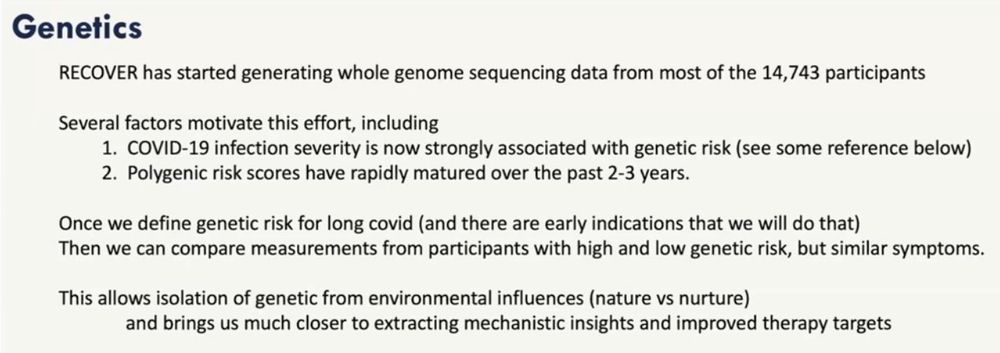
Recent events have brought far greater understanding of the threats that we all face from infectious agents. The COVID-19 pandemic has brought great suffering to the world, and even after recovery from an acute infection too many people experience prolonged harm. To further bolster research efforts to find treatments for long COVID, NIH launched a new component of the Researching COVID to Enhance Recovery (RECOVER) initiative(link is external) called RECOVER-Treating Long COVID (RECOVER-TLC). We convened a workshop to hear from more than 1,400 patients, advocates, health care providers and scientists to help inform this next phase of long COVID clinical trials. These trials will also be informed by extensive data from 40 pathobiology studies, review of 60 million electronic health records, and eight existing phase 2 clinical trials testing the safety and efficacy of 13 treatments that include drugs, biologics, medical devices and other therapies.
So, while I leave NIH unable to see these initiatives and more through to fruition, I am optimistic that they will continue under new leadership.
Quotes:
I am announcing today that I will step down on Jan. 17, 2025, as the 17th director of the National Institutes of Health (NIH).
...
Recent events have brought far greater understanding of the threats that we all face from infectious agents. The COVID-19 pandemic has brought great suffering to the world, and even after recovery from an acute infection too many people experience prolonged harm. To further bolster research efforts to find treatments for long COVID, NIH launched a new component of the Researching COVID to Enhance Recovery (RECOVER) initiative(link is external) called RECOVER-Treating Long COVID (RECOVER-TLC). We convened a workshop to hear from more than 1,400 patients, advocates, health care providers and scientists to help inform this next phase of long COVID clinical trials. These trials will also be informed by extensive data from 40 pathobiology studies, review of 60 million electronic health records, and eight existing phase 2 clinical trials testing the safety and efficacy of 13 treatments that include drugs, biologics, medical devices and other therapies.
So, while I leave NIH unable to see these initiatives and more through to fruition, I am optimistic that they will continue under new leadership.