Published poems by Veronica Ashenhurst, who has Severe ME

Cartography of an Illness


To bear the day, I touch a print of a map:

this old Venetian portolan chart,

ink on vellum, drawn to guide captains to port.

I once thought I could captain life itself,

and sketched my own map—partial, raw—with ports marked

school, study, and the ventures of love.

But shipwreck came, by way of infection.

Now, on a phantom island, I live apart,

in a bed, with an illness doctors claimed

for years was make-believe. If you saw me

from above—as might a bird or a god—

you would spot my waiting hand. You would hear me

ask “Where am I?” to the compass rose, while

the sea rolls navy blue, and the decades sail on.


The poem appears in the summer 2025 issue of HEAL: Humanism Evolving through Arts and Literature, a journal published by the Florida State University College of Medicine. I’ll link to the PDF. The poem is on page 5.

https://public.med.fsu.edu/images/newsletters/Heal/25_summer/images/2025SummerHEAL-V3.pdf
Incredible.
 
Bravo. With this strong imagery and concise language, Veronica, you offer a fresh or insightful perspective on living with ME, and thereby invite the reader to see things in a new light and visualise that reality in a very powerful way. Also, it's extremely important to have patient voices recording the severe ME experience in Health Care journals. Congratulations. I just wish that more people read your amazing work and recognised what it is your are doing by writing about one of the worst illnesses on the planet. Not sure how to widen the audience, I'll listen to any advice. Thank you.
 
Hi S4ME poetry readers,

Thank you for your kind words. Due to my health challenges, I can’t share my poems in person, at a poetry reading for instance, so I’m glad to share them with you here.

The HEAL editorial board placed my poem “Cartography of an Illness” next to an essay on compassion in medicine by Dr. Max Solano, a hospitalist and professor of medicine at FSU. I appreciated this placement, especially since ME/CFS patients have long suffered neglect, indignity, and even abuse from the medical profession. Compassion for ME patients is long overdue, as are meaningful treatments.

I’ll repost the link, for ease of reference (see p. 5).


Another poem I wrote will be published this fall. I’ll share it with you in due course, as my health permits.


Wishing you a peaceful summer’s end.
 
The HEAL editorial board placed my poem “Cartography of an Illness” next to an essay on compassion in medicine by Dr. Max Solano, a hospitalist and professor of medicine at FSU. I appreciated this placement, especially since ME/CFS patients have long suffered neglect, indignity, and even abuse from the medical profession. Compassion for ME patients is long overdue, as are meaningful treatments.
It's a wonderful opinion piece by a medic who has clearly retained his compassion throughout his career. Combination of better hours with your poetry is powerful, and suggest that the editorial board really understand understand your poem, and hopefully the biggest issues as well.

Thank you for sharing your poetry with us.
 
Hi S4ME poetry readers:

In 1902, the poet Rainer Maria Rilke was young, poor, and struggling with writer’s block. He accepted to work in Paris for the sculptor Auguste Rodin. Rodin encouraged Rilke to observe animals. Rilke found a caged panther at the Paris Zoo and developed his impressions of the animal into one of his most famous poems, “The Panther.” Rilke’s poem explores themes of confinement. It resonates deeply with me. I decided to write a sequel to Rilke’s poem. It appears in the fall issue of West Trestle Review:
https://www.westtrestlereview.com/wtr_september_2025_veronica_ashenhurst.html

Rilke’s Panther Befriends Me

I once read that the poet Rilke saw
a caged panther in Paris, with fur like night.
The animal’s pained eyes were yellow rooms.
Ill and shut in myself, I sensed the creature’s will
denied. When metal bars seem to last
forever, the lure is to cease counting years.

Rilke had learned to look anew that year
he wrote the panther’s poem. The poet’s sight
held viscera, skin, heart—until at last,
the trapped creature looked back at him. At night,
I weighed these thoughts, read the poem again, and willed
the rough-tongued, heaving animal room

for afterlife. Now, the cat soars through rooms
of sky, roars at stars, and recalls old years
of midnight hunts. He springs his unbound will,
and comes to condole with me. I can see
his paws, claws withdrawn like switchblades. By night,
he surveys me in my bed, and at last,

tilts his head in friendship. I’ve borne this lasting
illness and the gloom, alone in my room
so long. But with Rilke’s panther, at night,
fear subsides, as we have both known years
encaged. He, with strong bones and polished coat, sees
my scars, my fickle limbs, this numb will.

So, I sit up. The animal, willing,
lifts a curtain from his pupils. There’s lasting
insight in his eye. On his haunches, he sees
my potential coiled, tail-like, in this room,
surrounded by the silt of worn-out years.
The panther says we’ll leave this hurt tonight,

and I, tucked into the creature’s heart by night,
climb the clouds with him and feel his pulse. We’ll
gallop, hear the river that in years
past Rilke called grey silk. And here, at last—
in Paris gardens once again, with rooms
of blooms—we’ll touch the roses Rilke saw,

while Paris finds the sun. Night cannot last—
we’ll shed these pelts of grief. In the petaled rooms,
the panther lends his eye. He knows how much I yearn to see.

***

Rilke’s poem “The Panther” is here:

https://www.thereader.org.uk/featured-poem


I hope you enjoy the work.
 
Rilke’s poem “The Panther” is here:

https://www.thereader.org.uk/featured-poem
Thank you, Veronica. Both your poem and Rilke's resonate with me too. I will send you a longer response but I wanted to point out to anyone like me who had never come across Rainer Maria Rilke before that the original poem was written in German. As someone who occasionally translates poems and songs, I was interested to compare the two translations of Der Panther here: https://en.wikipedia.org/wiki/The_Panther_(poem). I also think it's a pity that translated poems are so often published without credit to the translators who, in my view, are themselves poets. After all, what is poetry if not the art of conveying "what oft was thought, but ne'er so well expressed"?

I wonder if anyone might volunteer to translate your poem into German.
 
Thank you, Veronica. Both your poem and Rilke's resonate with me too. I will send you a longer response but I wanted to point out to anyone like me who had never come across Rainer Maria Rilke before that the original poem was written in German. As someone who occasionally translates poems and songs, I was interested to compare the two translations of Der Panther here: https://en.wikipedia.org/wiki/The_Panther_(poem). I also think it's a pity that translated poems are so often published without credit to the translators who, in my view, are themselves poets. After all, what is poetry if not the art of conveying "what oft was thought, but ne'er so well expressed"?

I wonder if anyone might volunteer to translate your poem into German.
That is a brilliant idea!!
Just brilliant.
 
In 1902, the poet Rainer Maria Rilke was young, poor, and struggling with writer’s block. He accepted to work in Paris for the sculptor Auguste Rodin. Rodin encouraged Rilke to observe animals. Rilke found a caged panther at the Paris Zoo and developed his impressions of the animal into one of his most famous poems, “The Panther.” Rilke’s poem explores themes of confinement. It resonates deeply with me. I decided to write a sequel to Rilke’s poem.

There are a couple of references to The Panther in this article about Oliver Sacks and the fabrications in his work: https://www.newyorker.com/magazine/...mself-into-his-case-studies-what-was-the-cost

Archived copy: https://archive.is/jmb6s

From the article:
In “Awakenings,” Sacks writes about his encounters with a man he calls Leonard L. “What’s it like being the way you are?” Sacks asks him the first time they meet. “Caged,” Leonard replies, by pointing to letters of the alphabet on a board. “Deprived. Like Rilke’s ‘Panther’ ”—a reference to a poem by Rainer Maria Rilke about a panther pacing repetitively in cramped circles “around a center / in which a mighty will stands paralyzed.”
When Sacks was struggling to write his first book, “Migraine,” he told a friend that he felt like “Rilke’s image of the caged panther, stupefied, dying, behind bars.” In a letter to Shengold, he repeated this image. When Sacks met Leonard, he jotted down elegant observations in his chart (“Quick and darting eye movements are at odds with his general petrified immobility”), but there is no mention of Leonard invoking the Rilke poem.

I came across this because it was shared by @ME/CFS Science Blog on BlueSky:

 
A diversion from Veronica's evocative poem, sorry, but it was interesting to read about Oliver Sacks.
When Sacks was struggling to write his first book, “Migraine,”
I've commented elsewhere about the BPS-like assertions in that book (edit - here). Sacks suggested that having a migraine was a way for a non-assertive/powerless person to justify stopping taking care of others, and instead have a rest and withdraw from the world.

It's been a while since I read it, pre-ME/CFS onset, but I do remember finding the anecdotes rather unlikely. So, it's pleasing to hear that he has form.
 
Thanks to @Robert 1973 for drawing my attention to the New Yorker article about Dr Oliver Sacks. I read it with interest. A few comments:

  • My sense is that Sacks himself identified with the caged panther in Rilke’s poem—not because Sacks was disabled, but because he lived for so long as a closeted gay man unable to express his erotic self, at a time when being gay was still considered socially “deviant.” The emotional pain Sacks endured may partially help explain why he inserted himself—in a veiled way—into his patients’ narratives. That said, it doesn’t excuse embellishing, or even falsifying, patient experiences.
  • Mary Karr, a poet and memoirist whose work I admire, has observed that if “the reader intuits some deception … in the writer’s psyche that he can’t admit to,” the deception will erode the writer’s authority (see The Art of Memoir at 37). Also, by usurping patient experiences for his own narrative ends, Sacks missed an opportunity for greater self-knowledge, agency, and authenticity in his role as a doctor and writer (see generally The Art of Memoir at 9,12). This missed chance is quite sad, given that Sacks spent decades in therapy, the aim of which is, after all, greater self-knowledge.
  • As the New Yorker author notes, Sacks is considered the founding father of medical humanities, as a discipline. I have long admired Sacks’ contribution in this regard, so I was not a little disenchanted to find out he’d falsified patient experiences. The book Awakenings and parts of Sacks’ other work formed the backbone of an article I wrote critiquing legal education and urging a more multidisciplinary approach. For the sake of completeness, the cite is here: Ashenhurst, Veronica, Building on Strong Foundations: Rethinking Legal Education with A View to Improving Curricular Quality. Dalhousie Law Journal, Vol. 29, No. 2, pp. 491-527, 2006, Available at SSRN: https://ssrn.com/abstract=1862208
  • Now, with the new facts that have come to light about Sacks falsifying patient stories, I might rethink some of what I wrote then.
I have more to share, including a newer poem that was published late last year. But I’ve been very ill and had an unexpected and challenging hospitalisation in January. My recovery has been slow. I’ll write again when I can.
 
Hi S4ME Poetry Readers,

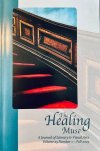
For ME Awareness Week, I’m sharing a poem I wrote which appears in The Healing Muse, a journal published by the Center for Bioethics and Humanities at the SUNY Upstate Medical University in Syracuse, NY.

This is a found poem: it draws and rearranges words from an existing text—in this case, a medical journal article about ME/CFS—to create new poetic meaning. The medical journal article I relied on was written by two UK-based ME specialists, Drs William Weir and Nigel Speight. The article offered an excellent summary of the maltreatment ME patients have endured, so I had good words to work with in creating my poem. According to the writer Annie Dillard, a found poem “swings between two poles”: the original meaning of the source text remains, but the found poem and its source text are now also in dialogue with each other.


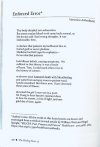
Enforced Error*

This body derailed into exhaustion.
But some routine blood work came back normal, so
the doctor said I had wrong thoughts. It was
fashionable, then,

to declare that patients lay bedbound due to
buried guilt or secret phobias.
Medicine had left logic for sophistry—
for an idea that patients

hold illness beliefs, causing symptoms. We
suffered in that theory: it was a house
of harm. True, I could mark other error in
the history of science,

as doctors once hastened death with bloodletting,
and came from autopsy room to patient ward,
hands unwashed. But this is now. I have drowned
these years of illness:

drowned the girl I once was in a pool.
Yet I long to force future’s resistant door,
to face the streets, a coin of light, and one
gold day of time, again.


The Healing Muse is a print journal, not an online journal. I’ll include the link to the journal homepage here, but the link is mainly to order copies of the journal, not to view the published pieces: https://www.upstate.edu/bioethics/thehealingmuse/

I’ll also include photos below, as I’m able, so you can see how the poem looks in print.

I hope you enjoy the work.


* Author’s note: All the words in this found poem are drawn and rearranged from a medical journal article by William Weir & Nigel Speight, “ME/CFS: Past, Present and Future” Healthcare 2021, 9(8), 984; https://doi.org/10.3390/healthcare9080984.
 
Last edited:
Very good, thank you Veronica. I like the clarity of the first part, telling it like it is, and then the moving into imagery, the house of harm, the drowning child, the resistant door. Took me back to re-read your poem about Rilke's caged panther.

Amazing what you have managed to do with a found poem. I tried writing some as a writing exercise, and was hopeless, but then I'm not and never could be a poet.
 
Thank you @Veronica. I liked the way the poem covered so much ground, and yet did not seem to be trying too hard, it was still cohesive.

I really liked the phrase 'forcing future's resistant door'. I think that is what we spend a lot of our time here trying to do, sometimes trying to find a key, often just beating our fists against the door.

I also wondered how William Weir and Nigel Speight came to be using words like 'coin' and 'streets' and 'gold' in their article. After a bit of thought, I sadly realised how the word 'pool' probably came to be there; its source adds some depth to the reference to the drowning of years of illness.

@Trish, of course you are a poet, an excellent one, we have considerable evidence of your creativity with words (good creativity, of course) here on the forum.
 
Back
Top Bottom