Trial Report Transcutaneous electrical nerve stimulation and pain with movement in people with fibromyalgia: a cluster randomized clinical trial 2026 Dailey et al

Andy

Senior Member (Voting rights)
Key Points

Question Is transcutaneous electrical nerve stimulation (TENS) effective for treating pain when combined with physical therapy (PT) in individuals with fibromyalgia?

Findings This cluster randomized clinical trial of 459 participants with fibromyalgia from 28 PT clinics from 6 health systems found that adding TENS to routine PT resulted in a statistically significant and clinically meaningful reduction of movement-evoked pain at 2 months, with effectiveness sustained for at least 6 months.

Meaning This study’s findings suggest that TENS is a safe and effective modality for managing fibromyalgia pain.

Importance Fibromyalgia is characterized by chronic widespread pain that is often exacerbated by movement that interferes with daily activities. Development of effective treatments for movement-evoked pain is essential for improving function for individuals with fibromyalgia.

Objective To evaluate whether the addition of transcutaneous electrical nerve stimulation (TENS) to outpatient physical therapy improves fibromyalgia-associated movement-evoked pain.

Design, Setting, and Participants The Fibromyalgia TENS in Physical Therapy (FM-TIPS) study was a cluster-randomized clinical trial of participants with fibromyalgia at 28 outpatient PT clinics from 6 health care systems. Between February 1, 2021, and September 31, 2024, 958 participants were screened, 459 participants enrolled, and 384 completed baseline data collection, with final data collected in March 2025.

Intervention Clinics were randomized to PT plus TENS (PT-TENS) and PT-only groups. Data were captured on days 1, 30, 60 (primary end point, randomized phase), 90, and 180. Participants in the PT-only group received TENS after day 60 (extension phase). TENS was applied to the upper and lower back with instructions to use 2 hours daily with parameters of modulating frequency of 2 to 125 Hz for 100 to 180 microseconds at a strong but comfortable intensity.

Main Outcomes and Measures The primary outcome was a change in movement-evoked pain (scale of 0-10, with 0 indicating no pain and 10 indicating worst pain imaginable) from baseline to day 60 rated during a 5-times sit-and-stand task using a linear mixed-effects model. In addition, patient-reported improvement based on the Patient Global Impression of Change score and patient-reported adverse events were assessed.

Results A total of 384 FM-TIPS participants (mean [SD] age, 53 [15] years; 351 [91%] female) completed baseline data collection (modified intention-to-treat), with 191 individuals in PT-TENS group and 193 in PT-only group. Movement-evoked pain at day 60 during TENS treatment was significantly lower in the PT-TENS group compared with the PT-only group (group mean difference, −1.2; 95 CI, −1.6 to −0.7; d = 0.46). A dose-response effect for TENS was observed, with more participants in the PT-TENS group reporting improvement on the Patient Global Impression of Change (120 [72%] vs 86 [51%], P = .001) and a 30% or greater reduction in movement-evoked pain in responder analysis (66 of 161 [41%] vs 22 of 169 [13%]; P < .001). At day 180, 217 respondents (81%) found TENS helpful and 147 (55%) used TENS daily. There were no serious adverse events, and 109 of 358 (30%) experienced minor adverse events during the entire 6 months of the study.

Conclusions and Relevance In this cluster randomized clinical trial of TENS in fibromyalgia, TENS meaningfully reduced movement-evoked pain and remained effective for 6 months. This study’s results suggest that TENS is a safe, inexpensive, and readily available treatment for fibromyalgia.

Open access
 
Commentary: TENS vs Physical Therapy for Fibromyalgia—Not All Exercise Is Good Exercise

"Perhaps the most surprising aspect of this current study1 is the poor response individuals with fibromyalgia had to PT alone. Scores for the primary outcome, movement-evoked pain, showed almost no improvement, nor were there many appreciable changes across the secondary end points. These poor outcomes could perhaps be explained by the PT itself. The PT delivered in this study was not standardized—the approach to treatment was left to the discretion of each physical therapist. As recommended in most clinical guidelines, previous studies of PT and exercise in fibromyalgia have nearly all used exercise and PT regimens that were specifically tailored for fibromyalgia, often deploying a start low and go slow approach.4,5 The present study1 demonstrating no net improvement in pain in the group receiving PT in the community raises the possibility that when PT is performed by therapists not accustomed to caring for fibromyalgia, and not tailored specifically to patients with fibromyalgia, it may sometimes worsen rather than improve pain.

A recent qualitative study explored physical therapists’ understanding of and concerns about treating fibromyalgia.6 They found that many considered fibromyalgia to be an ambiguous illness driven by psychological factors. In addition, without specific training, most reported lacking the competence to reduce the pain of their patients. Uncertainty about the diagnosis and a sense of failure when trying to reduce pain levels led some therapists to deploy unorthodox treatment strategies that were most likely unhelpful. Certainly, education and training specific to fibromyalgia could improve treatment outcomes and therapists’ sense of mastery and success with these patients."
 
Is there any point in trying TENS for me/cfs related pain? I think it is/can be quite similar to the pain in fibromyalgia, but I am not sure!
 
This is why physios, psychologists and psychiatrists don’t run multi-arm trials with interventions that are believed in. It destroys the bias that is the suggestion of their stuff having efficacy. You will instead got an arm with "usual care" to just strengthen that bias.
 
But did they try wearing a clown hat? Maybe a red one? Or a blue? Oh, I know! A polka dot hat! Surely that's the magical bean.

Hadn't noticed this comic before, but damn does it perfectly describe biopsychosocial pseudoresearch:

(Direct link: https://xkcd.com/882/)
significant.png
 
Perhaps the most surprising aspect of this current study1 is the poor response individuals with fibromyalgia had to PT alone.
Surprising to who? Dr Magoo? A deaf and blind head in a jar? No, really, are they actually pretending not to know that this has been controversial for decades? That no study has actually produced reliable evidence of this? This is either feigned surprise or they truly operate entirely within completely insulated bubbles. This is frankly like being taken by surprise at the fact that water is wet, as a marine scientist.
The present study1 demonstrating no net improvement in pain in the group receiving PT in the community raises the possibility that when PT is performed by therapists not accustomed to caring for fibromyalgia, and not tailored specifically to patients with fibromyalgia, it may sometimes worsen rather than improve pain.
Exact same Big Lie as with GET. Always No True GET, even in trials with people 'specializing' in this. Who somehow need to be trained in doing something they are 'teaching' patients.

Why not blame the weather? Space weather, while we're at it? Illuminati? George Clooney's current facial hair?
 
Not enthused about the study itself. I do know that the stick on electrodes patches are not cheap..


What I use daily for my FM pain is a capsaicin cream (0.1% --Capzaisin is the brand I use) which works on light to moderate pain by blocking pain transmission.

edited
 
Last edited:
I don't understand the point of using TENS for all over body pain. I thought it was for localised pain.

I have come across it prescribed for period pain and it seemed to help a bit for a while but the woman trying it found she became oversensitised to the TENS induced sensation, so it was counterproductive.
 
Press release:
https://www.eurekalert.org/news-releases/1121750

NEWS RELEASE 27-MAR-2026

TENS improves pain and fatigue in fibromyalgia​

Real-world trial finds long-lasting benefit for TENS with physical therapy in reducing movement pain, fatigue

Peer-Reviewed Publication
UNIVERSITY OF IOWA HEALTH CARE


FacebookXLinkedInWeChatBlueskyMessageWhatsAppEmail

Kathleen Sluka, PT, PhD, FAPTA University of Iowa Professor of Physical Therapy and Rehabilitation Science
IMAGE:

UNIVERSITY OF IOWA PROFESSOR KATHLEEN SLUKA, PT, PHD, LED THE FIRST REAL-WORLD TRIAL OF TENS FOR FIBROMYALGIA. THE STUDY FOUND THAT ADDING TENS (transcutaneous electrical nerve stimulation) TO OUTPATIENT PHYSICAL THERAPY REDUCED MOVEMENT-BASED PAIN AND FATIGUE IN PATIENTS WITH FIBROMYALGIA, AND THE EFFECTS LASTED FOR AT LEAST SIX MONTHS.


view more


CREDIT: UNIVERSITY OF IOWA HEALTH CARE

Adding TENS (transcutaneous electrical nerve stimulation) to outpatient physical therapy reduced movement-based pain and fatigue in patients with fibromyalgia, and the effects lasted for at least six months, according to a new study led by researchers at University of Iowa Health Care.

The study, led by Kathleen Sluka, PT, PhD, is the first real-world trial of TENS for fibromyalgia. The findings, published on March 27 in the journal JAMA Network Open, show that TENS is a safe, effective, inexpensive, and readily available treatment for fibromyalgia, a chronic condition that causes pain, tenderness, and fatigue throughout the body.

“It is one of the few treatments that specifically targets movement-evoked pain and fatigue, which are major barriers to participation in daily activities,” says Sluka, UI professor of physical therapy and rehabilitation science.

TENS uses a small device with adhesive electrodes to send mild electrical pulses through the skin to block or reduce pain. The study found that the effect of TENS for reducing pain was similar, if not better, than current FDA-approved medications for fibromyalgia.

“We were excited to see that patients also had less fatigue,” Sluka added. “Right now, there are no good treatments for fatigue. So, the fact that we had anything that touched the fatigue was pretty powerful.”

Fibromyalgia: complicated, misunderstood, and hard to treat

Fibromyalgia affects about 4% to 7% of the population. It significantly impacts a person’s physical function, cognitive abilities, and sleep. In addition to chronic pain, a key feature of the condition is whole-body fatigue, which interferes with day-to-day life and contributes to patients’ inability to concentrate and perform functional activities.

Exercise is often the first line of treatment recommended to people with fibromyalgia, and research has shown that it can be beneficial. However, fibromyalgia causes fatigue and pain, which is a key reason why the research team focused on alleviating pain with movement.

“Pain with movement hinders a person’s ability to participate in an effective exercise program and do their day-to-day activities.” Sluka says.

Science translated to real-world benefit

Sluka and her colleagues have spent decades studying the biological mechanisms affected by TENS, developing the ideal parameters of TENS stimulation and testing the efficacy of TENS for treating chronic pain and fatigue in human trials.

They have previously shown that under the ideal conditions of a randomized, controlled clinical trial, TENS in conjunction with physical therapy can significantly decrease movement pain.

The new Fibromyalgia TENS in Physical Therapy (FM-TIPS) study was designed to test the effect of TENS under real-world conditions. The study was conducted in 28 outpatient physical therapy clinics across six health care systems in the Midwest, and included 384 people of different ages, education levels, and socioeconomic backgrounds. Almost 50% of the participants were from rural areas.

“It was a challenge to recruit participants for this study, but the clinics and the physical therapists we worked with were great. This would never have happened without them,” Sluka says.

The clinics were randomized to provide either physical therapy (PT) with TENS or physical therapy alone. In the PT-TENS group, participants were asked to use TENS for two hours a day for six months. That time could be split into short periods or done all at once. The TENS electrodes were placed on the upper and lower back and delivered a mixed frequency signal at an intensity as strong as the participant could tolerate.

After 60 days, movement-evoked pain during TENS treatment was significantly improved in the PT-TENS group. Adding TENS also significantly reduced resting pain and resting and movement-fatigue. In contrast, participants who received only physical therapy had no change in their movement-evoked pain.

The response also was dose-dependent, with people who used TENS daily for 60 days having the best outcomes.

Unlike many pain-relieving drugs that can become less effective over time as the body develops a tolerance for the medication, the study shows that over time, TENS maintained its ability to improve pain and fatigue at a significant level.

After the primary endpoint at day 60, the PT-only group was also given TENS, and all the participants continued in the study for another four months.

“When we gave the PT-only patients the TENS unit and they started using it, we also saw the same improvements as the PT with TENS patients, which is powerful,” Sluka says.

Overall, the study showed that 80% of patients found TENS helpful. At six months, 80% were still using TENS once a week, and over 70% reported they felt better after using TENS.

TENS adds benefit

Dana Dailey, PT, PhD, UI assistant research scientist and the first author of the study, notes that it’s important for people to realize that the benefit of TENS comes from using it as a part of a total treatment planthat includes physical therapy.

“Using TENS on its own will not give the same benefits,” Dailey says. “However, the study shows that TENS provides an added benefit on top of any relief from other treatments. All the study participants were also using pain medications and receiving physical therapy, yet TENS still provided additional relief.”

Fibromyalgia often needs multiple interventions to help patients feel less pain and fatigue and improve their overall function. The new findings suggest that TENS could be particularly helpful as a part of a multipronged approach because it can be safely and easily used as a self-management tool that uniquely targets movement-associated pain and fatigue.

“Often, when you move a randomized, controlled clinical trial into a real-world setting, it doesn't work because there are too many confounding factors. But this intervention still works,” Sluka says. “Not only did the treatment reduce movement pain and fatigue during the testing period, but patients continued to use it at six months.”

The study team included researchers from University of Iowa Health Care and the University of Iowa College of Public Health; University of Illinois Chicago and UI Health; Advanced Physical Therapy & Sports Medicine; Kepros Physical Therapy & Performance; Advanced Physical Therapy Associates; Big Stone Therapies; Rock Valley Physical Therapy; Iowa City VA Healthcare System; Grand Valley State University; and Vanderbilt University Medical Center.

The research was funded as part of the HEAL Initiative by the National Institute of Arthritis and Musculoskeletal and Skin Diseases.

JOURNAL​

JAMA Network Open

DOI​

10.1001/jamanetworkopen.2026.2450

METHOD OF RESEARCH​

Randomized controlled/clinical trial

SUBJECT OF RESEARCH​

People

ARTICLE TITLE​

Transcutaneous Electrical Nerve Stimulation and Pain With Movement in People With Fibromyalgia

ARTICLE PUBLICATION DATE​

27-Mar-2026

COI STATEMENT​

Dr Worth reported receiving payment from University of Iowa to his private practice during the conduct of the study. Dr Ecklund reported receiving grants from the Michael J. Fox Foundation for Parkinson's Research during the conduct of the study. Dr Archer reported receiving personal fees from Spine and from NeuroPoint Alliance Inc outside the submitted work. Dr Crofford reported receiving personal fees from UCB outside the submitted work. No other disclosures were reported.
 
Exercise is often the first line of treatment recommended to people with fibromyalgia, and research has shown that it can be beneficial.
Perhaps the most surprising aspect of this current study1 is the poor response individuals with fibromyalgia had to PT alone.
At some point, medicine had to choose between "rousing confidence" and honesty, and of course they went with the overconfident BS so now here we are, decades into this choice and, like everything else, medicine is falling apart at the most basic levels. There is a reason why LLMs are overly confidently wrong, and it's because even in circumstances where it's critical to simply tell the truth, most humans seem to go with not telling the truth. They're just learning from us.
“Using TENS on its own will not give the same benefits,” Dailey says.
Based on what? I mean, yes, of course, but neither does it do that with anything else, but this isn't based on anything. When you mix biasebo with gullibo, you get bullshibo.
 
I don't think there is any good evidence that TENS works for anything other than being a distraction from pain during the period of application.

As Jonathan says, this study is useless at telling us if TENS is helpful. It was open label trial. Without blinding, we know that people report all sorts of things help when they in fact don't.

One major benefit from this study is that it shows that physical therapy is not helpful, not even in the people who were willing to do it and were committed enough to make it to the followup assessments. That is important, it could save health systems some money and people with fibromyalgia considerable stress. It should have been the headline result.

A minor benefit is that it puts a cap on the benefit gained from TENS for fibromyalgia. Even with the substantial bias implicit in an open-label trial, TENS only shifted assessments of pain by 1.2 on a 10 point scale compared to the physical therapy where the result from baseline was 'almost no improvement'. I haven't read the study to be able to quantify the physical therapy benefit, but it sounds close to zero. So, this study has found that the reported change in pain from baseline with TENS is minor. Given the flaw in the trial design, it's very reasonable to assume that that minor change is simply due to the biases the flaw creates.
 
Significant group differences were observed for both the fibromyalgia-positive (mean score, −1.0; 95% CI, −1.5 to −0.5) and fibromyalgia-negative (mean score, −1.6; 95% CI, −2.6 to −0.7) participants (eTable 4 in Supplement 2).
Not all the participants were regarded as fibromyalgia positive. 74% met the ACR criteria for fibromyalgia.


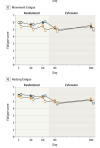
The study measured the impact on fatigue too. Note that beyond 60 days, most of the group in the PT got access to the TENS, and so that data is a bit useless. It is the 60 day figures that matter. For the period up to and including the 60 day observations, for TENS the measurements are before and after 30 minutes of TENS; for PT the measurements are before and after 30 minutes of rest.

Physical therapy had no impact on fatigue.


Screenshot 2026-03-30 at 10.58.42 AM.png
 
Screenshot 2026-03-30 at 11.13.40 AM.png
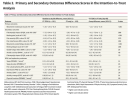
Here are the results at 60 days. The change from baseline for movement-evoked pain for the TENS group was only -1.0.

Perhaps the most surprising aspect of this current study1 is the poor response individuals with fibromyalgia had to PT alone. Scores for the primary outcome, movement-evoked pain, showed almost no improvement, nor were there many appreciable changes across the secondary end points.

The change from baseline in the primary outcome (movement-evoked pain) for physical therapy wasn't 'almost no improvement'. It was in fact 0.0 with a 95% confidence interval of -0.3 to +0.3. That is actually 'no discernable improvement whatsoever for basically anyone'.

The change from baseline in movement evoked fatigue for physical therapy for physical therapy was also 0.0 (remarkably with the same 95% confidence interval as for pain).

I think there is an error in the table, ether are two lines for FIQR, but with different values.
 
Last edited:
From that article:
University of Iowa Professor Kathleen Sluka, PT, PhD, led the first real-world trial of TENS for fibromyalgia. The study found that adding TENS to outpatient physical therapy reduced movement-based pain and fatigue in patients with fibromyalgia, and the effects lasted for at least six months.

I don't understand how researchers get away with such bad research. Why isn't everyone laughing at them for doing such a bad study? It aimed to prove that TENS is useful, but in fact only proves that physical therapy is useless and TENS is probably useless.

Definitely a study to bookmark as evidence that physical therapy is not the panacea to all.
 
Back
Top Bottom