Andy
Senior Member (Voting rights)
Key Points
Question Is transcutaneous electrical nerve stimulation (TENS) effective for treating pain when combined with physical therapy (PT) in individuals with fibromyalgia?
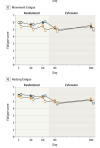
Findings This cluster randomized clinical trial of 459 participants with fibromyalgia from 28 PT clinics from 6 health systems found that adding TENS to routine PT resulted in a statistically significant and clinically meaningful reduction of movement-evoked pain at 2 months, with effectiveness sustained for at least 6 months.
Meaning This study’s findings suggest that TENS is a safe and effective modality for managing fibromyalgia pain.
Importance Fibromyalgia is characterized by chronic widespread pain that is often exacerbated by movement that interferes with daily activities. Development of effective treatments for movement-evoked pain is essential for improving function for individuals with fibromyalgia.
Objective To evaluate whether the addition of transcutaneous electrical nerve stimulation (TENS) to outpatient physical therapy improves fibromyalgia-associated movement-evoked pain.
Design, Setting, and Participants The Fibromyalgia TENS in Physical Therapy (FM-TIPS) study was a cluster-randomized clinical trial of participants with fibromyalgia at 28 outpatient PT clinics from 6 health care systems. Between February 1, 2021, and September 31, 2024, 958 participants were screened, 459 participants enrolled, and 384 completed baseline data collection, with final data collected in March 2025.
Intervention Clinics were randomized to PT plus TENS (PT-TENS) and PT-only groups. Data were captured on days 1, 30, 60 (primary end point, randomized phase), 90, and 180. Participants in the PT-only group received TENS after day 60 (extension phase). TENS was applied to the upper and lower back with instructions to use 2 hours daily with parameters of modulating frequency of 2 to 125 Hz for 100 to 180 microseconds at a strong but comfortable intensity.
Main Outcomes and Measures The primary outcome was a change in movement-evoked pain (scale of 0-10, with 0 indicating no pain and 10 indicating worst pain imaginable) from baseline to day 60 rated during a 5-times sit-and-stand task using a linear mixed-effects model. In addition, patient-reported improvement based on the Patient Global Impression of Change score and patient-reported adverse events were assessed.
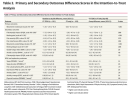
Results A total of 384 FM-TIPS participants (mean [SD] age, 53 [15] years; 351 [91%] female) completed baseline data collection (modified intention-to-treat), with 191 individuals in PT-TENS group and 193 in PT-only group. Movement-evoked pain at day 60 during TENS treatment was significantly lower in the PT-TENS group compared with the PT-only group (group mean difference, −1.2; 95 CI, −1.6 to −0.7; d = 0.46). A dose-response effect for TENS was observed, with more participants in the PT-TENS group reporting improvement on the Patient Global Impression of Change (120 [72%] vs 86 [51%], P = .001) and a 30% or greater reduction in movement-evoked pain in responder analysis (66 of 161 [41%] vs 22 of 169 [13%]; P < .001). At day 180, 217 respondents (81%) found TENS helpful and 147 (55%) used TENS daily. There were no serious adverse events, and 109 of 358 (30%) experienced minor adverse events during the entire 6 months of the study.
Conclusions and Relevance In this cluster randomized clinical trial of TENS in fibromyalgia, TENS meaningfully reduced movement-evoked pain and remained effective for 6 months. This study’s results suggest that TENS is a safe, inexpensive, and readily available treatment for fibromyalgia.
Open access
Question Is transcutaneous electrical nerve stimulation (TENS) effective for treating pain when combined with physical therapy (PT) in individuals with fibromyalgia?
Findings This cluster randomized clinical trial of 459 participants with fibromyalgia from 28 PT clinics from 6 health systems found that adding TENS to routine PT resulted in a statistically significant and clinically meaningful reduction of movement-evoked pain at 2 months, with effectiveness sustained for at least 6 months.
Meaning This study’s findings suggest that TENS is a safe and effective modality for managing fibromyalgia pain.
Importance Fibromyalgia is characterized by chronic widespread pain that is often exacerbated by movement that interferes with daily activities. Development of effective treatments for movement-evoked pain is essential for improving function for individuals with fibromyalgia.
Objective To evaluate whether the addition of transcutaneous electrical nerve stimulation (TENS) to outpatient physical therapy improves fibromyalgia-associated movement-evoked pain.
Design, Setting, and Participants The Fibromyalgia TENS in Physical Therapy (FM-TIPS) study was a cluster-randomized clinical trial of participants with fibromyalgia at 28 outpatient PT clinics from 6 health care systems. Between February 1, 2021, and September 31, 2024, 958 participants were screened, 459 participants enrolled, and 384 completed baseline data collection, with final data collected in March 2025.
Intervention Clinics were randomized to PT plus TENS (PT-TENS) and PT-only groups. Data were captured on days 1, 30, 60 (primary end point, randomized phase), 90, and 180. Participants in the PT-only group received TENS after day 60 (extension phase). TENS was applied to the upper and lower back with instructions to use 2 hours daily with parameters of modulating frequency of 2 to 125 Hz for 100 to 180 microseconds at a strong but comfortable intensity.
Main Outcomes and Measures The primary outcome was a change in movement-evoked pain (scale of 0-10, with 0 indicating no pain and 10 indicating worst pain imaginable) from baseline to day 60 rated during a 5-times sit-and-stand task using a linear mixed-effects model. In addition, patient-reported improvement based on the Patient Global Impression of Change score and patient-reported adverse events were assessed.
Results A total of 384 FM-TIPS participants (mean [SD] age, 53 [15] years; 351 [91%] female) completed baseline data collection (modified intention-to-treat), with 191 individuals in PT-TENS group and 193 in PT-only group. Movement-evoked pain at day 60 during TENS treatment was significantly lower in the PT-TENS group compared with the PT-only group (group mean difference, −1.2; 95 CI, −1.6 to −0.7; d = 0.46). A dose-response effect for TENS was observed, with more participants in the PT-TENS group reporting improvement on the Patient Global Impression of Change (120 [72%] vs 86 [51%], P = .001) and a 30% or greater reduction in movement-evoked pain in responder analysis (66 of 161 [41%] vs 22 of 169 [13%]; P < .001). At day 180, 217 respondents (81%) found TENS helpful and 147 (55%) used TENS daily. There were no serious adverse events, and 109 of 358 (30%) experienced minor adverse events during the entire 6 months of the study.
Conclusions and Relevance In this cluster randomized clinical trial of TENS in fibromyalgia, TENS meaningfully reduced movement-evoked pain and remained effective for 6 months. This study’s results suggest that TENS is a safe, inexpensive, and readily available treatment for fibromyalgia.
Open access