Which computer for someone with Parkinson's Disease

ladycatlover

Senior Member (Voting Rights)
https://www.theguardian.com/technol...is-the-best-pc-for-someone-who-has-parkinsons

I thought some of the suggestions and advice on this article might be useful for ME/CFS patients.

While I have a laptop so I can take it to and fro from home and caravan, I use wireless keyboard and mouse with it. After reading this article I'm inclined to think about doing things differently, though it's complicated to even begin thinking about it. :rolleyes:

Anyway, I think it's worth a read. After all, a lot of the problems we have are somewhat similar to people with Parkinson's Disease.
 
meant speech to text .

I found speech to text much more tiring than typing, specially as the applications seem to be trained mainly to understand American accents. (These are somewhat thin on the ground in the part of Yorkshire where I was born!)

It takes so long to keep repeating the phrase until the software's picked it up, and then to correct all the mistakes, that typing just seems easier – at least for people who can sit up some of the time. I realise this won't apply to everyone, though.
 
For me speech is cognitively much more demanding than typing, and harder to edit, which is a frequent requirement.

I was not impressed by the article.

My solution is a moderately powerful, but quite small, system using a TV as a monitor, and both wireless and bluetooth keyboards, mice and a trackball. This can be used lying down, and mainly is.

I also use tablets, and have a laptop, and the bedroom has a similar but less powerful setup to the living room using a mini pc and a TV.

The laptop is hardly ever used, mainly due to the size of the display.
 
Decent article.

However, a desktop may be less practical for those who spend periods bedbound. I think ME/CFS is less "one size fits all" than most disabling chronic illnesses. Every situation can be unique.

A laptop which can be hooked up to an external monitor and keyboard at the desk, but also used solo while bedbound might be a working solution for some. Or a desktop when non-bedbound, and a phone when bedbound. Whatever works.

While it keeps the suggestions focused, the article does seem pretty stuck on Windows 10. But there are other good OS options out there.

Would have liked to see tablet solutions mentioned too. Some of the more severe can be physically limited to managing a tablet or phone.
 
There are specialist assistive technology services that in theory could be very useful for some people with ME. This would range from supporting computer access to fitting environmental controls. There are an enormous number of options, be it just providing a custom made armrest to position your hand over a computer keyboard, or controlling a computer with minimal movements, or a door lock control and intercom control from you bed or arm chair.

Here in the UK service provision varies from area to area, as there is no national guidance on funding. It is down to historical accident whether particular areas have well developed services or not. Some services rely only on existing commercial products, etc whereas others have access to medical physics/engineering input enabling custom made adaptations. In the UK these services are usually hosted within the NHS. My knowledge is twenty years out of date, but a quick web search suggests things are not that different now.

There are some regional centres, but with an awareness some people are unable to travel to a centre. Also in some districts there are looser associations of various professionals working in the field. Where there is a specific centre people could contact them directly to discuss there referral procedures, but where provision is through other services it may be harder to find a way in. It may also be that OTs could provide an way into specialist services, but I imagine the knowledge of a lot of OTs in relation to this is quite patchy.

This is something that the specialist ME/CFS services could provide an in to, but given they almost universally ignore more severe patients they probably do not in general recognise any need. In other conditions, such as MND (ALS), there are charities that provide support workers that are knowledgable on their local service provision and even have access to their own equipment libraries.

There is a real need for a pooling of knowledge relating to the sorts of things that might help us in general, through to support in deciding when an individual would benefit from accessing a specialist service.
 
Yes I’m better writing and editing my own text than trying to dictate. Interestingly I had a job years ago where I went from typing my own stuff to a team where they used dictation and a typist. I had to write it out then read it as I couldn’t do it in my head without seeing the words written down so it’s not necessarily an ME thing unless it is and I had very mild ME 5 years longer than I reckon my gradual onset started.
 
I had to write it out then read it as I couldn’t do it in my head without seeing the words written down

Me too! Most people learn to compose written work in childhood, without really being aware of how long it takes to learn to do it at reasonable speed. Dictation is every bit as much of a skill, and I think anyone who's not used to doing it would struggle to compose more than a sentence or two without practice. Brain fog makes it much harder!
 
I just learned about the existence of gyroscope mice, sometimes also called flymouse or airmouse.
It enables you to control the mouse pointer with a kind of laser pointer device, but unlike a pointer, you don’t have to point at the screen, instead, it seems to work relative to your start position.
I imagine it could be useful for bedridden folks who need to keep their arms flat on the bed.

It seems rather niche but some shorts exist on YouTube:


ETA: found some gyromice specifically for people with disabilities. Unfortunately, they cost $1000+.

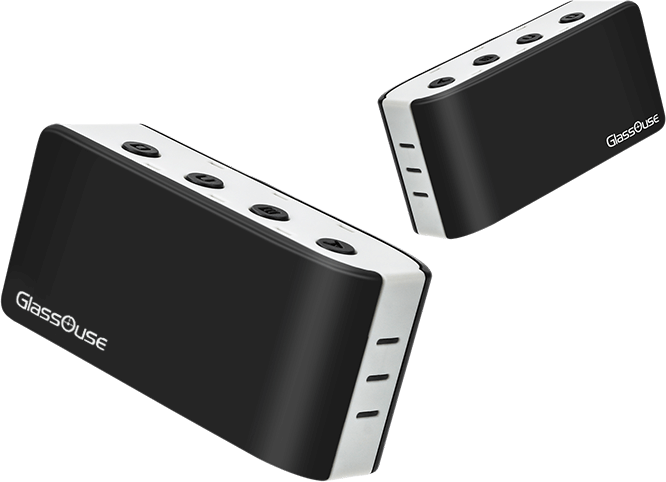
Head-mounted devices:


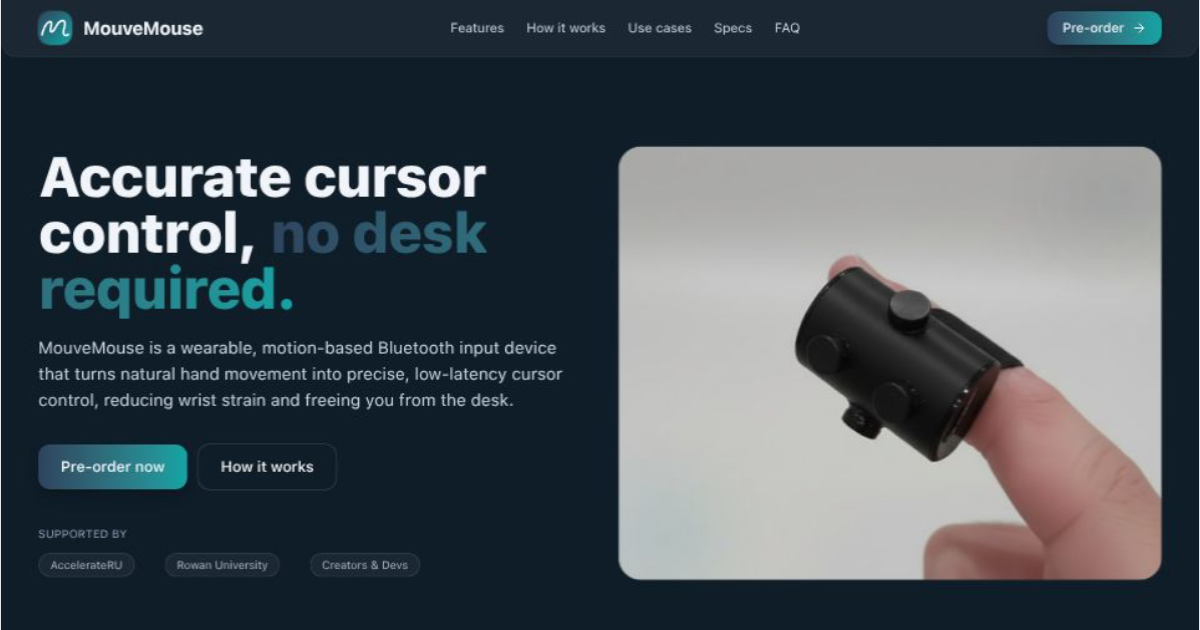
Finger-mounted device:
Preorder only, don’t know the price.
 
Last edited:
There are specialist assistive technology services that in theory could be very useful for some people with ME. This would range from supporting computer access to fitting environmental controls. There are an enormous number of options, be it just providing a custom made armrest to position your hand over a computer keyboard, or controlling a computer with minimal movements, or a door lock control and intercom control from you bed or arm chair.

Here in the UK service provision varies from area to area, as there is no national guidance on funding. It is down to historical accident whether particular areas have well developed services or not. Some services rely only on existing commercial products, etc whereas others have access to medical physics/engineering input enabling custom made adaptations. In the UK these services are usually hosted within the NHS. My knowledge is twenty years out of date, but a quick web search suggests things are not that different now.

There are some regional centres, but with an awareness some people are unable to travel to a centre. Also in some districts there are looser associations of various professionals working in the field. Where there is a specific centre people could contact them directly to discuss there referral procedures, but where provision is through other services it may be harder to find a way in. It may also be that OTs could provide an way into specialist services, but I imagine the knowledge of a lot of OTs in relation to this is quite patchy.

This is something that the specialist ME/CFS services could provide an in to, but given they almost universally ignore more severe patients they probably do not in general recognise any need. In other conditions, such as MND (ALS), there are charities that provide support workers that are knowledgable on their local service provision and even have access to their own equipment libraries.

There is a real need for a pooling of knowledge relating to the sorts of things that might help us in general, through to support in deciding when an individual would benefit from accessing a specialist service.
Just replying to bump this

I think if we are talking about services and thereby thinking about suggestions of what could be helpful ‘fixes’ given some of the unusual aspects about me/cfs (such as needing help or lack of mobility clashing with said help causing noise and needing energy to organise)

And as tech is moving on apace so new solutions cover new areas each year like eg sound control light or heat , door entry systems and doorbells

Sadly no ‘dinner robots’ yet but…

Then it would be interesting to find out more about whether services like this are being moved forward and going strong or disappearing

The issue with commercial anything is the plain luck of not getting ripped of and safety but also it being really hard to know what is out there and how it might help and catches just as wheelchair pages are interesting for flagging eg to think of hands getting exhausted by controls

And the communicating to get what you need right is huge energy for very ill people

So there are gaps even in just communicating and engaging the need

But could this be an area where if eg there were really perfect forward looking charities a lot of useful stuff could be being developed ?
 
I found voice recognition and dictation incredibly weird to start with. As the technology has improved and as I’ve just been forced to get used to it I found it incredibly useful, not as a replacement to writing but certainly is a tool that I now find invaluable.
 
This is something that the specialist ME/CFS services could provide an in to, but given they almost universally ignore more severe patients they probably do not in general recognise any need. In other conditions, such as MND (ALS), there are charities that provide support workers that are knowledgable on their local service provision and even have access to their own equipment libraries.

There is a real need for a pooling of knowledge relating to the sorts of things that might help us in general, through to support in deciding when an individual would benefit from accessing a specialist service.
Absolutely agree. And with other conditions there’s a lot of variation of needs between people and a lot of custom solutions. I think many of us do without them or are forced to find them ourselves rather than having experts who see a wide range of people so learn what works and can efficiently help. In many ways ME/CFS particularly severe isn’t a great deal different to other conditions in this respect, except in how we’re treated.
 
Back
Top Bottom