Transfer of IgG from long COVID patients induces symptomology in mice, 2026, Chen et al

Have previously measured NFL in ME/CFS patient serum vs controls. Found no difference. Didn't measure GFAP though.

I have measured all of them and GFAP in my own samples (very severe ME), all negative, but again, I did not expect them to be elevated, as I think we deal with something more akin to past 'acute injury' as opposed to 'neurodegeneration'. I think 'time of sampling' is paramount.

PS: If LC mouse models are somewhat informative about ME/CFS we would not expect to see Nfl but GFAP to be elevated.
 
I haven't had a chance to read the preprint yet so apologies if my question is answered in it.
Did they by chance monitor the mice to see if their LC resolved over time?
 
Commentary in Nature News

Danny Altmann, an immunologist at Imperial College London, is more sceptical. “Things like long COVID are really, really hard to reiterate in animal models,” he says, and it is unclear how well the symptoms observed in mice really reflect what’s going on in humans. “We’ve invested almost zero in building up those models,” he says, owing to a lack of government interest and “policymaker fatigue” in funding long COVID research. So even “if this study catalyses debate about the vacuum of small-animal models that are really holding back the field, I think it’s helpful”, he adds.
 
I would contrast this paper with the sort of paper that one found in a journal of 1974 - where a single simple experiment was reported and in six cases out of ten became a classic piece of evidence that everyone learnt about. These days we see thirty seven graphs in colour about various things not directly related to the main experiment but not much detail on the finding of interest. In 99 out of 100 cases the papers are forgotten.

I am not aware of any disease in which transfer of human antibodies to mice has been critical in our understanding. Human immunoglobulin in mice will form immune complexes, fix complement, activate Fc receptors and generally cause a nuisance, whatever it is against.

I just don't see this sort of paper as a serious attempt to convey a simple, sound, scientific observation. It is more like what pops up when you try to read a newspaper - all sorts of flashing advertisements here there and everywhere making it impossible tor read what you wanted to look at. It is bad manners apart from anything.

We all used to do bad experiments in the 1970s but didn't bombard people with all this stuff and didn't expect anyone to take much notice. Now people spend millions of dollars on studies like this and nobody has any idea what to make of it.

If antibody transfer from human to mice always causes problems because it is mice, why didn't the authors do a transfer of IGG of healthy people to mice and compare that as well? Because that would pretty much prove whether the first statement is true or not. @Jonathan Edwards

If there are overlapping effects from just the antibody being from a human to mice and also the faulty antibodies from CFS, then doing a healthy transfer would allow the researchers to extract out the two effects, similar to how you look at regression coefficients.
 
Cell Reports Medicine: Transfer of IgG from long COVID patients induces symptomology in mice - Chen et al, 2026

Highlights​

• Transfer of long COVID IgG induces pain-associated behaviours in mice
• Pathogenic IgG effects vary across biomarker-defined patient subgroups
• Autoantibody signatures are subgroup specific and persist long-term
• IgG collected from patients 2 years later retains pain-inducing activity in vivo

Summary​

SARS-CoV-2 infections have led to a surge in long COVID, a post-infectious syndrome in which autoantibodies are proposed to play a pathogenic role, analogous to fibromyalgia. Here, we test this hypothesis by transferring total IgG from long COVID patients into mice. We stratified patients into three subgroups using plasma levels of glial fibrillary acidic protein (GFAP), neurofilament light chain (NFL), and interferon-β, with subgroup-specific pathways supported by plasma proteomics. Transfer of pooled total IgG induces pronounced and persistent mechanical hypersensitivity. Notably, IgG collected 2 years later from the same long COVID patients who remained symptomatic reproduced mechanical allodynia in mice, demonstrating longitudinal stability of pathogenic activity. Proteome-wide autoantibody profiling identifies elevated, subgroup-linked autoreactivities that persist over time and are validated by independent assays. Together, these findings demonstrate that long COVID IgG can induce mechanical hypersensitivity in mice, support a causal role for autoantibodies in long COVID pathogenesis, and may establish a murine model for therapeutic development.

 
Last edited by a moderator:
Medical Express: Autoantibodies implicated as drivers of long COVID in new study

quotes:

new research coordinated by UMC Utrecht and Amsterdam UMC provides some of the strongest functional evidence yet that autoantibodies (antibodies that mistakenly target the body's own tissues) could play a causal role.

...

Long COVID is known for its wide range of symptoms, including extreme fatigue, post-exertional malaise (PEM), pain, and cognitive dysfunction ("brain fog").

...

While the study has limitations, including its relatively small size, single-center design and the use of pooled samples, it provides compelling evidence that IgG autoantibodies may actively contribute to long COVID symptoms. The results also point toward new treatment strategies. Therapies that are able to remove or neutralize harmful antibodies, such as immunoadsoption, plasmapheresis or targeted immunotherapy, could offer relief, particularly if tailored to specific biological subtypes.


Medical Express: Autoantibodies implicated as drivers of long COVID in new study

quotes:

new research coordinated by UMC Utrecht and Amsterdam UMC provides some of the strongest functional evidence yet that autoantibodies (antibodies that mistakenly target the body's own tissues) could play a causal role.

...

Long COVID is known for its wide range of symptoms, including extreme fatigue, post-exertional malaise (PEM), pain, and cognitive dysfunction ("brain fog").

...

While the study has limitations, including its relatively small size, single-center design and the use of pooled samples, it provides compelling evidence that IgG autoantibodies may actively contribute to long COVID symptoms. The results also point toward new treatment strategies. Therapies that are able to remove or neutralize harmful antibodies, such as immunoadsoption, plasmapheresis or targeted immunotherapy, could offer relief, particularly if tailored to specific biological subtypes.


https://skywriter.blue/@drdendunnen.bsky.social/3mhsxc3q3ns2h here’s a quick and simpler explainer thread by one of the authors. Interesting to see it’s already been replicated multiple times it appears.
 
Interesting to see it’s already been replicated multiple times it appears.
If one reads the threads here on this forum, I think the very strong suggestion is that there has been nothing that would be considered a replication. In short: If you give mice a bunch of different stuff and measure a bunch of stuff you will get some differening positive results multiple times.
 
Cell Reports Medicine: Transfer of IgG from long COVID patients induces symptomology in mice - Chen et al, 2026

Highlights​

• Transfer of long COVID IgG induces pain-associated behaviours in mice
• Pathogenic IgG effects vary across biomarker-defined patient subgroups
• Autoantibody signatures are subgroup specific and persist long-term
• IgG collected from patients 2 years later retains pain-inducing activity in vivo

Summary​

SARS-CoV-2 infections have led to a surge in long COVID, a post-infectious syndrome in which autoantibodies are proposed to play a pathogenic role, analogous to fibromyalgia. Here, we test this hypothesis by transferring total IgG from long COVID patients into mice. We stratified patients into three subgroups using plasma levels of glial fibrillary acidic protein (GFAP), neurofilament light chain (NFL), and interferon-β, with subgroup-specific pathways supported by plasma proteomics. Transfer of pooled total IgG induces pronounced and persistent mechanical hypersensitivity. Notably, IgG collected 2 years later from the same long COVID patients who remained symptomatic reproduced mechanical allodynia in mice, demonstrating longitudinal stability of pathogenic activity. Proteome-wide autoantibody profiling identifies elevated, subgroup-linked autoreactivities that persist over time and are validated by independent assays. Together, these findings demonstrate that long COVID IgG can induce mechanical hypersensitivity in mice, support a causal role for autoantibodies in long COVID pathogenesis, and may establish a murine model for therapeutic development.

There appears to be some changes in comparison to the preprint. For example they have included a 2-year follow-up.
 
There appears to be some changes in comparison to the preprint. For example they have included a 2-year follow-up.
Well that’s a kind of self replication at least then, right? Pain behavior changed the same way twice responding to the same patient cohort IgG. Though of course the methods limitations still apply.
 
1774373352896.png
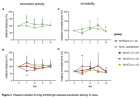
I'll also note that despite the apparent findings of hypersensitivity to painful stimuli, these mice had basically no difference in activity level. Which suggests that the IgG, if it's doing anything, is not inducing chronic pain as we might recognize it
 
Back
Top Bottom