The possibility of autoimmunity or auto-reactivity in ME/CFS

Lets remember there are several research groups looking at T-cells in ME. I hope they find some interesting clues.....
* Jackson Group
* Anna Selin via Ramsay award
* Mark Davis
* UK ME Biobank / LSHTM (published)
* Chris Ponting

Here is an excerpt from NIH Reporter on the work Mark Davis's team is doing in ME/CFS that relates to this thread.

Source : https://projectreporter.nih.gov/pro...dvalue=&ddsub=&cr=2&csb=default&cs=ASC&pball=

As an aside, Mark Davis has a new 2020 award to look at how B and T-cells change with COVID infection in a large cohort. He has been studying influenza for a long time (Reporter shows 17+ years) but I imagine COVID has given him access to many more patients to study what happens to the immune system with infection.

Source : https://projectreporter.nih.gov/pro...dvalue=&ddsub=&cr=5&csb=default&cs=ASC&MMOpt=
(If you click on his name in this link it will show all his active projects - note, his ME one has Ron Davis as PI).

This would place Mark Davis and colleagues in a great position to study what happens to B and T cells during long COVID.

Thanks - Googled and I assume this is Chris Ponting's T-cell project - correct? https://www.actionforme.org.uk/rese...arch/research-we-fund/comparing-immune-cells/
 
Thanks - Googled and I assume this is Chris Ponting's T-cell project - correct? https://www.actionforme.org.uk/rese...arch/research-we-fund/comparing-immune-cells/
Yes. More info and video from CMRC 2020 in this post.
https://www.s4me.info/threads/chris-pontings-project-to-replicate-mark-davis’s-remarkable-findings-of-immune-activation-in-me-cfs-s-mcgrath-blog.4391/#post-257035

Rereading the post, they were expecting first results at the end of 2020 although the pandemic is likely to have delayed this.
 
Merged thread

FROM IACFS/ME 2021

Emerging evidence suggests that autoimmunity plays a role in postinfectious myalgic encephalomyelitis/chronic fatigue syndrome (ME/CFS) and that targeting autoantibodies could be a promising treatment approach.


Dr. Carmen Scheibenbogen

The same may also apply to many cases of “long COVID,” in which many of the symptoms overlap with those of ME/CFS, Carmen Scheibenbogen, MD, professor of clinical immunology and director of the Institute for Medical Immunology, Charité University Medicine, Berlin, said during the annual meeting of the International Association for Chronic Fatigue Syndrome/Myalgic Encephalomyelitis.

Several groups, including Dr. Scheibenbogen’s, have reported finding autoantibodies against neurotransmitter receptor antigens in people with ME/CFS. And, in a paper published in the Journal of Clinical Medicine the day that Dr. Scheibenbogen spoke at the meeting, her team reported significant correlations between autoantibodies to vasoregulative G-protein–coupled receptors and symptom severity, autonomic dysfunction, and disability among 116 patients with infection-triggered ME/CFS who were diagnosed using the symptom-based 2003 Canadian consensus criteria.
full article here
https://www.mdedge.com/rheumatology...issue-diseases/emerging-data-point-underlying

eta: to view second page you might need to register(?)
 
Last edited by a moderator:
I'm coming from a thread that is even more enthusiastic about the possibility that Long Covid is an autoimmune disease, (i.e. characterised by the presence of autoantibodies), than Dr Scheibenbogen is in the 2021 report above:
Autoimmunity is a hallmark of post-COVID syndrome, 2022, Rojas et al

So, Rojas et al found that the majority of the Long Covid patients did have autoantibodies, but of the 100 autoantibodies or so tested for, no particular autoantibody stood out as being common. The authors did not report what percentages of healthy controls also had elevated levels of one or more autoantibodies.

So, I've come here to continue thinking about whether everyone, and certainly everyone who recently had an infection, has elevated levels of some autoantibodies. i.e. having some autoantibodies is perfectly normal. On the Rojas et al thread, I quoted a 2016 paper that suggested that some autoantibodies are helpful. It was suggested that they have a function in regulating an immune response, among other things.

There's this 2021 Russian paper that proposes an idea that is interesting:
Antinuclear Autoantibodies in Health: Autoimmunity Is Not a Synonym of Autoimmune Disease
Accepting autoantibodies as a kind of bioregulator, not only the upper, but also the lower borders of their normal range should be determined; not only their excess, but also a lack of them or "autoimmunodeficiency" could be the reason for disorders.
That is, not only are some autoantibodies not harmful, but a lack them and the regulatory functions they perform might even cause problems. :confused:
 
There's this 2021 Russian paper that proposes an idea that is interesting:
Antinuclear Autoantibodies in Health: Autoimmunity Is Not a Synonym of Autoimmune Disease

That looks garbage to me.

I worked out that the way to produce remission in RA was to target B cell clones rather than T cells despite the mockery of the immunology community and proved right. I made that decision because I had reached an understanding of how autoantibody production occurs. No fancy theories about autoantibodies being useful are needed, just the cell biology finally cracked by Michael Neuberger in the 1990s and the concept that antibody species production is random and that selecting useful species is inevitably subject to some 'software bugs' because of the way the system signals.
 
CD8 T cells would be likely to be involved because they are involved in antibody-independent immune responses. CD4 T cells might very likely also be implicated but in the disease examples we have, such as psoriasis and ask spend, nobody really knows which cells are the primary problem.


T cell cytokines probably operate almost entirely locally over distances of a few microns at most -pretty much with cell contact. Circulating cytokines are probably mostly derived from macrophages and other stroll cells. In psoriasis there isn't necessarily much to find other than the local rash.


Cyclophosphamide does not deal with T cells at tolerable doses and can actually promote T cell activity, possibly by selective effects on suppressor cells. Campath 1H might well deal with the problem and I have encouraged people to try Campath in conditions like any spondylitis and psoriatic arthropathy. Unfortunately doctors are very frightened of using Campath because of the long term T cell depletion it produces. If we want to deplete T cells that seems misguided but I have never been in a position to try it myself.

The argument for trying Campth in ME is I think marginal but not to be dismissed. Before doing so it would be useful to know if anyone who has had Campath for other reasons also had ME and noticed changes.


T cells belong to at least four separate trafficking compartments - gut, skin, mucosal and everything else. So we have four T cell arthropathies - Crohn's, psoriatic, Reiter's and ankylosing spondylitis. I think it quite plausible that there is in fact yet another T cell compartment - that does not go out into any of the peripheral tissues but remains confined to lymphoid tissue. B cells remain confined to lymphoid tissue in normal immune responses. For all the functional variants of T cells there are usually 'null' groups. So there might be a 'null-trafficking' group. The interesting implication would be that persistent activation of these cells would not produce any visible local pathology but might still produce systemic symptoms due to signalling mechanisms. These might not be systemic cytokine release but might involve neural signals or other hormonal signals.
[/QUOTE]

From my experience this is starting to sound spookily close
 
Moved posts

The irony is that apparnelty her techniques for antibodies are very limited. For example. Celltrend measures 10 aabs. The huprot array measures 21000 aabs. It’s no wonder they aren’t finding anything…

You seem to be suggesting that there are pathogenic autoantibodies to be found. Jo Cambridge has looked at a vast array of self antigens and although there are some interesting differences from normal none of them are at a level that would suggest a pathogenic role as far as I know.
 
Last edited by a moderator:
You seem to be suggesting that there are pathogenic autoantibodies to be found. Jo Cambridge has looked at a vast array of self antigens and although there are some interesting differences from normal none of them are at a level that would suggest a pathogenic role as far as I know.
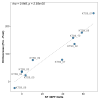
If you look at the scatterplot (not this one, there is another one of antibody hits vs sf36 delta) in Fluge presentation with CDI labs, you can see some signal. The paper will be coming out in a couple months I believe. If Tyler can get permission to use the blood data from P2, we can have even more evidence

The idea is that the more autoabs gone = more response in patients and the scatterplot does show that to an extent.

 
Last edited:
Here is the figure I am referring to which FM shared.


We can note that 05 had no reduction in hit decrease which actually tells us she was a placebo responder, and this correlates as the SF36 bounced up and down but step count did not.

07 is a responder, 09 is not, but my guess is the trend is so strong its likely due to the type of aabs that were hit. Clearly 07 hit the right ones, 09 did not. Nonetheless, the trend is quite decent.

So there is alot of work to be done finding out which are the antibodies causing the problem. Problem is p >> n but if P2 bloods can be use we have n=60 which is quite an upgrade.
1778400041026.png
 
Last edited:
The idea is that the more autoabs gone = more response in patients and the scatterplot does show that to an extent.

Yes, but I think that interpretation is simplistic. More autoantibodies gone may be a proxy for some other general shift in cell dynamics that is actually what matters. It might even fit with the sort of model we published in Qeios where wht matters is not being an autoantibody but a 'loose' regulation of B cell clonality allowing a wider range of antibody specificities. That might show up on assays as an apparent increase in autoantibody. I don't think we can argue that these autoantibodies are directly pathogenic.
 
Well, you have literally the evidence that the more your autoab repertoire resets, the more likely you are to be a responder. You also have the information that Daratumumab targets LLPCs which produce aabs. You can just connect the dots... the evidence is all there.

Any model of this disease must be evidence first. We've seen all the theory first like itaconate shunt etc just be theory. Unless this theory can connect directly to evidence in clinical trials, of course. Does the Qeios theory build on the evidence provided by the Ritux/Cyclo/Dara trials?

If so, is there any way to test out the theory using blood or serum data from the patients like what is being done here?
 
Last edited:
Well, you have literally the evidence that the more your autoab repertoire resets, the more likely you are to be a responder. You also have the information that Daratumumab targets LLPCs which produce aabs. You can just connect the dots... the evidence is all there.

Sadly, immunology is not as simple as that @ryanc97. There are dozens of ways that you might get a correlation between shifts in autoantibodies and improvement (responder is too strong here). If dara does a range of things to NK cells, T cells and plasma cells then it is quite likely to do them all more in some people than others. So you have an epiphenomenon.

There are always lots of ways to join the dots. The tricky part is joining them the right way.
Any model of this disease must be evidence first. We've seen all the theory first like itaconate shunt etc just be theory. Unless this theory can connect directly to evidence in clinical trials, of course. Does the Qeios theory build on the evidence provided by the Ritux/Cyclo/Dara trials?

Exactly, we need evidence. And so far the Ritux/Cyclo/Dara trials have provided no reliable evidence for any efficacy. Ritux was negative. Cyclo was unblinded and could work lots of ways and Dara we have no hard controlled data. B cell targeting in ME/CFS is very much theory first.

The problem is that we have a large body of data suggesting that there are no pathogenic autoantibodies in ME/CFS. All the data are actually negative here. I admire F&M for pursuing every clue they can but the odds have always been stacked up against this approach.
 
I think the paper will prove otherwise and my bet is Jo Cambridge missed something. But thats my opinion of course.

To date, nobody has ran a proper antibody array on pre and post responders. So I think that past data needs to be weighed by that fact.

We have to wait and see how it goes...
 
Last edited:
To date, nobody has ran a proper antibody array on pre and post responders.

But that will tell you nothing because we know they are being given a drug that is likely to reduce all antibodies. That was the fallacy of suggesting that people got better because their anti-GPCR antibodies went down with ritux. Of course they went down, because that is what the drug does. It tells us nothing aout their role in disease.

The only thing that would tell us anything useful is comparing ME/CFS and controls and finding a stark difference in some specific autoantibody level that could plausibly produce symptoms that worsen several hours after exertion. Scores of people have looked for antibodies to known self antigens. Jo screened thousands of proteins. Some differences came up which may tell us something important but the differences are not at al level that would explain the symptoms directly.

You have said we need to strart with data - that is a bit different from 'I bet they missed something'.
 
That’s where correlation between antibody hits and response comes in…

But you have said it could be a proxy for something else, which can apply to any variable in the world.

If antiGPCR showed a correlation with response, I would believe it.
 
Last edited:
Back
Top Bottom