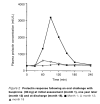
Here are the results of the buspirone challenges for the 2001 case study of the post-menopausal woman, linked above.
View attachment 32421
The result at month 18 (post-recovery) is actually abnormal - there was virtually no response to the buspirone challenge. Normally prolactin peaks at approximately double the baseline 60 to 90 minutes after buspirone administration. (I haven't checked the absolute values.)
This case study claims that the prolactin response to a buspirone challenge was a biomarker for recovery, a recovery due to graded exercise. There's a lot about that that does not add up. I wonder if a drug, an anti-depressant or hydrocortisone (possibly not reported to the researchers) might be a confounding factor.
If this claimed finding was true, surely it would have been taken further by the BPS proponents? Here you have a biomarker that supposedly tracks recovery from CFS, a recovery due to graded exercise. One of the authors of the case study was funded by the ME Association.
It might be useful to put all the studies in a timeline, noting the authors and the funders, to understand how the thinking about this evolved over time, who was doing what.