
V.R.T.
Senior Member (Voting Rights)
Good to hear! Is the timeframe for the HLA analysis similar?Almost certainly this year, hopefully within the next 6 months.

Good to hear! Is the timeframe for the HLA analysis similar?Almost certainly this year, hopefully within the next 6 months.

Yes.Good to hear! Is the timeframe for the HLA analysis similar?


So MCTS1 seems to sometimes work in concert with E2F1.
Somewhere in all this is a causal reality. I think we might find it but don't ask me where at the moment.
 If they tell us anything., who knows. Maybe one day they will.
Whereas I am standing on the cliff up above yelling 'maybe look over there! Or over there!' to nobody in particular whilst gesticulating wildly at various stretches of beach.My general approach is like someone flailing around on a beach picking up pebbles and holding them up to passers-by and saying, in a hopeful tone, ‘is this interesting?’
*looks up to the cliff, tries to follow where @V.R.T. Is pointing, runs over and picks up another pebble* “this one?”Whereas I am standing on the cliff up above yelling 'maybe look over there! Or over there!' to nobody in particular whilst gesticulating wildly at various stretches of beach.

Can only speak to what we know other people are doing. I have circulating proteomics on 100 people being done as a small part of one of my studies but it is using olink, not somascanI was going to ask those more knowledgeable and experienced in this field (like @DMissa ) what the chances are of someone else looking at ME/CFS proteomics would be of reproducing this.

Failure to efficiently clear apoptotic cells (efferocytosis) is associated with autoimmunity. Complement component C1q is required for efferocytosis, and deficiency in C1q leads to development of autoimmunity. We recently identified a novel molecular mechanism for C1q-dependent efferocytosis in mouse macrophages. We found that C1q elicited the expression and function of Mer tyrosine kinase and the Mer ligand, Ga6: a receptor-ligand pair that mediates efferocytosis. To define the signal transduction pathway downstream of C1q, pathway analysis was performed using the transcriptome from C1q-treated macrophages. This analysis revealed that the adiponectin signaling pathway was significantly upregulated with C1q. Adiponectin is a well characterized adipokine with critical roles in glucose and fatty acid metabolism, and it is structurally homologous to C1q. Similar to C1q, adiponectin triggered expression of Mer that correlated with enhanced engulfment of apoptotic cells, and a soluble Mer-Fc fusion protein inhibited adiponectin-dependent efferocytosis.

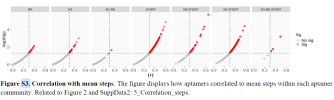
Data S1C: Correlation with mean number of steps
In our main analysis, we used SF-36 Physical Functioning (SF-36PF) as a proxy for physical activity, reasoning that lower SF-36PF scores would likely reflect reduced activity and thus potential deconditioning. The broad proteomic changes observed in ME/CFS that were unrelated to SF-36PF therefore suggested that these changes were not driven by reduced activity or deconditioning.
To further address this point, we performed an additional analysis using mean daily step count (per 24h), which provides a more direct measure of physical activity. We found that a large fraction of aptamers correlating with SF-36PF also correlated with mean step count, confirming that SF-36PF is a good surrogate for activity level. Importantly, the main proteomic changes distinguishing ME/CFS from controls remained unrelated to either SF-36PF or step count, supporting that these changes are not primarily driven by deconditioning.
We acknowledge that reduced activity can have negative physiological effects; however, our findings suggest that these effects are largely separate from the disease-specific serum proteome alterations observed in ME/CFS.
To further assess potential associations with the metabolic context and physical function, we correlated ME/CFS diagnosis, SF-36 Physical Function (SF-36PF), and metabotype (using metabotype M1 as reference17), adjusting for sex, age, BMI, and fasting (Figures 2B–2D; Supplemental Data S2).
Of 924 aptamers associated with ME/CFS, 775 were unique to the diagnosis and enriched for intracellular transport/translation.
Metabotype and SF-36PF influenced 1,015 and 726 aptamers, respectively, with distinct enrichments: metabotype-linked proteins involved hormone secretion and smooth-muscle cell regulation, while SF-36PF-linked proteins related to tissue homeostasis and nervous system development.
A subset of 149 aptamers overlapped with both ME/CFS and either metabotype or SF-36PF, highlighting shared immune-metabolic and extracellular matrix pathways, which may link disease status to metabolic context and clinical severity.
Only five proteins showed joint influence by ME/CFS status, SF-36PF, and metabotype (IL-22, HTRA1, OXCT1, ENPP5, and FAS).
Overall, these results indicate that a substantial proportion of the broad proteomic alterations in ME/CFS cannot be explained by demographic factors or deconditioning, but instead may point to intrinsic disease-associated molecular changes.
Comparison with other proteomic studies
To compare our results with previous work using the same SomaScan platform, we reanalyzed data from Germain et al.29, and Walitt et al.29,30 using a similar analytical pipeline adapted to the available data (STAR Methods; Supplemental Data S7; Document S1: Data S1I, Figures S5 and S6; Tables S10–S13).
In the Germain dataset, 391 aptamers differed between ME/CFS and controls (p < 0.05), of which 122 overlapped with our findings.
In the Walitt dataset, 41 aptamers were altered, with seven overlapping with our data.
While neither dataset demonstrated the broad reduction in intracellular proteins observed here, the Germain data showed a relative increase in membrane and secreted proteins, consistent with our results.
Despite some inter-study variation, likely reflecting differences in ME/CFS case definitions and cohort size, all three studies consistently pointed to immune-related dysregulation.
Our results also align with other independent proteomic investigations showing immune-vascular dysregulation and metabolic involvement, including coagulation and complement pathway changes,47 immune-related differences in plasma and extracellular vesicles,48 mitochondrial and metabolic pathway changes in immune cells,49,50 and aberrant innate/adaptive immune regulation revealed by single-cell and multi-omics analyses.51
Together, these cross-platform findings converge on immune, vascular, and metabolic dysregulation in ME/CFS and strengthen our interpretation of the serum proteome results.
Immune system changes and impaired neutrophil function
Our findings indicate a primarily innate-immune-skewed reduction in granulocyte- and monocyte-associated signatures, contrasting with more variable or elevated lymphoid-cell patterns.
This imbalance may reflect a disturbed immune homeostasis that could contribute to or parallel autoimmune-like mechanisms, although the present data do not directly demonstrate autoimmunity.
Increased pro-inflammatory cytokines associated with T cell dysregulation, together with mixed changes reflecting disturbed immune balance, are hallmarks of many autoimmune conditions.59
The increased inflammatory, coagulation, and complement factors align with previous observations in ME/CFS and long COVID.1,60,61
The substantial reduction of neutrophil-associated proteins may indicate impaired neutrophil maturation or activation.62,63
Elevated complement factors CFD and C6 indicate alternative complement pathway activation, implicated in vasculitis, lupus, dermatomyositis, and autoimmune nephritis.64
Reduced MPO and extracellular histones, which are autoantigens in antineutrophil cytoplasmic antibodies (ANCA)-associated vasculitis, further suggest aberrant neutrophil-complement interplay, although ANCA is not typically reported in ME/CFS.65
Additional evidence includes the presence of autoantibodies and promising studies of antibody-targeting therapies such as immune adsorption and plasma-cell-directed treatments.16,66
Collectively, these findings support a possible autoimmune contribution to ME/CFS pathology.


The fact that most LC cases stem from mild acute cases should have completely shut this nonsense down for good. In a sane world, it would have led to major changes. When you read back at the genesis of the ideology, it's all framed around this, around severe acute illness leaving people ill for weeks, bedbound, and simply not getting back into a normal routine. It's all there, in writing, easy to find.The psycho-behavioural club has never presented any evidence for deconditioning being a significant factor, and indeed have not even made any serious attempt to robustly test that critical assumption.
Instead, all the evidence is pointing in the opposite direction: that deconditioning is not a critical, let alone defining, factor in this disease.
It ain't patients who are irrational and prejudiced and anti-science.
Yep. The whole thing is a complete fiction, spun from the finest of rhetorical threads, and powered entirely by their obsession with proving psychosomatics is actually a Very Important Phenomenon. No really, guys.It was all completely fabricated. Wessely had these cutesy imaginary internal dialogues around it, Sharpe basically threw an example of that in a recent presentation. They made it all up, no one ever even told them those things, they completely made them up to support their imaginary model, but the origin of this lie has been completely swept under the rug.
