Preprint Biological Insights from Genome-Wide Association Studies and Whole Genome Sequencing of [ME/CFS], 2026, Maccallini et al

I’m just wondering if this could join up any dots.

I am wary of suggestions that we can explain ME/CFS just be an imbalance of something like glutamate metabolism. A gene variant that changes glutamate regulation might make neural circuits that use glutamate more likely to flip into an abnormal signalling pattern but there has to be an account of what that flip involves. I think it is likely to be very specific and local within the brain.

And that makes me sceptical of any proposal to try to shift the metabolic balance back with supplements etc..
 
Perhaps we do.

Autoimmune diseases tend to link to HLA-D (MHC Class II) loci. The known T cell dependent diseases - spondarthropathies - tend to link to HLA-B or C. More innate autoinflammatory diseases can link to obscure proteins involved in macrophage or neutrophil activation - the familial fevers.

ME/CFS has a link to BTN2A1, which is involved in innate immune recognition. It is one of the clearest peaks and now seems to be fairly well pinned down to this gene. It might be linked because of a 'non-immune' role in lipid regulation but its role in T cell recognition is much more clearly defined in the literature.

Ok yes sorry I missed mentioning of this gene, like you said it does have a very important role in modulating the immune system https://maayanlab.cloud/Harmonizome/gene/BTN2A1
 
Would lactate be involved?

"Lactate can disturb the neuronal excitation-inhibition balance
Lactate attenuates neurotransmission at glutamatergic and GABAergic synapses•
Lactate increases oxygen consumption, whereas neural activity can even decrease"

And would dimer PKM2 glycolysis be possible switch flip


And could hypoxia cause both lactate toxicity and glutamate synapse interference


"During hypoxia-ischemia, as cellular energy reserves and Na+ gradients fall, increased release and impaired uptake of glutamate mediate a toxic buildup of extracellular glutamate, leading to overstimulation of glutamate receptors and consequent neuronal cell death."
 
This is similar to the case of a patient who suffered from a very severe condition for years, Martin, a German man. He is now mild and continues to improve. His treatment?

First, LDA, which quickly brought him back to a moderate state, with no further effects after a few months. I had the same experience.
He was sure he had a glutamate problem. Then he tried Pregabalin at a very high dose (really very high) every other day and immediately saw an improvement, no more sensation of poisoning or sensitivity to noise and light.
Then he started taking an even higher dose of Lorazepram every day (at least 3 mg). He added Lamotrigine.
He also tried Memantine.

I don't think I'm off-topic and I don't advise anyone to do what he did, especially with Pregabalin and benzodiazepines at such high doses.

He has been living a new life for three years.
 
Would lactate be involved?

"Lactate can disturb the neuronal excitation-inhibition balance
Lactate attenuates neurotransmission at glutamatergic and GABAergic synapses•
Lactate increases oxygen consumption, whereas neural activity can even decrease"

And would dimer PKM2 glycolysis be possible switch flip


And could hypoxia cause both lactate toxicity and glutamate synapse interference


"During hypoxia-ischemia, as cellular energy reserves and Na+ gradients fall, increased release and impaired uptake of glutamate mediate a toxic buildup of extracellular glutamate, leading to overstimulation of glutamate receptors and consequent neuronal cell death."
Could glymphatic system dysregulation cause glutamate toxicity

https://www.mdpi.com/1422-0067/26/23/11524

The glymphatic system (glial–lymphatic) is the lymphatic analog of the brain necessary for the removal of metabolic wastes (e.g., lactate, glutamate, reactive oxygen species, ammonia, and protein aggregates such as tau and β-amyloid) [18,19]. This unique system plays a critical role in brain homeostasis by facilitating cerebrospinal fluid (CSF) and interstitial fluid (ISF) exchange through directional fluid movement via the periarterial and perivenous pathways (Figure 1); here, efflux fluids drain into the meningeal lymphatic vessels and eventually exit from the central nervous system (CNS) to the bloodstream
 
Adverse brain function can be downstream consequences of all sorts of other non-brain systems failing or being sub-par.

Problems with kidney or liver function can really mess with cognition and emotion, for example.

I agree that whatever ME/CFS is must somehow affect brain function. But doesn't mean that the brain is a part of the primary pathology, just that it is affected somewhere in the causal chain.
For sure, it could be a checkpoint in a long chain, causing adjustments to cascade down. Involves prominently doesn't mean "originate from". I've been dealing with stomach issues for years and finally have some medication that sort of works, and it's absurd how just treating stomach acid has an impact on my brain fog and lethargy. It makes no sense at all.
 
I need to catch up with this but it looks very interesting. This is fantastic work @paolo

Really hope it gets the attention it deserves and hope the right people are looking.

Also really gratifying to have some of the things that seemed to be indicated from my experiments and lines of thought pop up. But you know, done properly! Something I could never have achieved

One thing I have wondered about in the past is interferon/glutumate angle, see some papers here. Would be interesting to hear what people think in this context?

 
Last edited:

Intriguing. Everything may be linked to everything in the brain (it more or less is) but it might fit.

I love these medium spiny neurons. It reminds me of the Indian restaurateur down the road who will explain, in an eccentric way, that all dishes can be had hot or medium spicy.

Perhaps it will one day be called:

Disease Affecting Medium Spiny Odd Neurons, Just Add Myalgia.
 
Isn’t the Shisa6 gene supposed to regulate glutamate receptors in response to glutamate levels? I understood that DecodeME showed as almost significative the locus containing Shisa6. I understood that shisa6 allowed the receptor to remain sensitive to the influx of glutamate for longer. I wonder what the consequences would be if the receptor remained sensitive for too long or not long enough.
 
Isn’t the Shisa6 gene supposed to regulate glutamate receptors in response to glutamate levels? I understood that DecodeME showed as almost significative the locus containing Shisa6. I understood that shisa6 allowed the receptor to remain sensitive to the influx of glutamate for longer. I wonder what the consequences would be if the receptor remained sensitive for too long or not long enough.
Yes, good question.

Here’s the locus https://my.locuszoom.org/gwas/894183/region/?chrom=17&start=10402663&end=12402663
And the genecard https://www.genecards.org/cgi-bin/carddisp.pl?gene=SHISA6

It looks like there’s an enhancer hit, although you need to lower the threshold a bit, seems expressed in various cells but a fair bit in the brain and some nerves
 
No. Vasculitis in the brain produces coma. I don't see this being relevant.


The concept of a glymphatic waste system remains speculative and unsatisfactory. Neurotransmitters move around much too fast for it to be relevant anyway I think.

None of these global vascular events seem to me likely to be relevant - we have nothing upstream to explain, nor have they been observed.
Intriguing. Everything may be linked to everything in the brain (it more or less is) but it might fit.

I love these medium spiny neurons. It reminds me of the Indian restaurateur down the road who will explain, in an eccentric way, that all dishes can be had hot or medium spicy.

Perhaps it will one day be called:

Disease Affecting Medium Spiny Odd Neurons, Just Add Myalgia.
Good evening, Professor. Please excuse my question as a concerned novice, but would Daratumumab be justified in cases of problems with these neurons/synapses, etc.?
Do the latest findings (let's be cautious, of course) support Fluge and Mella's findings? We'll know in two years, okay, with SequencEM, okay, but I hope we'll make some progress while we wait for those results.

If it is indeed a brain disease, without degenerative characteristics, and considering the findings discussed in this thread, what would MECFS resemble?
 
Good evening, Professor. Please excuse my question as a concerned novice, but would Daratumumab be justified in cases of problems with these neurons/synapses, etc.?

If the neurons were being influenced by antibodies, yes, otherwise probably no.
Do the latest findings (let's be cautious, of course) support Fluge and Mella's findings? We'll know in two years, okay, with SequencEM, okay, but I hope we'll make some progress while we wait for those results.
They don't really say anything about Fluge and Mella's work. Fluge and Mella might have rightly identified a B cell related mechanism that is more likely to give problems in people with certain genes affecting neuronal susceptibility. They might not. It would be a different part of the story.

If it is indeed a brain disease, without degenerative characteristics, and considering the findings discussed in this thread, what would MECFS resemble?

ME/CFS doesn't resemble anything very closely. It may have analogies of all sorts with various other conditions, but if we are thinking of a pathway that involves an immune trigger and then a mis-setting of a neural regulatory mechanism there are likely to be dozens of steps involved. Similar steps may occur in other diseases, but lined to quite different causes or outcomes.

To give an idea, when I worked out enough about rheumatoid arthritis to think I knew it might respond to rituximab, the simplest model that I could write out that seemed plausible had 55 steps to it. Every step has its relevance. We are dealing with mechanisms that don't fit easily into soundbites!!
 
This is very impressive work. I'm late to this, and am going to have to spend more time on it to understand it better. For example, I'm not following Figure 4 yet.

It occurs to me that the situation with ME/CFS is not just the blinded scientists trying to describe the little bits of the elephant that they can feel, but that they are actually wandering around a waterhole, with the elephants there, but also the zebras and wildebeests and a few warthogs. Certainly that will be the case with the MVP cohort, with its relatively high CFS incidence. It does feel, though, that we are getting closer to identifying at least one of the diseases included under a CFS label.

I note the limitations says 'Cell-type analysis was performed only on brain cells'. Why was that? I can see that a lot of the findings point towards things happening in or around neurons, but neurons aren't just in the brain.

That's an interesting observation about Shisa6 @Axel. Thanks for the links related to that hotblack.
 
Last edited:
Why was that? I can see that a lot of the findings point towards things happening in or around neurons, but neurons aren't just in the brain.
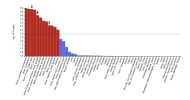
The tissue results largely pointed to the brain which was also reported by the DecodeME preprint and Ponting in his talk. See figure 3. Still might be interesting to try other cell types though I do not expect a hit there.

1779139012080.png
 
I made a separate thread to discuss the eccentric medium spiny neurons (eMSN). These look like a more specific and informative result than synapses, glutamergic neurons, etc.
 
Isn’t the Shisa6 gene supposed to regulate glutamate receptors in response to glutamate levels? I understood that DecodeME showed as almost significative the locus containing Shisa6. I understood that shisa6 allowed the receptor to remain sensitive to the influx of glutamate for longer. I wonder what the consequences would be if the receptor remained sensitive for too long or not long enough.
Here's our thread on the Shisa6 gene
 
To give an idea, when I worked out enough about rheumatoid arthritis to think I knew it might respond to rituximab, the simplest model that I could write out that seemed plausible had 55 steps to it. Every step has its relevance. We are dealing with mechanisms that don't fit easily into soundbites!!
Quotes like this really put a spin on the weird/nonsensical soundbite we got from the Oslo gang, those who got quoted in the context of the Paris psychosomatic Long Covid conference that was interrupted, dismissing the relevance of "a biomedical model", aka as medicine, as merely being "one disease, one cause, one treatment".
 
Back
Top Bottom