Unraveling the genetic susceptibility of irritable bowel syndrome: integrative genome-wide analyses in 845 492 individuals: a diagnostic study
Background
Irritable bowel syndrome (IBS) significantly impacts individuals due to its prevalence and negative effect on quality of life. Current genome-wide association studies (GWAS) have only identified a small number of crucial single nucleotide polymorphisms (SNPs), not fully elucidating IBS’s pathogenesis.
Objective
To identify genomic loci at which common genetic variation influences IBS susceptibility.
Methods
Combining independent cohorts that in total comprise 65 840 cases of IBS and 788 652 controls, the authors performed a meta-analysis of genome-wide association studies (GWAS) of IBS. The authors also carried out gene mapping and pathway enrichment to gain insights into the underlying genes and pathways through which the associated loci contribute to disease susceptibility.
Furthermore, the authors performed transcriptome analysis to deepen their understanding. IBS risk models were developed by combining clinical/lifestyle risk factors with polygenic risk scores (PRS) derived from the GWAS meta-analysis. The authors detect the phenotype association for IBS utilizing PRS-based phenome-wide association (PheWAS) analyses, linkage disequilibrium score regression, and Mendelian randomization.
Results
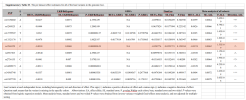
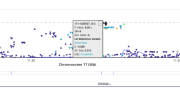
The GWAS meta-analysis identified 10 IBS risk loci, seven of which were novel (rs12755507, rs34209273, rs34365748, rs67427799, rs2587363, rs13321176, rs1546559). Multiple methods identified nine promising IBS candidate gene ( PRRC2A, COP1, CADM2, LRP1B, SUGT1, MED12L, P2RY14, PHF2, SHISA6 ) at 10 GWAS loci.
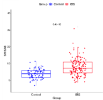
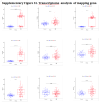
Transcriptome validation also revealed differential expression of these genes. Phenome-wide associations between PRS-IBS and nine traits (neuroticism, diaphragmatic hernia, asthma, diverticulosis, cholelithiasis, depression, insomnia, COPD, and BMI) were identified.
The six diseases (asthma, diaphragmatic hernia, diverticulosis, insomnia major depressive disorder and neuroticism) were found to show genetic association with IBS and only major depressive disorder and neuroticism were found to show causality with IBS.
Conclusion
The authors identified seven novel risk loci for IBS and highlighted the substantial influence on genetic risk harbored. The authors’ findings offer novel insights into etiology and phenotypic association of IBS and lay the foundation for therapeutic targets and interventional strategies.
Web | DOI | PMC | PDF | International Journal of Surgery | Open Access
Huang, Wentao; Zhang, Lijun; Ma, Yuying; Yu, Shiyi; Lyu, Yanlin; Tong, Shuangshuang; Wang, Jiaxuan; Jiang, Rui; Meng, Meijun; Wu, Yanjun; Luo, Ruibang; Qiu, Xinqi; Sha, Weihong; Chen, Hao
Background
Irritable bowel syndrome (IBS) significantly impacts individuals due to its prevalence and negative effect on quality of life. Current genome-wide association studies (GWAS) have only identified a small number of crucial single nucleotide polymorphisms (SNPs), not fully elucidating IBS’s pathogenesis.
Objective
To identify genomic loci at which common genetic variation influences IBS susceptibility.
Methods
Combining independent cohorts that in total comprise 65 840 cases of IBS and 788 652 controls, the authors performed a meta-analysis of genome-wide association studies (GWAS) of IBS. The authors also carried out gene mapping and pathway enrichment to gain insights into the underlying genes and pathways through which the associated loci contribute to disease susceptibility.
Furthermore, the authors performed transcriptome analysis to deepen their understanding. IBS risk models were developed by combining clinical/lifestyle risk factors with polygenic risk scores (PRS) derived from the GWAS meta-analysis. The authors detect the phenotype association for IBS utilizing PRS-based phenome-wide association (PheWAS) analyses, linkage disequilibrium score regression, and Mendelian randomization.
Results
The GWAS meta-analysis identified 10 IBS risk loci, seven of which were novel (rs12755507, rs34209273, rs34365748, rs67427799, rs2587363, rs13321176, rs1546559). Multiple methods identified nine promising IBS candidate gene ( PRRC2A, COP1, CADM2, LRP1B, SUGT1, MED12L, P2RY14, PHF2, SHISA6 ) at 10 GWAS loci.
Transcriptome validation also revealed differential expression of these genes. Phenome-wide associations between PRS-IBS and nine traits (neuroticism, diaphragmatic hernia, asthma, diverticulosis, cholelithiasis, depression, insomnia, COPD, and BMI) were identified.
The six diseases (asthma, diaphragmatic hernia, diverticulosis, insomnia major depressive disorder and neuroticism) were found to show genetic association with IBS and only major depressive disorder and neuroticism were found to show causality with IBS.
Conclusion
The authors identified seven novel risk loci for IBS and highlighted the substantial influence on genetic risk harbored. The authors’ findings offer novel insights into etiology and phenotypic association of IBS and lay the foundation for therapeutic targets and interventional strategies.
Web | DOI | PMC | PDF | International Journal of Surgery | Open Access