
Death* by a thousand facts.ANZMES* are involved in some GP education this weekend...
*ANZMES (Associated NZ ME Society), is our national support and advisory charity for ME.
Edited to add: As shared on their facebook page.

* to disinformation

Death* by a thousand facts.ANZMES* are involved in some GP education this weekend...
*ANZMES (Associated NZ ME Society), is our national support and advisory charity for ME.
Edited to add: As shared on their facebook page.


 .
. 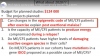
ANZMES asks experts for their recommendations on whether people with ME/CFS (pwME/CFS) should get the COVID-19 vaccine or not.
Dr. Ros Vallings, Howick Health & Medical Centre
COVID-19 can be a severe and debilitating disease which can lead to multi-organ damage and death in some people. If someone with ME/CFS catches COVID-19 it is likely to cause a significant exacerbation or relapse of their ME/CFS symptoms, as has been shown in the UK. Yet those experiencing a heightened immune system may be protected against catching viruses – although there is no guarantee. The Pfizer vaccine that is being administered in New Zealand is well studied and exceptionally safe and provides a high degree of protection. However, as with any vaccine some people with ME/CFS have an exacerbation of symptoms which overlap with the commonly reported side effects of the COVID-19 vaccines. A small percentage of people may have a more severe exacerbation of symptoms. I have many of my ME/CFS patients immunised now and not one has had a bad reaction to date. This may be because they used Dr. Nancy Klimas’ antihistamine suggestions which I recommend. I also provide a prescription for prednisone for patients to use if they get sicker, but it is not to be used long-term, and so far only one patient has needed it. For more information please read the recommendations on Dr. Vallings’ website: http://www.drvallings.co.nz/news-items/covid-19-vaccines
Emeritus Professor Warren Tate
I’m a strong advocate for vaccination of any family household member who is not health compromised as this provides protection for the unvaccinated, however I propose a cautious approach for all people with ME/CFS. This is because although the predictive analyses of immunologists might suggest the risk of ongoing relapse (of ME/CFS symptomatology) is small, the patient self-reporting suggests the risk is significant. For example if the person with ME/CFS experiences severe food allergies, chemical hypersensitivities, is prone to frequent debilitating relapses and has a significant compromised level of activity, then I would suspect a much higher risk in comparison to pwME/CFS who do not have these extra dimensions of the illness. In two international studies that came across my desk in regards to the Pfizer vaccine (administered here in NZ) after one dose, 10% reported severe effects on ME/CFS, 40% had mild-moderate effects and 50% had no effects. After the second dose, again 50% had no significant effects, yet nearly 30% had severe effects for at least one month, and 20% had moderate effects. Another study has reported 30% severe effects after the first dose. Anecdotally, of the three women in my university group who had the vaccine, one required hospitalisation for IV fluids after 2 weeks of being severely affected, another had two weeks of a moderate relapse and the third woman had no significant side effects. This seems to mirror the international patient reporting of the much larger groups, and made their results seem genuine to me. I believe therefore that I cannot provide a blanket recommendation for or against the vaccine, but rather believe that each individual should weigh up the decision based on their personal ME/CFS history. If pwME/CFS decide to vaccinate then I would suggest following Dr. Klimas’ antihistamine protocol.
Dr. Nancy Klimas, Nova Southeastern University
COVID kills people. It kills people with over-activated and damaged immune systems preferentially - and that is what ME/CFS is all about. So while there certainly is a risk for an ME relapse with these hyper reactive vaccines, you have to weigh the possibility of an ME relapse against the risk of death from COVID-19. For more information and for advice for people with mast cell activation syndrome visit: https://www.nova.edu/nim/To-Vaccinate-or-Not-with-MECFS.html
In conclusion from our experts
There is not a definitive answer about whether pwME/CFS should or should not get the COVID-19 vaccine. As the condition is highly individualised, so too, is the response to the vaccine. Some have no effects, some only the expected immune response, some experience improvement of symptoms, and some a worsening of symptoms or a relapse. So what is appropriate for the individual is best considered in conjunction with your GP or specialist who has access to your personal medical history.
Should you choose to vaccinate
Center for Disease Control (CDC) states that people with ME/CFS or fibromyalgia should rest for several days before and after the vaccine, as anecdotal information shows that symptoms can resurface while the immune system is activated. The CDC provide information on what to expect before and after your vaccine: https://www.cdc.gov/coronavirus/2019-ncov/vaccines/expect/after.html
Dr. Lucinda Bateman, Bateman Horne Center states that pwME/CFS should be rested and stable prior to the vaccine, and plan on resting/relaxing for at least 72 hours afterward. Supportive care will include anything you usually do for flu symptoms, PEM, allergy flares, worsened orthostatic intolerance, etc. If anything, including a vaccine, makes you sick enough that you are unable to maintain adequate fluids and nutrition, or results in fluid and electrolyte losses (sweating, diarrhea, etc), it is always appropriate to seek IV fluids as a primary intervention.
Antihistamine Usage
Dr. Klimas suggests that before the vaccine, make sure you are taking enough antioxidants, particularly NAC or glutathione and CoQ10. Take an antihistamine before and for several days after the vaccine – the strongest one you can tolerate. Please note: that if you take the vaccine you should take the whole recommended dose, and the current vaccine Pfizer should be administered twice.
As always when dealing with medications and supplements please only do so under the direction of your General Practitioner or Medical Professional to ensure correct dosage administration and to avoid contraindications with your existing medications and personal medical history.
The experience Dr. Brooks refers to is that of Prof. Tate, winner of the Rutherford medal in 2010, who has been investigating ME/CFS since 2012, and has identified molecular signatures of ME/CFS. As co-investigators for this new study, Dr. Brooks and her team are conducting immunological studies and Prof. Tate and his team are performing molecular studies of Long COVID and its relationship to ME/CFS. Prof. Tate aims to perform molecular analyses on a subgroup of this study in addition to providing samples from his ME/CFS patient group for analysis of immunological status before and after vaccination. In addition to being an experienced cellular immunologist, Dr. Brooks is also Director of Auckland Cytometry, the core facility which houses the leading-edge technologies necessary to perform these critical analyses.
How will this research benefit the ME/CFS community? Since a certain percentage of people with Long COVID symptoms also fit the diagnostic criteria for ME/CFS and many go on to receive this diagnosis as well, the samples analysed as part of this study will be beneficial in tracking early onset ME/CFS in comparison to Long COVID. It is hoped that the researchers will be able to identify key markers of immune dysfunction, especially as a percentage of samples will be obtained at very early stages of disease. This investigation into the unique immune signature of ME/CFS and Long COVID has the potential to unveil a biomarker specific to these conditions. As Dr. Brooks’ core expertise is with advanced flow cytometry, this research will screen for over 100 immune cell biomarkers which to date supersedes any previously screened for in ME/CFS research. “This will be a world first.” states Dr. Brooks.
Of course, there's some truth in that, but it makes it sound as if we are sitting around, without lives, until someone comes along to lift us up, and, when they do, we recover. It patronisingly makes us sound like damsels in distress. It suggests nothing about how it is often possible to live a worthwhile life while waiting for the breakthrough in medical knowledge, nor does it recognise the huge part people with ME/CFS have played in progressing the understanding of the illness and fighting misinformation.The ANZMES logo, is the New Zealand Albatross. This is symbolic as these birds need a good strong wind to lift them up so that they can fly; rather like the help sufferers need from others in order to begin their lives again.

From the ANZMES website, about the research.
As a side note, I found the explanation of the ANZMES logo on the website, beside the detail about the research, rather sad:
Of course, there's some truth in that, but it makes it sound as if we are sitting around, without lives, until someone comes along to lift us up, and, when they do, we recover. It patronisingly makes us sound like damsels in distress. It suggests nothing about how it is often possible to live a worthwhile life while waiting for the breakthrough in medical knowledge, nor does it recognise the huge part people with ME/CFS have played in progressing the understanding of the illness and fighting misinformation.
When I first realised the bird in the ANZMES logo was an albatross I immediately associated this with the saying 'having an albatross around one's neck' - which ME could certainly qualify as - but it still struck me as a weird symbol to choose, especially as it leaves open the unfortunate interpretation of the pwME being an albatross around somebody else's neck. No thanks!!!the ANZMES logo
Tēnā koutou katoa
I am writing to you as the newly elected president of ANZMES, to let you know I have created this new email address (president@anzmes.org.nz) and to say hello!
Firstly, thank you to those who participated in voting in the new committee and office bearers. I am honoured to have been asked to step into the role and am grateful for the confidence vote. I look forward to serving the community to address the needs of people with ME/CFS, their families, carers, medical professionals and of course all the regional support organisations and groups - all of you. I see us all working together to further the cause to make positive impactful changes in the lives of all those affected by this debilitating condition.
I have a background in marketing and management as well as non-profit fundraising both here in NZ and in the UK. I have post graduate qualifications in health science alongside undergrad degrees in education and psychology. I endeavour to utilise these skills/knowledge in the role of president and I will update you in due course with plans for the future. I have ME/CFS & FM as well as several auto-immune disorders so I fully understand the needs of our community.
Heather Wilson has stepped into the vice president role to help with a smooth transition through this change of leadership. Re-elected members are Steve Murray, Claire Verryt, Dr. Anna Brooks, Wendy Matthews, Dr. Rosamund Vallings, Lisa Thomas, Suzanne Duffy, and Dr. Ken Jolly, with Dr. Sarah Dalziel as ex-officio.
Moving forward we'd love to have more representatives from each regional group/organisation on committee, but if this isn't possible, I am here to provide an open channel for your ideas, to address your needs, and to ensure that we are all working in the best possible way for the whole community. So please feel free to email me any time.
I have a dim feeling I heard that her daughter is taking over? Does anyone know for sure? And if so, what she's like?Dr Vallings is retiring - not sure exactly when but if not already, then soon…


Know M.E. the podcast where guest speakers talk about pressing issues surrounding Myalgic Encephalomyelitis/Chronic Fatigue Syndrome (ME/CFS) and Post COVID Conditions. Join researchers, clinicians, and patient advocates as we take a deep dive into the most recent, evidence-based information, so that you too can know M.E. In today's bonus episode:
ANZMES president Fiona Charlton speaks with Dr. Neera Jain and Kate Waterworth about ME/CFS, disability, health equity, and the ANZMES petition to reclassify ME/CFS as a disability.
A full transcript of today's episode can be found here: https://docs.google.com/document/d/1n...
00:00 Series Introduction
00:24 Episode Introduction
00:42 Speaker Introduction
02:14 ANZMES petition
04:48 How is disability understood socially and historically?
07:14 What is the current Aotearoa context?
10:49 What are the significant inequities to access of healthcare for people with long term conditions and disability?
17:33 Is it important for funding, services, and policies to cater for people with ME and long COVID?
20:56 Whaikaha formation
21:33 What are the biggest barriers for health equity?
23:07 Ableism 25:49 UN Report
26:58 Historical context of ME/CFS 27:24 Legitimising ME/CFS
27:44 Societal stigma around work productivity
29:28 Vocational rehabilitation
31:28 Next steps
34:04 Conclusion
34:45 Outro
