Metabolic conditions and the Liver

mariovitali

Senior Member (Voting Rights)
I wanted to start a thread that is looking to potential information after I came across a PDF which I will link below. I do not know if -looking at the associations below- it is warranted that patients are screened for such conditions. Recall that @Chris Ponting study identified "Liver disease" as a condition.

Link : https://www.iembase.org/gamuts/store/docs/Liver_disorders_in_inherited_metabolic_disorders.pdf

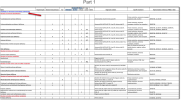
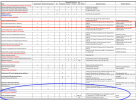
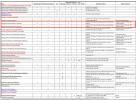
The PDF has several entries related to nitrogen metabolism, Porphyria, Hemochromatosis, Wilson disease, Carnitine Palmitoyltransferase deficiency and many others. I provide several examples below. @ME/CFS Science Blog what do you think ? This could be a tool for diagnosis or helping in differential diagnosis ?

1. From the PDF : Nitrogen metabolism is being looked by @MelbME and the OMF.
1766060711681.png

2. Hemochromatosis was mentioned on the HFE gene listed in the GWAS study. There are cases of patients who also found they have Wilson's disease (mentioned in forums).



1766060762399.png

3. We then have Porphyria, note the Hemin entry below :
1766060882720.png

and relevant post from MEAssociation (note that Porphyria is mentioned) :

Screenshot 2025-12-18 at 14.31.54.png

4. Finally Carnitine Palmitoyltransferase deficiency :
1766061501739.png

and

1766061527428.png
 
Posts moved from: Genetic similarities between ME/CFS and other diseases


I spoke with a patient just yesterday. He mentioned that he has elevated ALP (Liver-related enzyme). Another patient -a psychiatrist- , got COVID19 then LongCOVID and now he has symptoms similar to Fibromyalgia. He contacted me because he found to have elevated blood ammonia (=impacts the liver). He also has Gilbert's.

Question : Should elevated ammonia be dismissed as an offending factor, simply because not every patient has it? This is what we are discussing here.

Do I believe that the liver is the only responsible factor ? absolutely not. But it should not be dismissed out of the picture because "many people have liver problems and they do not have ME/CFS"

We could see insulin resistance and liver disease that @Chris Ponting' s study identified as factors that set the stage along with other factors. And I believe that synapses are one of them and this is where @paolo study excelled. So we have a kind of a perfect storm taking place : metabolic+immune+neural.

Also, we should not dismiss findings of the DecodeME study so easily and what could they suggest. They imply issues with vesicle trafficking, ER-golgi transport, organelle quality control and autophagy among others. Question : Do these concepts connect with synaptic function? If yes, what are the implications on the synapses if we have failure of these concepts upstream ?

Are we sure that we have checked everything ? Did we have an efferocytosis assay done for ME/CFS after all of these years?

Jack Hadflield, previously CEO of Amatica Health posts about a test that costs more than 1K dollars (yes I know what people think about their methodology). At the same time, he has elevated liver enzymes ever since he got COVID19 :


Screenshot 2026-05-25 at 08.45.33.png
 
Last edited by a moderator:
Question : Should elevated ammonia be dismissed as an offending factor, simply because not every patient has it? This is what we are discussing here.

In simple terms, yes it should.

In looking for "ME/CFS" we are looking for some common element to pathogenesis that justifies having this syndrome name, which is there because we suspect such a common element.

If elevated ammonia is not this common element, or part of a common sequence of elements, it is not 'the offending factor'. It might be one of several ways to feed in to such an offending factor but it is not the offending factor we are looking for.

Statistical shifts in values are never going to give us 'offending fctors' if many of the values are in the normal range. They may provide invaluable indirect or circumstantial eviedence of an offending factor nearby but no more than that.
 
In simple terms, yes it should.

In looking for "ME/CFS" we are looking for some common element to pathogenesis that justifies having this syndrome name, which is there because we suspect such a common element.

If elevated ammonia is not this common element, or part of a common sequence of elements, it is not 'the offending factor'. It might be one of several ways to feed in to such an offending factor but it is not the offending factor we are looking for.

Statistical shifts in values are never going to give us 'offending fctors' if many of the values are in the normal range. They may provide invaluable indirect or circumstantial eviedence of an offending factor nearby but no more than that.

Elevated ammonia should be dismissed as the universal offending factor in ME/CFS. But it should not be dismissed as biologically irrelevant in a subgroup. Are you suggesting this may not be the case?

if elevated ammonia is not present in most patients, then it is probably not the common causal element that defines ME/CFS but It may be one of several routes feeding into a more central pathology. In complex diseases, many important mechanisms are not present as abnormal lab values in every patient, correct?

In other words, ammonia is unlikely to be the universal cause of ME/CFS, but elevated ammonia or related urea-cycle/liver/nitrogen-handling abnormalities could be a subgroup signal or a clue to a common recovery-failure pathway that is responsible for PEM.

In relation to DecodeME, the same logic applies. RABGAP1L, KLHL20, ARFGEF2-like trafficking biology, autophagy, Golgi/endosome transport, immune signaling, and synaptic development are not “the biomarker” either. But they may point toward a network-level vulnerability. Are we able to dismiss this possibility and focus just to neurons?
 
Elevated ammonia should be dismissed as the universal offending factor in ME/CFS. But it should not be dismissed as biologically irrelevant in a subgroup.

I think those were the points I was making @mariovitali.
But we are looking for the universal offending factor. If there isn't one then the name ME/CFS was a mistake.

And to be honest I doubt that more than 1% of people with ME/CFS have a clinically relevant elevation in ammonia. 5% will have a statistically 'raised' level just because that is how it is defined. I have seen no evidence for even a trend on published studies.
 
I think those were the points I was making @mariovitali.
But we are looking for the universal offending factor. If there isn't one then the name ME/CFS was a mistake.

Is it reasonable to look for a universal offending factor in a polygenic disease (I believe Chris Ponting mentioned that many times)? Unless the results of this analysis suggest that ME/CFS is not a polygenic disease.

Talking about names, I really do not care whether we have been calling it in a wrong way and I believe that many patients feel the same. If the common offending factor is metabolic disruption that takes place via different routes be it a viral infection, chemical exposure to organophosphates or even intense stress then we could name it "Post-metabolic disruption syndrome".

Let's end the discussion here for the sake of this thread, I am sure that readers by now get the point.
 
Is it reasonable to look for a universal offending factor in a polygenic disease (I believe Chris Ponting mentioned that many times)?

Yes, if we think this is a distinct disease then by definition we think that there is some universal offending process stage. For rheumatoid arthritis that is widespread small immune complex based macrophage activation. There may be a variety of immunoglobulins comlexing and the outcome can be very varied but identifying a single central step justifies the idea that RA is a distinct syndrome.

The universal offending step need not be at the beginning nor at the end - it can be anywhere. Hypertension is another good example - the easiest because it is defined as the mediating step of high blood pressure. Diabetes is another good one - failure of glucose control.

If ME/CFS is a term worth having then there ought to be soeme step universal to all cases.

Being polygenic does not matter. RA is polygenic. Hypertension is polygenic.
If the common offending factor is metabolic disruption

But what is 'disruption' To me it is one of those vague, rather empotive terms that is not precise enough causally to be useful scientifically. The common step might be a generalised metabolic shift like in diabetes but to be honest I find it hard to see how you explain the ME/CFS clinical picture that way when we don't have any consistent findings out of range at present.
 
Back
Top Bottom