Metabolic adaptation and fragility in healthy 3-D in vitro skeletal muscle tissues exposed to [CFS] and Long COVID-19 sera, 2025, Mughal+

I'm not a huge fan of Cort's 'everything is true even conflicting things' approach to MECFS science but the below quote sounds quite a good idea to me:
Aren’t there thousands of components in the blood, and umpteen different assays to test?

How do you pick the relevant ones? Sounds like a pipe dream, but someone with much more knowledge than me might be able to chime in?
 
Aren’t there thousands of components in the blood, and umpteen different assays to test?

How do you pick the relevant ones? Sounds like a pipe dream, but someone with much more knowledge than me might be able to chime in?
I don't know much either, but I thought there was a way to filter molecules by size. So you'd split patient serum into large molecules and small molecules, and see which of these still has an effect on the muscle like in this study. Then split the one that does by size again and try again. It might at least narrow it down a bit.
 
So you'd split patient serum into large molecules and small molecules, and see which of these still has an effect on the muscle like in this study. Then split the one that does by size again and try again.

In software development a similar concept is called a binary search — you split the search field in two, then see if what you're looking for is on the left or right side according to a test (requires the items to be sortable by a value, in this case mass). Then repeat that recursively until you find the item you're looking for.


In a video a year or so ago Ron Davis mentioned a potential plan to do this (I think with some kind of advanced mass spectrometry?) to find the "something in the blood". I forget what technical name he called it, ("bisecting"?), but yes that's (simplified) how they planned to look for the unknown factor.


It does seem like if this study's findings are verified then some kind of search by elimination makes sense and could offer clues.
 
Last edited:
I recently read a news item about an AI designed to find patterns in really complex systems. Sounds like a good thing for figuring out ME. However, the problem is providing all the necessary data on the components of the system. Some factors are easily measured in plasma, but some are hidden in vesicles that travel only a short distance, or which have a very short half-life, so they might be missed. I think that AI would also need the equations describing how each type of cell responds to inputs. Given the rate of new discoveries of cell functions, I expect there isn't enough data for that AI, and there's probably a fair amount of false data (bad experiments, or results that have been applied to cells in general when they only applied to specific types under specific conditions).

So, that "something in the blood" can't be used in theories if you don't know what it actually is, and that's just one "something" that is an unknown for ME.
 
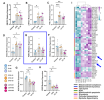
PDK4 and PDHA1 were upregulated in the tissues exposed to ME/CFS serum in this study:
image.psd(8).png

Figure 4. qRT-PCR relative gene expressions of 48 h tissue cohort. (A) SMYD1 (B) ATP2A1( C) FHL1 (D) ENO3 (E) PDK4 (F) PDK3 (G) NOG and (H) ESR2. (I) Heatmap of differentially expressed genes from RNASeq. Statistical analyses: biological replicates: ME/CFS and control, n = 3 sera per condition. Technical replicates: n = 4 tissues per serum for all analyses. Data show the mean ± s.d. Statistical analysis: one-way ANOVA with Tukey’s post hoc test *P ⩽ 0.05; **P ⩽ 0.01.


They were also upregulated in another study:

Metabolic profiling indicates impaired pyruvate dehydrogenase function in myalgic encephalopathy/chronic fatigue syndrome, 2016, Fluge et al
To investigate whether the observed effects on the serum amino acid profile in ME/CFS patients could be explained by changes in PDH function, we compared mRNA levels of PDH-related genes in PBMCs from nonfasting ME/CFS patients and nonfasting healthy controls (Figure 3). We found significantly increased mRNA expression in ME/CFS patients of the inhibitory kinases PDK1 (P = 0.002), PDK2 (P = 0.022), and PDK4 (P = 0.006), whereas PDK3 was unchanged (Figure 3, A–D).
Pyruvate dehydrogenase E1α (PDHA) mRNA was slightly upregulated in ME/CFS patients (P = 0.037) (Figure 3G).

Though PDK4 was downregulated in the muscle in another study:

Transcription Profile Analysis of Vastus Lateralis Muscle from Patients with Chronic Fatigue Syndrome, 2009, Pietrangelo et al.
DEGs in both female and both male patients —

Upregulated
Downregulated
 
Back
Top Bottom