Long COVID Treatment Guide (Patient-Led Research Collaborative & RTHM)

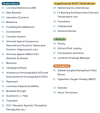
A long list of treatments presented as if they may be helpful. Treatments were selected for inclusion based on if they were highly rated in the TREATME study, with some other supporting evidence added.
This Long COVID treatment guide is meant to spark meaningful conversations with patients and their clinicians about potential treatment options that could become part of a personalized care plan.
We chose the treatments in this guide using a combination of clinical evidence (reviewed up until Nov 2025), observed real-world effectiveness, and experience treating people with Long COVID. We focused on treatment options from the Harvard/Stanford TREATME Study (PMID: 40627388) that at least 20% of participants with Long COVID reported moderate to substantial benefit.
Additionally, we included treatments that show meaningful promise in clinical practice, or that have shown benefit in other infection-associated chronic conditions.


Probably helpful for RTHM's business:

Edit: Added quotes and made wording more accurate.
 
Last edited:
The paragraph describing RTHM at the bottom:
RTHM is a pioneering telehealth clinic and HIPAA-compliant intelligence platform dedicated to complex chronic illnesses like Long COVID, ME/CFS, POTS, and MCAS, offering personalized treatment suggestions, diagnostic paths, symptom tracking, and care team collaboration powered by the latest research. Cofounders Dr. Ryan Kellogg and Dr. Jennifer Curtin drew from their personal journeys through dismissed symptoms and scarce answers in a broken system. By blending their lived experiences and clinical expertise, they transformed a vision for accessible, science-driven care into a growing community and medical home for complex illnesses.

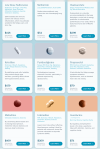
They don't seem to mention that they prescribe medications in the list of services they offer.
 
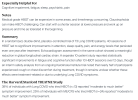
Just as an example, here's the entry for HBOT


So, it leads with a 'randomised, double-blind, placebo-controlled trial of 73 Long covid patients, 40 sessions of HBOT led to significant improvements in attention, sleep quality, pain, and energy levels'.

The forum thread for the study is here.
Turns out, only 40 patients were randomised to HBOT, and only 31 of them contributed data to the evaluation. Gains were typically small. For SF36 Physical functioning, the HBOT group's 60.3 increased to 63 (not significant), while the placebo group's increased from 50.7 to 58.6 (significant).

Even more damning, every single author had a major conflict of interest. They are part of a company rolling out HBOT clinics worldwide.
Leonid Schneider (data sleuth & scientific integrity journalist) has flagged this study because the authors have previously been involved in scientific fraud. The owner of the company, Dr Schai Efrati, has previously made claims that HBOT is an effective treatment for many conditions.
Importantly, Schneider spotted that 11% of the patients in the intervention group had been hospitalized for Covid while that number rose to 22% in the control group.


We have threads on other studies of HBOT:

Here are some comments on one that actually found and reported 'no significant effect' of HBOT.
After treatment, there were no significant differences in subjective symptoms, functional scores, and cognitive performance between any groups.

The response to treatment was highly variable, with some patients in even the ‘placebo’ group D reporting a significant improvement in their well-being. This was not reflected in any objective outcome scores. No subgroups of patients responded better to any of the treatments.

Conclusions
There was no significant effect from different doses of oxygen in a hyperbaric chamber. It is possible that the very modest improvements reported in other studies were due to a placebo effect. Claims that HBOT has a significant effect on Long COVID need further investigation before indiscriminately prescribing or promoting HBOT.

And here's a study that we didn't think much of:
Why are there so many HBOT trials with no proper control group?
The results are seriously unimpressive:
They excluded the 7/37 participants who dropped out
They do not compare results to a control group
The participants received 40 sessions, which seems quite a lot

And still the improvement was only 6.3 points on the SF-36 PF (a clinically meaningful improvement was defined as 10 points)
So it looks like the trial strongly showed that hyperbaric oxygen therapy probably doesn't work in ME/CFS.


The evidence does not suggest that HBOT is of any use for ME/CFS. We've seen a patient report of HBOT treatment - 40 sessions is exhausting and expensive. The promotion of this therapy in the Long Covid Treatment Guide is unwarranted and unethical. ME/CFS already robs so much of our capacity to do the things we want, and our wealth. And here is this guide, encouraging people to waste their remaining time and money.

It makes me feel angry. The authors of the guide probably feel that they have done something useful. They have not.
 
It’s wild that’s there’s enough people with chronic illnesses that there is a viable “Hims” business model.

Theres even an AI integration:

Grifting to new highs
 
Last edited by a moderator:
Back
Top Bottom