Latent class analysis of a heterogeneous international sample of patients with myalgic encephalomyelitis/chronic fatigue syndrome (Leonard Jason team)

Dolphin

Senior Member (Voting Rights)
https://www.tandfonline.com/doi/full/10.1080/21641846.2018.1494530

Original Articles
Latent class analysis of a heterogeneous international sample of patients with myalgic encephalomyelitis/chronic fatigue syndrome
Kayla A. Huber , Madison Sunnquist & Leonard A. Jason
Received 15 May 2018, Accepted 26 Jun 2018, Published online: 04 Jul 2018

ABSTRACT
Background: Individuals with myalgic encephalomyelitis/chronic fatigue syndrome (ME/CFS) routinely display differences in symptomatology, as well as illness course, onset, duration, and functional disability. Given such diversity, previous work has attempted to identify symptom-based ME/CFS subtypes. However, results have been inconsistent.

Purpose: This study sought to elucidate potential subtypes of ME/CFS as well as explore the impact of subtype membership on health functioning.

Methods: Twelve non-core (i.e. less frequently endorsed) symptoms were included in a latent class analysis of 1,210 adults with ME/CFS. Demographic and illness-related predictors of class membership were evaluated with a multinomial logistic regression. ANOVAs were then performed to determine if there were significant differences across class on the eight subscales of the Short-Form Health Survey (SF-36).

Results: A six-class solution was selected, which consisted of one class that was likely to endorse all non-core symptoms, one class that was unlikely to endorse any non-core symptoms, and four classes that were likely to endorse either one or two non-core symptom domains (i.e. circulatory/neuroendocrine impairment, orthostatic intolerance, and gastro-intestinal distress). Significant functioning differences by class were present for all SF-36 subscales.

Conclusions: These results are suggestive of subtypes of ME/CFS and, if replicated, may assist physicians in providing tailored treatment to patients and allow researchers to form more homogeneous samples.

KEYWORDS: Myalgic encephalomyelitis, chronic fatigue syndrome, subtypes, latent class analysis, health functioning

Additional information
Funding
This work was supported by the Eunice Kennedy Shriver National Institute of Child Health and Human Development under [grant number HD073308].
 
I found this wording questionable: "feeling hot/cold for no reason". I'm sure there is a reason! I get very hot after doing an activity for a while, and suspect that it's due to my delayed adjustment mechanisms. It stops after I've stopped the activity for about 5 minutes.
 
I haven't read the full paper but do they note duration of illness anywhere?; in my experience you can develop 'new' symptoms and older symptoms can decline in severity as time goes on (possibly due to better management).
So I don't think this approach to sub-sets particularly helpful.
 
I've just read through the paper and am dubious about the whole enterprise. I don't criticise the effort or the intention, which I am sure is good, but I find it odd that they don't seem to take duration or current severity of illness into account as an important and possibly confounding factors to the whole enterprise. Unless I've missed something, which is entirely possible.

For example, as my illness has declined through mild and moderate to fairly severe, I've acquired extra symptoms along the way and some have become more severe. But I'm still the same person with the same illness... Hmm. Not sure.
 
Participants who reported on the DSQ that they experienced a symptom at least half the time and of at least moderate severity in the past six months were classed as having that symptom (i.e. if frequency and severity were greater than or equal to 2). Previous work has demonstrated that a frequency/severity threshold of 2/2 is effective in reducing the likelihood of misclassification [29].
So people who had the symptom some of the time were included with those who had it none of the time.
 
I don't understand the details but the authors had different options to choose from. The one they chose wasn't the best on all measures.
Figure 1 plots the AIC, BIC, and SABIC for each class solution. All three criteria displayed a steep decline from one to two classes. From classes three to eight, the AIC and SABIC decreased at a fairly constant rate, while the BIC reached a minimum at six classes. Table 2 displays additional fit statistics for each model. Only the two class model met the recommended lower bound for entropy (e.g. 0.80 [31]), a measure of class separation, while the remaining models had entropy values between 0.72 and 0.76. Finally, the models were compared on the basis of significance tests derived from two likelihood ratio tests. Only the two, four, five, and six class models had p-values less than 0.05, indicating that the two-class model better explains the data than one-class model, the four-class better than the three-class, and so on.

We chose to interpret a six-class solution, as it minimized the BIC, was favorable to models with fewer classes, and resulted in interpretable classes (i.e. classes with content validity).
 
I have to wonder with at least some these particular symptoms, how accurately people are reporting them.

People could concentrate on some symptoms more than others.

For example, I remember being more conscious of my heartbeat previously but now I don't pay much attention to it so might say that I don't have an irregular heartbeat, particularly after having normal ECGs.

This could be particularly important if people concentrate on particular types of symptoms.

I avoid standing as much as possible, so don't have as much dizziness as previously.
 
Class predictors and characteristics

In order to examine predictors of class membership, an exploratory multinomial logistic regression was performed using eight relevant demographic and illness-related variables, including: gender (male, female), race (White, non-White), Hispanic or Latinx origin (yes, no), education (high school or less, partial or full college, graduate school), work status (on disability, student/homemaker, retired, unemployed, working part- or full-time), how long ago fatigue began (6–12 months, 1–2 years, longer than 2 years, since childhood or adolescence), and mode of onset (both stress and infectious, only stress, only infectious, neither stress nor infectious).

Likelihood ratio tests determined that gender, race, Latinx or Hispanic origin, and mode of onset were not significant predictors of class membership.

However, education (p < .001), work status (p < .001), illness course (p < .001), and how long ago fatigue began (p < .001) were significant predictors of class membership. It should also be noted that a Pearson’s chi-squared test indicated that there were significant differences in class assignment by study sample (X2 (20, N = 1210) = 152.64, p < .001). The BioBank sample placed more individuals into Class 6 and the Norway 1 sample placed less individuals into Class 6 than would be expected, implying that the Norway 1 recruitment methods resulted in a generally more symptomatic group of ME/CFS patients (and vice versa for BioBank).

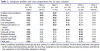
Regression results indicated that, relative to Class 6, Classes 1, 3, and 5 were more likely to have a high school diploma or less (p < .001, p = .04, and p = .01, respectively), while Class 3 was less likely to have a college degree or some college education (p = .03). Classes 1–5 were more likely to be on disability than Class 6 (p < .01, p < .01, p = .02, p = .04, and p < .01, respectively) and Class 3 was less likely to be retired (p = .04). Classes 1 and 5 were more likely to endorse a ‘constantly getting worse’ illness course (p = .01 and p = .04, respectively) and Class 1 was less likely to endorse a ‘relapsing and remitting’ course (p = .01). Finally, compared to Class 6, Classes 1 and 4 were more likely to have a fatigue that began 1–2 years ago (p = .05 and p = .01, respectively), while Classes 1 and 5 were less likely to have a fatigue that began longer than 2 years ago (p < .01 and p = .02, respectively). Further inspection of this variable revealed that, across all classes, few individuals stated that their fatigue began 6–12 months ago or 1–2 years ago. Of note were Classes 1 and 5, which had the highest proportion of individuals who had experienced fatigue since childhood or adolescence (24.2% and 18.7%, respectively).
 
Overall, Class 6 (the least symptomatic class) and Class 4 (characterized by circulatory symptoms) demonstrated the highest levels of physical and emotional functioning (see Figure 2).
This seems a common enough finding: the more severe an illness people have, the more symptoms they have.

It was interesting previously when Jason did previous studies where people were divided by severity. There was a difference on virtually every symptom. I think in general summing the scores of all the symptoms could be useful to define severity thresholds or even as illness criteria, but Jason seems to avoid wanting to do that.
 
Our results lend credence to the proposed multi-systemic nature of ME/CFS [2]. The existence of subtypes provides evidence against a uniform presentation of ME/CFS and disputes the validity of diagnostic criteria that require multiple non-core symptoms.
This might put them at odds with supporters of the international consensus criteria, for example.

I think the authors of this study might need to give more specific details to justify this claim e.g. Are these specific symptoms used in a problematic way in other criteria?
 
Last edited:
Furthermore, class membership was associated with various demographic characteristics. Classes that were likely to endorse a large number of the non-core symptoms (Classes 1, 3, and 5) were more likely to have lower levels of educational attainment than the least symptomatic class (Class 6). Previous work has demonstrated how chronic illnesses limit children’s ability to attend school [37] and lead to children being underserved in the educational system [38]. These factors lower their odds of graduating from college [39]. It is a possibility that ME/CFS patients who developed their illness during childhood, or those with more symptoms, experienced greater educational disruption and had increased barriers to academic achievement than those with fewer symptoms.
 
The subtypes presented here, if replicated, may allow researchers to obtain more homogenous samples, enhancing their ability to identify biological markers and replicate study results.

Additionally, awareness of ME/CFS subtypes could improve clinicians’ ability to develop individualized plans of care. For instance, a patient in Class 5 could benefit from home orthostatic training [33] and medicinal methods of modulating temperature in addition to traditional pacing techniques [34].
They do later on go on to say that the classes need to be replicated, so I suppose this is not totally unreasonable. But for the moment, it might be simpler just to treat people by their individual symptoms rather than these speculative classes.

The point with regard to subgrouping research samples may be stronger.

These results, if replicated, may assist physicians in providing tailored treatment to patients, allow researchers to form more homogeneous samples, and aid in the development of empirically derived diagnostic criteria for ME/CFS.
 
It is a little interesting to see the dynamics of applying for disability payments/benefits being discussed in a paper. And though I'm not 100% convinced by all their arguments about prejudice or difficulties, perhaps empirical evidence might show it to be true.

Certainly it seems plausible that somebody with a "relapsing and remitting" illness course might find it more difficult to get disability payments (or alternatively they might be less likely to see the process of applying through, either by not applying at all, or by giving up if they faced difficulties if they then had a good period).

They could have looked at the variable involving a "relapsing and remitting" illness course directly to see if the relationship was stronger or weaker, rather than doing solely relying on the class method.
Class assignment also appeared to have important implications for work status and illness course. As expected, all of the classes characterized by non-core symptom endorsement were more likely to be on disability than Class 6. Other studies of chronic illness have demonstrated that patients with higher levels of functional disability are more likely to be approved for disability benefits [40]. Given the higher degree of physical and mental/social impairment exhibited by individuals with non-core symptoms in the current study, it would be conceivable that they are more likely to apply for and/or obtain government assistance. However, one must also consider the prejudice and difficulties individuals with ME/CFS face when applying for disability [41]. A claimant with ME/CFS may appear to present discrepant information if their self-report form describes their symptoms on ‘bad days,’ but the examining medical practitioner visits on a ‘good day.’ Given the greater likelihood of Class 6 to endorse a ‘relapsing and remitting’ illness course (i.e. having ‘good’ periods with no symptoms alternating with symptomatically ‘bad’ periods), it would not be unusual for this group to have lower levels of disability benefits than classes with more consistent illness trajectories (such as Classes 1 and 5).
 
Back
Top Bottom