nataliezzz
Senior Member (Voting Rights)
Inspiratory Airflow Dynamics During Sleep in Women with Fibromyalgia
Avram R Gold, Francis Dipalo, Morris S Gold, Joan Broderick
https://www.researchgate.net/publication/8541375_Inspiratory_Airflow_Dynamics_During_Sleep_in_Women_with_Fibromyalgia (PDF Available)
Study objectives: To determine whether women with fibromyalgia have inspiratory airflow dynamics during sleep similar to those of women with upper-airway resistance syndrome (UARS).
Design: A descriptive study of consecutive female patients with fibromyalgia.
Setting: An academic sleep disorders center.
Patients or participants: Twenty-eight women with fibromyalgia diagnosed by rheumatologists using established criteria. Fourteen of the women gave a history of snoring, while 4 claimed to snore 'occasionally' and 10 denied snoring. The comparison group comprised 11 women with UARS matched for age and obesity.
Interventions: Eighteen of the 28 women with fibromyalgia and all of the women with UARS had a full-night polysomnogram. All participants had a nasal continuous positive airway pressure (CPAP) study with quantitative monitoring of inspiratory airflow and effort between atmospheric pressure and therapeutic CPAP. Fourteen patients with fibromyalgia and all patients with UARS had a successful determination of pharyngeal critical pressure.
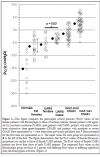
Measurements and results: Twenty-seven of 28 women with fibromyalgia had sleep-disordered breathing. One of the 27 had obstructive sleep apnea hypopnea while 26 had milder inspiratory airflow limitation with arousals. One patient had no apnea or hypopnea or inspiratory airflow limitation during sleep. While the patients were sleeping at atmospheric pressure, apnea-hypopnea index, arousal index, the prevalence of flow-limited breaths, and maximal inspiratory flow were similar between groups. The pharyngeal critical pressure of the patients with fibromyalgia was -6.5 +/- 3.5 cmH2O (mean +/- SD) compared to -5.8 +/- 3.5 cmH2O for patients with UARS (P = .62). Treatment of 14 consecutive patients with nasal CPAP resulted in an improvement in functional symptoms ranging from 23% to 47%, assessed by a validated questionnaire.
Conclusion: Inspiratory airflow limitation is a common inspiratory airflow pattern during sleep in women with fibromyalgia. Our findings are compatible with the hypothesis that inspiratory flow limitation during sleep plays a role in the development of the functional somatic syndromes.
Avram R Gold, Francis Dipalo, Morris S Gold, Joan Broderick
https://www.researchgate.net/publication/8541375_Inspiratory_Airflow_Dynamics_During_Sleep_in_Women_with_Fibromyalgia (PDF Available)
Study objectives: To determine whether women with fibromyalgia have inspiratory airflow dynamics during sleep similar to those of women with upper-airway resistance syndrome (UARS).
Design: A descriptive study of consecutive female patients with fibromyalgia.
Setting: An academic sleep disorders center.
Patients or participants: Twenty-eight women with fibromyalgia diagnosed by rheumatologists using established criteria. Fourteen of the women gave a history of snoring, while 4 claimed to snore 'occasionally' and 10 denied snoring. The comparison group comprised 11 women with UARS matched for age and obesity.
Interventions: Eighteen of the 28 women with fibromyalgia and all of the women with UARS had a full-night polysomnogram. All participants had a nasal continuous positive airway pressure (CPAP) study with quantitative monitoring of inspiratory airflow and effort between atmospheric pressure and therapeutic CPAP. Fourteen patients with fibromyalgia and all patients with UARS had a successful determination of pharyngeal critical pressure.
Measurements and results: Twenty-seven of 28 women with fibromyalgia had sleep-disordered breathing. One of the 27 had obstructive sleep apnea hypopnea while 26 had milder inspiratory airflow limitation with arousals. One patient had no apnea or hypopnea or inspiratory airflow limitation during sleep. While the patients were sleeping at atmospheric pressure, apnea-hypopnea index, arousal index, the prevalence of flow-limited breaths, and maximal inspiratory flow were similar between groups. The pharyngeal critical pressure of the patients with fibromyalgia was -6.5 +/- 3.5 cmH2O (mean +/- SD) compared to -5.8 +/- 3.5 cmH2O for patients with UARS (P = .62). Treatment of 14 consecutive patients with nasal CPAP resulted in an improvement in functional symptoms ranging from 23% to 47%, assessed by a validated questionnaire.
Conclusion: Inspiratory airflow limitation is a common inspiratory airflow pattern during sleep in women with fibromyalgia. Our findings are compatible with the hypothesis that inspiratory flow limitation during sleep plays a role in the development of the functional somatic syndromes.