Preprint Initial findings from the DecodeME genome-wide association study of myalgic encephalomyelitis/chronic fatigue syndrome, 2025, DecodeMe Collaboration

How are we to reconcile the somewhat different genes and tissues of:

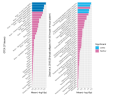
Fig. 3. MAGMA gene-tissue analysis shows statistically significant enrichment of ME/CFS-related genes in all 13 brain tissues.
Fig. 4: Approximate Bayes factor posterior probability (PPH4) that mRNA expression and ME/CFS traits are associated and share a single causal variant.
They're just different methods of predicting the important genes, so the results won't be exactly the same. (Again, keep in mind those 13 genes aren't necessarily related to the brain enrichment.)

The candidate genes were determined based on genes known to be differentially expressed due to a significant variant. The 13 MAGMA genes were basically just the genes with the most highly significant variants nearby.

Lots of the candidate genes in fig. 4 show brain expression, so I don't see a disconnect with the tissue enrichment part.
 
But it's hard to say how many immune-related links we would expect with 8 hits. We would have to random sample some SNP hits or loci, count the number of potential implicated genes and their immune-related pathways. It would be a lot of counting and not entirely objective.
Maybe a better way is to estimate the number of immune genes. I found one at about 1600 genes . https://pubmed.ncbi.nlm.nih.gov/15789058/Let's say 2000 – or about 10% of all human genes.

As far as I can see, quite a lot more than 10% of candidate genes linked to the DecodeME genetic signals are immune genes.

Never better, and more recent estimates than the one I found. But I would be surprised if the proportion of immune genes was much over 10%.
 
and come up with reasonable ideas of what experiments to do next, besides more genetics.
It sounds like an interesting thing to do. But he thought anyone commits resources to do any experiment, it would be useful to have the planned analysis narrow down the like candidates. Which would also presume they have a big impact on the credible hypothesis. Maybe it's because I've been ill so long but waiting some more months to get a clearer view of the likely target seems prudent.
 
So while some or all of the 13 top genes might potentially be wrong, the tissue analysis includes every gene.
Could you clarify that, please? The way it was explained to me, magma looks at the set of 13 genes only, and compares them with other genes. It doesn't look at any other ME/CFS genes. Are you saying that's not the case? I may have misunderstood you or what was explained to me originally.
 
As far as I can see, quite a lot more than 10% of candidate genes linked to the DecodeME genetic signals are immune genes.

I think there may be a problem in that immune genes are much more likely to be polymorphic as part of a 'strategy of diversity' to combat changing pathogen environments. MHC genes can be ludicrously polymorphic. A lot of non-immune genes may have virtually no variants beyond a few rare disease-determining ones.
 
Could you clarify that, please? The way it was explained to me, magma looks at the set of 13 genes only, and compares them with other genes. It doesn't look at any other ME/CFS genes. Are you saying that's not the case? I may have misunderstood you or what was explained to me originally.

MAGMA manual if anyone wants to look.

DecodeME says (bolding added):
Thirteen genes were significantly associated with ME/CFS in a MAGMA gene-based test of 18,637 genes (p < 0.05/18637; Table S4). We considered 54 tissue types and identified significant enrichment of these genes’ expression for 13 (p < 0.05/54), all of which were brain regions (Fig. 3).
"These genes" does seem to imply that they looked at expression of specifically those 13 genes. Maybe it's just the wording.

The bits I understand in the MAGMA papers seem to indicate that the gene-property analysis has a continuous dependent variable Z which is each gene's GWAS score. But I'm out of my depth with the complicated terminology in those papers, so I'm not going to pretend I'm positive that's correct. Hopefully an author or someone more knowledgeable can clarify.
 
@Chris Ponting Would you be kind enough to help us interpret the MAGMA analysis paragraph in the paper (discussion in above post).

Are the 13 genes in table S4 found from gene based analysis only and then tested for tissue, or is the list a gene-tissue enrichment analysis presented as a gene set - table S4 and then tested against all tissue types in Fig 3. Or is fig 3 showing something different? Which analysis is the last sentence on significance referring too - is it a tissue one or non-tissue one?
Thank you. Table S4 genes are from the gene based analysis. And then these genes were tested against the tissue types in Fig 3, which found significant association to 13 brain tissues.
 
Thank you. Table S4 genes are from the gene based analysis. And then these genes were tested against the tissue types in Fig 3, which found significant association to 13 brain tissues.
This non-scientist's understanding would benefit from knowing the variables involved in the gene-set analyses:
Z = B0 + C1.B1 + ... + CnBn + e
 
@Chris Ponting, as arnoble says, can you clarify, was the tissue enrichment based on putting those 13 genes into a discrete gene set and seeing if those 13 genes specifically, without regard for their actual p-values/z-scores, were enriched among all genes expressed in a tissue?

Or was every one of the ~18,000 genes' z-scores considered in the enrichment in a continuous manner (where if genes with high z-scores, which includes, but is not limited to, those top 13, have high expression, and genes with low z-scores have low expression, then the genes are considered to be enriched in the tissue)?

Figure 3 says this was a "MAGMA gene-tissue analysis". Looking at the cited MAGMA paper, the only equations I see for their gene-set analyses have Z as the dependent variable in a linear regression. With Z being:
To perform the gene-set analysis, for each gene g the gene p-value pg computed with the gene analysis is converted to a Z-value Zg = Φ−1(1 – pg), where Φ−1 is the probit function.

Edit: The paper says it used the FUMA platform. FUMA includes MAGMA, so I assume that's where the MAGMA analysis is done. The documentation details the method for tissue analysis, which looks like it uses the z-score for every gene.
 
Last edited:
I think there may be a problem in that immune genes are much more likely to be polymorphic as part of a 'strategy of diversity' to combat changing pathogen environments. MHC genes can be ludicrously polymorphic. A lot of non-immune genes may have virtually no variants beyond a few rare disease-determining ones.
Thanks. There were no HLA/MHC gene flagged as likely candidates in DecodeME. Excluding HLA, do you have any feel for what percentage of human genes are immune ones?
 
There were no HLA/MHC gene flagged as likely candidates in DecodeME.

Well, there was the DQ signal, which is yet to be sorted out and did not gt into the list for what appear to be technical reasons. But I was using MHC simply as an illustration. I suspect there are lots of polymorphisms in receptors in immune system genes - FcRIIIa, common cytokine receptor, etc, and complement factor 4 is very polymorphic, including duplications, mannose binding lectin is quite often absent .... and so on.

I have no idea what proportion we are talking about but because these genes are involved in a a whole lot of alternative partially redundant strategies I suspect that they are generally more polymorphic. That may not matter but I worry that some of these background issues are not fully taken into account.
 
I like the writing style of this paper. When I read through the whole thing, it struck me as very comprehensible considering the subject matter. Unfortunately, a lot of scientific papers are extremely dense and you can only understand them if you're an expert in that tiny field. But Ponting's team did a good job making it accessible. Doctors and scientists from different fields will understand it easily. That's what science should be. It's useless if only your tiny clique can understand it.
 
I'd be really interested in a follow up of the brain enrichment by looking at enrichment in specific brain cell types. The brain finding is interesting, but hard to know what to do with it since the brain is a big place.

The following studies show examples of looking at specific cell-type expression. I'm pretty sure I even saw a study that looked at enrichment based on gene expression at different stages of development (embryo, fetus, etc), though I can't find it now.


A GWAS of tic disorders saw enrichment in brain tissue, then followed up by looking at specific brain cells (though they say they were underpowered with ~10,000 cases to reach any significant cell types using MAGMA):

Screenshot_20250815-101223.png
However, 4 brain tissues (putamen, caudate, nucleus accumbens, and frontal cortex Brodmann area 9) were significant in 1 test type [MAGMA] (Figure S1). This justified follow-up analysis of 39 broad brain cell types, which revealed 4 broad cell types (di- and mesencephalon inhibitory neurons, telencephalon projecting excitatory neurons, hindbrain neurons, and telencephalon projecting inhibitory neurons) that were significant in 1 test type [LDSC] (Figure S1).

A GWAS of panic disorder looked at enrichment in cell types throughout the body:
The single-cell analyses provided compelling evidence for the role of the CNS with limbic system (FDR=3.8×10⁻⁶), granule (FDR=4.0×10⁻⁵), purkinje (FDR=4.4×10⁻⁵), excitatory (FDR=4.4×10⁻⁵) and inhibitory (FDR=4.4×10⁻⁵, 1.5×10⁻⁵) neurons of cerebellum and cerebrum being implicated (Fig 2). We also found significant enrichment for visceral afferent neurons in the lung (FDR=8.2×10⁻⁴), heart (FDR=3.1×10⁻⁴), and eye, including retina amacrine (FDR=4.4×10⁻⁵) and ganglion cells (FDR=4.4×10⁻⁵). Our analysis of the foetal developmental gene expression atlas also implicated glial cell types, notably cerebrum astrocytes (FDR=1.7×10⁻³) (Fig 3).

A GWAS of Alzheimer's found MAGMA enrichment in the spleen. They followed up with individual cell types (though with a non-MAGMA method, I think) and found enrichment in microglia:
MAGMA tissue specificity analysis15 identified spleen (Pbonferroni=0.034) as the GTEx tissue where expression of the significant MAGMA genes was enriched (Supplementary Figure 2, Supplementary Table 3). Spleen was also significant in the previous MAGMA tissue specificity analysis performed in Jansen et al. (2019)8 and is a known contributor to immune function. To investigate enrichment at the cell type level, FUMA cell type analysis16 was performed with a collection of cell types in mouse brain, human brain, and human blood tissue, resulting in 6 single-cell (scRNA-seq) datasets significantly associated, after multiple testing correction (P<5.39×10⁻⁵), with the expression of LOAD-associated genes (Supplementary Figure 4, Supplementary Table 4). The only significant cell type in all six independent scRNA datasets was microglia.

A GWAS of nasopharyngeal carcinoma found CD8 T cells through cell-type specific MAGMA enrichment.
We found that NPC susceptibility was significantly associated with T and NK cells (P = 0.015 for MAGMA and P = 0.045 for RolyPoly; Fig. 2c, Additional file 2: Table S6). Analysis of the cell subtypes identified three suggestively enriched CD8+ T cell populations including cytotoxic CD8+ T cells, exhausted CD8+ T cells, and CD8+ T cells with high expression of interferon-induced genes (Fig. 2c, Additional file 2: Table S6).

A GWAS of hearing loss found enrichment in cell types of the cochlea. Notably, since GTEx doesn't contain expression data for this part of the body, they used mouse expression data.
To show evidence connecting hearing loss GWASs to cell type, we used two different methods accounting for gene size and linkage disequilibrium: LDSC,40 assessing the enrichment of the common SNP heritability of hearing loss in the most cell-type-specific genes and MAGMA,20 evaluating whether gene-level genetic association with hearing loss linearly increases with cell-type expression specificity. [...] When assessing the enrichment in SGN and cells from the cochlear lateral wall (stria vascularis), LDSC analysis revealed the involvement of spindle cells of the stria vascularis and root cells of the outer sulcus, whereas MAGMA analysis highlighted the involvement of basal cells of the stria vascularis in hearing loss (Figure 2D, Table S13).
 
Has data on comorbidities in the ME/CFS patients in the DecodeME patients been released? The protocol says that exclusion criteria are "(ii) any alternative diagnoses including major psychiatric illness (e.g. bipolar disorder or schizophrenia) that can result in chronic fatigue, as explicit in the Canadian Consensus and IOM/NAM criteria[4, 14]." so in my head that would include Hashimotos, Graves, Lupus, MS, Sjögrens etc. So quite a few B-cell autoimmune diseases that have HLA link if I'm not mistaking. If I remember correctly it wasn't possible to exclude such people in the control sample? Should it then not be possible that DecodeME spits up some HLA links because these illnesses are now underrepresented or am I overestimating their possible impact given their relatively low prevalence in the general population?

Would this possibly be an issue for the Precision Life combinatorial analysis if you have HLA genes that are somehow "close to each other"?
 
What’s this in relation to? Sorry, I don’t have time to catch up on the whole thread and study yet, but I don’t want to miss whatever this was referring to on the off chance it’s important given that I have hundreds of these cell lines in the freezer
Figure 3, tissues that significant genes are enriched in, in terms of gene expression (based on GTEx expression data). EBV-transformed lymphocytes were not a significant tissue, just one of the few lowest p-value non-significant tissues, but probably nothing very exciting.
 
Back
Top Bottom