Hemodynamics During the 10-Minute NASA Lean Test: Evidence of Circulatory Decompensation in a Subset of ME/CFS Patients-Lee,Unutmaz,Bateman May 2020

Sly Saint

Senior Member (Voting Rights)
This preprint is under consideration at Journal of Translational Medicine. Preprints are preliminary reports that have not undergone peer review. They should not be considered conclusive, used to inform clinical practice, or referenced by the media as validated information.

Abstract

Background Lightheadedness, fatigue, weakness, heart palpitations, cognitive dysfunction, muscle pain, and exercise intolerance are some of the symptoms of orthostatic intolerance (OI). There is substantial comorbidity of OI in ME/CFS (Myalgic Encephalomyelitis/Chronic Fatigue Syndrome). The 10-minute NASA Lean Test (NLT) is a simple, point-of-care method that can aid ME/CFS diagnosis and guide management and treatment of OI. The objective of this study was t o understand the hemodynamic changes that occur in ME/CFS patients during the 10-minute NLT.

Methods A total of 150 ME/CFS patients and 75 age, gender and race matched healthy controls (HCs) were enrolled. We recruited 75 ME/CFS patients who had been sick for less than 4 years (<4 ME/CFS) and 75 ME/CFS patients sick for more than 10 years (>10 ME/CFS). The 10-minute NLT involves measurement of blood pressure and heart rate while resting supine and every minute for 10 minutes while standing with shoulder-blades on the wall for a relaxed stance. Spontaneously reported symptoms are recorded during the test. ANOVA and regression analysis were used to test for differences and relationships in hemodynamics, symptoms and upright activity between groups.

Results At least 5 minutes of the 10-minute NLT were required to detect hemodynamic changes. The <4 ME/CFS group had significantly higher heart rate and abnormally narrowed pulse pressure compared to >10 ME/CFS and HCs. The <4 ME/CFS group experienced significantly more OI symptoms compared to >10 ME/CFS and HCs. The circulatory decompensation observed in the <4 ME/CFS group was not related to age or medication use.

Conclusions Circulatory decompensation characterized by increased heart rate and abnormally narrow pulse pressure was identified in a subgroup of ME/CFS patients who have been sick for <4 years. This suggests inadequate ventricular filling from low venous pressure. The 10-minute NLT can be used to diagnose and treat the circulatory decompensation in this newly recognized subgroup of ME/CFS patients. The >10 ME/CFS group had less pronounced hemodynamic changes during the NLT possibly from adaptation and compensation that occurs over time. The 10-minute NLT is a simple and clinically useful point-of-care method that can be used for early diagnosis of ME/CFS and help guide OI treatment.
https://www.researchsquare.com/article/rs-28631/v1
 
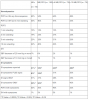
For those wanting a quick read just look at table 2. For example the first line in table 2
POTS or OH any time sequence: HC=49%, ME=54%.

I was very surprised by the amount of response to measures Healthy Controls had. I would have liked to see a breakdown showing orthostatic hypertension as well. I'm disappointed there wasn't a bigger separation between ME patients and healthy controls.

Hopefully the Solve ME sponsored study of "Hours of Upright Activity" will have sensor data for both healthy controls and patients that can show a greater separation between groups than the Nasa Lean Test. This paper only had individual self reported estimates for HUA in ME patients.

EDIT : Here is table 2
upload_2020-5-18_10-36-2.png
 
Last edited:
Thank you for this important work. It would be interesting to see the standing vital signs in order to calculate shock index while standing. I note that even while supine the overall ME/CFS group has a shock index of .6 which is considered "mild shock", according to Wikipedia (ahem, sorry). I have found the shock index to be useful in deciding whether to engage in upright activity. Pretty much anytime I am upright I am "in shock". When the index is near 1.0 ("moderate shock"), it's time to lay down.

There is an interesting reader comment.
 
So this is a large study with 150 ME/CFS patients that found no statistically significant difference in the rate of POTS between ME/CFS patients and controls. This was mostly due to the high rate of POTS in the control group (33%).

Another large study with more than 400 patients, also found no statistically significant difference in the rate of POTS between ME/CFS patients and controls. However, in contrast to this study by the Bateman Horne Centre, they reported very low rates in the ME/CFS population (5.7%).

Perhaps researchers need to start thinking about other ways to explain OI in ME//CFS than in terms of hemodynamics?
 
I have a sensation in my head that is the very similar as the one that can be felt by someone that suddenly stands up after lying down and then feels faint and dizzy. This feeling is always there and not as intense as the one that occurs when suddenly standing up.

I'm not sure if I still meet the POTS diagnostic criteria (30 bpm increase when standing). I think I clearly had POTS (with emphasis on the tachycardia). This abnormal reactivity of the heart rate has improved over the past 5 years while other aspects of orthostatic intolerance have changed little.

I think it's an issue of insufficient blood getting into the head or something similar. I would have said it's low blood pressure if I didn't know my blood pressure was mostly in the norm (low-normal but nothing bad).
 
Last edited:
maybe many false negatives?
If I understand correctly, that study criticizes protocols that put persons only 2 or 5 minutes in an upright position while testing for POTS. The studies I quoted both used the 10-minute protocol.

I'm always weary when Knoop en van der Meer are involved
The biomedical studies done by Megan Roerink look alright.

EDIT: there is also an evident reason to be skeptical of positive findings of POTS namely, selection bias. The clinic by Van Campen/Visser, for example, is known to test for POTS and to prescribe medication for it, so ME/CFS patients with heart or other hemodynamic issues might be overrepresented there.
 
If I understand correctly, that study criticizes protocols that put persons only 2 or 5 minutes in an upright position while testing for POTS. The studies I quoted both used the 10-minute protocol.


The biomedical studies done by Megan Roerink look alright.
Also the Roerink did 10 minutes? Sorry didn't read. Head not working!
 
This is incredible, from Lee et al. 2020 (including Vernon, Bateman) which used the NASA lean test:

OH was defined as a decrease in SBP of 20 mm Hg or more, or a decrease in DBP of 10 mm Hg or more in the first 3 min standing compared to resting supine values.

POTS was defined as an increase of HR greater than 30 bpm or a HR of greater than 120 bpm, based on the average of the last three minutes standing. (e.g., if the standing portion of the test was terminated at 6 min, we calculated the mean of the data recorded during the 3rd, 4th and 5th minutes).

The 10-minute NLT induced OI manifestations of POTS and OH in 54% of ME/CFS participants and 49% of HCs (Table 2).

Further, HR increased in all groups for each minute of standing so that by 10 min 33% of HCs, 42% < 4 MECFS and 38% > 10 MECFS met POTS criteria. [<4 years and >10 years duration of illness]

Now, 33% of healthy controls do not have debilitating tachycardia on standing that should be treated. They just don't. That would suggest that most of those with ME/CFS meeting POTS criteria might not either.

Where the groups did differ was in symptoms: people with ME/CFS felt a lot worse than healthy controls when standing.

Lee et al. conclude:
The most important take-home clinical message from this study is that the identification of OI in ME/CFS will immediately provide information for objectively supported diagnoses and evidence-based targeted treatment, drawing from a large literature regarding OI and POTS, even if the cause is unknown.

I think the conclusion should be something like:
The NASA lean test identifies about as much POTS and OH in healthy controls as it does in people with ME/CFS, but people with ME/CFS feel a lot worse than healthy controls when upright. This suggests that POTS and OH are not the cause of feeling rotten when upright in ME/CFS.

Editing to add: they did find a difference between those with shorter duration ME/CFS and more POTS compared to healthy controls, but I feel like they had to work to find that, and it's pretty small. Certainly not enough to merit treating 40% of people with ME/CFS for POTS.
 
Last edited:
I think as the blog by @ME/CFS Science Blog (which includes this paper) and many previous discussion of papers have highlighted is that POTS does not seem to characterise the problem of OI in ME/CFS patients. In short, if you take 2 groups, 20 ME/CFS patients and 20 healthy controls and run a POTS test on them (be it NASA lean or HUT) then based on those results you will not be able to tell which group is those of patients and which group is those of healthy controls.

Some of those problems may be related to the arbitrary POTS cut-offs (30 BPM for both NASA and HUT) and the tests itself which have a low reproducibility rate and are highly influenceable, i.e. the POTS criteria itself, rather than there being no hemodynamic group differences and there might well be slight and interesting differences in hemodynamics if the sample size is massive, but I'm yet to find a solid study that suggests that POTS is of any use, with many studies seemingly yielding null results.

I also remain very sceptical that things will turn out any different for those cerebral blood flow results. If I'd have to place bets, I'd be very comfortable to bet on the fact that those result will also turn out to be null.
 
Some of those problems may be related to the arbitrary POTS cut-offs (30 BPM for both NASA and HUT) and the tests itself which have a low reproducibility rate and are highly influenceable, i.e. the POTS criteria itself, rather than there being no hemodynamic group differences and there might well be slight and interesting differences in hemodynamics if the sample size is massive, but I'm yet to find a solid study that suggests that POTS is of any use, with many studies seemingly yielding null results.
Agree. It's just a bit worrying that some clinicians interpret the research as indicating treatment for so many. Will stop there as I'm wearing myself out!
 
I think as the blog by @ME/CFS Science Blog (which includes this paper) and many previous discussion of papers have highlighted
I'm always late to the party because I just can't post as often as other people can. Most of the time I can just read a bit on here and I have patches when that's not possible either. But when I get back I get overexcited and post more than I should!
 
Back
Top Bottom