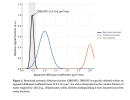
Evidence of White Matter Neuroinflammation in [ME/CFS]: A Diffusion-Based Neuroinflammation Imaging Study 2026 Yu et al

3.5.1 Lower NII-RF Associated With Worse Mental Health and Increased Disability
Among all participants (including patients and HCs), significantly positive associations were observed between NII-RF and MCS or BDS across major white matter tracts (Figures 5 and 6, Table 3). Note that the regions where NII-RF significantly associated with MCS and BDS largely overlapped with the regions where ME/CFS participants exhibited significantly lower NII-RF compared to HCs.

That section of the paper reinforces that low NII-Restricted Fraction was associated with worse health. BDS is Bells Disability Scale - lower numbers mean lower function. So, a 'positive association' means higher NII-RF was associated with better function.

******
Diffusion Basis Restricted Fraction as a Putative Magnetic Resonance Imaging Marker of Neuroinflammation: Histological Evidence, Diagnostic Accuracy, and Translational Potential
That 2025 paper discusses the Restricted Fraction measure.

Here's the abstract:
Diffusion basis spectrum imaging–derived restricted fraction (DBSI-RF) isolates the low apparent diffusion coefficient water signal attributed to cellular crowding. It is therefore proposed as a putative magnetic resonance imaging (MRI) marker of neuroinflammation.

The purpose of this narrative review is to evaluate animal and human studies that compared DBSI-RF with histopathological benchmarks and clinical parameters. Across inflammatory demyelination, viral encephalitis, traumatic brain injury, and neurodegenerative disorders, DBSI-RF correlated moderately to strongly with immune cell density and distinguished inflammation from demyelinating or axonal pathology. In acute multiple sclerosis, com-bined isotropic fractions predicted lesion evolution, clinical subtypes, and deep-learning models that included DBSI-RF classified lesion subtypes with high accuracy. DBSI-RFmight also be used to track putative neuroinflammation associated with psychosocial stress, mood disorders, and anxiety disorders.

The strengths of the method include sensitivity to subclinical changes and the concurrent mapping of coexisting edema, demyelination, and axon loss. Limitations include non-specific etiology features, a demanding acquisition protocol, and limited large-scale human validation. Overall, DBSI-RF may demonstrate a promising diagnostic and prognostic accuracy, warranting standardized, multicenter, prospective trials and external validation.
Overall, DBSI-RF is hypothesized to serve as an MRI marker of neuroinflammation, since cellular infiltration and glial activation in neural tissue increase the density of cells. Thus, the fraction of the restricted diffusion compartment is also elevated [16–21].
In optic neuritis, the DBSI restricted fraction increases with the number of DAPI-counted nuclei and decreases with anti-inflammatory treatment.

It's clear from that abstract and quotes that RF is seen as correlating with immune cell density and a possible measure of neuroinflammation - more RF indicates more neuroinflammation. But, this Shan study found low RF in ME/CFS..... I don't know if the Shan et al study are reporting things differently?

The abstract of the 2025 paper also calls this measure 'promising' and warranting trials and validation in humans. Clearly, Shan and the team are using cutting edge technology, which is great, but it means it's a bit hard to know what it means.
 
Last edited:
They are also suggesting a change in cellularity although I doubt they can pin that down to microglia, which would be the inflammatory cell. They cite NAkatomi but the signal in Nakatomi's study was not in white matter particularly. It was mostly down in midbrain and brainstem I think. And it was not replicated.

It might be that this is finally going to give us evidence of structural change in brain of a low-grade inflammatory type. However, (1) they point out the inconsistency of previous studies and this one may be no different and (2) it may be better to analyse this in terms of the raw data - water, cell and fibre changes, without premature labelling as inflammatory.
From the paper: "This study has some limitations that should be acknowledged. First, although the NII model offers biologically informed metrics, it is still an indirect measure of neuroinflammation and does not differentiate between specific inflammatory cell types or processes. Validation with other neuroinflammation-specific techniques would strengthen the interpretations"

It seems they are cognisant of this, which is great.
 
Just coming back to this because it is so puzzling and I'm trying to find what I am not understanding. The Yu/Shan 2026 ME/CFS study is very clear that the Restricted Fraction is lower in people with ME/CFS.
Compared to HCs, ME/CFS patients exhibited widespread white matter abnormalities, including significantly lower NII-HR and NII-RF


The Yu/Shan study quotes a 2020 study of people with obesity.
The NII model has been successfully applied to detect neuroinflammation in multiple sclerosis (Wang et al. 2011, 2015), Alzheimer's disease (Wang et al. 2019, 2024), and obesity (Samara et al. 2020).
That 2020 obesity study says in its abstract:
In both cohorts, the obese group had significantly greater DBSI-derived restricted fraction (DBSI-RF; an indicator of neuroinflammation-related cellularity)
That study claims that it is the high RF that suggests neuroinflammation in obesity.


Everything I can find suggests that it is a high Restricted Fraction that indicates increased cellularity, and that's an indicator of inflammation.
e.g. this:
Preliminary studies suggest that DBSI-derived metrics can putatively capture neuroinflammation in diseases like [Alzheimers AD] [33]. Ex vivo DBSI on human AD brain tissue, combined with immunohistochemical staining of microglia (Iba-1) and computational modeling, has shown increased RF in white matter compared to controls, aligning with microglial activation and cellular debris in AD [34]. These early findings, along with rodent models of AD [35], indicate a potential for DBSI-RF to quantify neuroinflammatory components in neurodegenerative disorders.
 
Back
Top Bottom