Discriminating Myalgic Encephalomyelitis/Chronic Fatigue Syndrome and comorbid conditions using metabolomics in UK Biobank, 2024, Huang et al

There was a study that looked at correlations between ME/CFS and all sorts of health conditions in the UK Biobank data. There is a thread on it somewhere here. I remember poking around in the data, but I think I felt in the end that the ME/CFS labelling was probably too noisy to tell us much. I don't think many correlations that we might have expected, things like allergies and asthma, showed up,

This paper here compared ME to general population to look at conditions that were more present in ME than general population.

Is that what you are thinking of?
 
You're misrepresenting or misunderstanding the papers intentions. You've tried to make the paper about lipids and then questioned why they aren't mentioned in abstract. I think that's the confusion, you think we set out to prove lipids are part of the mechanism of me/CFS. That's not right. Maybe this is the source of our disagreement here without us knowing?

Ponting an Co released a preprint before ours that compared ME to general population (our C1). This seems to be the data you are asking for, it was already published. They show the same signature we do with respect to lipids in the blood. https://www.medrxiv.org/content/10.1101/2024.08.26.24312606v1

The purpose of our paper was to explore the beginning of developing a differential diagnostic signature that could separate out ME/CFS from common comorbid conditions. Differential diagnostic signatures are used in cancer subtyping, this concept is novel for a disease like ME/CFS but we want to try see if it's possible. Diagnosis of ME/CFS take 4-5 years on average in Australia and the speed is largely dictated by clinician confidence in excluding other conditions and differentiating ME/CFS from other conditions.

So to do this we used healthy and 7 comorbid control populations to create a reference of what markers were relevant to those conditions. We couldn't do that with me/CFS because really no patients have no comorbidities conditions. We actually highlight in this manuscript or the next that more comorbidities actually predict ME/CFS and I personally think that either the mechanism of ME/CFS is producing comorbid conditions or the misunderstanding and breadth of symptoms of ME/CFS is leading to diagnosis of other conditions. Either way, more diagnosed comorbidities is a feature of ME/CFS against other conditions. So we allowed the full ME/CFS cohort in and did a sensitivity analysis where we stripped away the conditions and the numbers dramatically fell to 300s. The lower number of patients dropped the power but we still had significant lipid markers. The dropped power seemed to be responsible for the significance drop and not the comorbid conditions dropping from 3 to 0.6. the patterns remained the same but it dropped below our conservative threshold.

We were actually encouraged by reviewers of the paper to talk more about lipids, originally the focus was on the differential pipeline we put together. Maybe it's come across distorted because of this? The diagnostic is still a work in progress and we are developing it further to be more applicable to the translational aim.

Also your concern on multimorbidity is highlighted by us in the paper. We mention it limitations of the paper, we highlight that this portion of work is hypothesis generating. This is why we've felt targeted because everything is clear in the paper, nothing you've brought up is new. Your criticism isn't that we did this wrong, it's that you would have liked to see us do ME vs general population. Again, that's already been published.

We are working on a follow up to this paper though, perhaps tell me comparisons you would be interested to see and I can see if it fits.
I find your thoughts and work interesting. From my patient experience though I can't agree with the idea that the problem with the late diagnosis is caused by doctors lacking confidence in diagnosing ME. What I have seen is that with the average clinician's poor abilities to update themselves on current research they are not capable to judge for themselves whether they should chose the school of the psychiatric explanations of ME or the somatic one.

They are waiting that someone higher up in the hierarchy tells them what to believe. And as long as there are psychiatric explanations around in the heads of many doctors high in the hierarchy the majority of doctors will not take a stand on the somatic side because they don't want to expose themselves.

From what I have seen from the patient perspective is that the majority of doctors are not not capable to diagnose ME but not willing to learn anything about ME.
 
Small correction that one group, hypertension, had a higher median BMI.

Easier just to post it:
ME/CFS 26.6
C2 (healthy) 25.8
Hypertension 27.8
Depression 25.9
Asthma 26.1
IBS 25.2
Hay fever 25.6
Hypothyroidism 26.2
Migraine 25.2

Problem with Obesity is that people don't often report they have it, some don't see it as a medical condition but as a temporary impact on their physical appearance. But BMI was used to determine it in UK Biobank, we controlled for BMI in the population.
 
Last edited:
I find your thoughts and work interesting. From my patient experience though I can't agree with the idea that the problem with the late diagnosis is caused by doctors lacking confidence in diagnosing ME. What I have seen is that with the average clinician's poor abilities to update themselves on current research they are not capable to judge for themselves whether they should chose the school of the psychiatric explanations of ME or the somatic one.

They are waiting that someone higher up in the hierarchy tells them what to believe. And as long as there are psychiatric explanations around in the heads of many doctors high in the hierarchy the majority of doctors will not take a stand on the somatic side because they don't want to expose themselves.

From what I have seen from the patient perspective is that the majority of doctors are not not capable to diagnose ME but not willing to learn anything about ME.

True, our discussion with clinicians are based on those that know the condition and make diagnoses. We chatted to them about pain points in diagnosis.

Of course you also have GPs that have no idea. Hopefully a tool like this would help them. Goal is that your blood pathology data combined with initial presentation of ongoing fatigue is going to be put in to an algorithm that gives a probability of ME. Of course this would have to be well validated.
 
Last edited:
We even compare ME/CFs directly to a cohort of 100% hypertension and ME/CFs had worse lipid profiles.
Right, you previously mentioned that:
If you are concerned then simply look at the forest plots. We have a 100% hypertension group there. Compare mecfs to that group. ME/CFS group had worse cholesterol and lipoprotein issues than a group made from all hypertensive patients.

So I guess for me, the concern with regard to comparing to other conditions could be summed up as such:

It seems to me that if there were individuals with any of hundreds of comorbidities, such as T2D, in the ME/CFS group, but any such individuals were excluded from the hypertension group, the hypertension group's cholesterol levels would be expected to get shifted closer to healthy levels and thus potentially display the pattern we see where the ME/CFS group shows larger differences from healthy individuals than the hypertension group, even if there were no real difference between ME/CFS and hypertension.

I'm sorry if I'm repeating myself, but maybe you could just say if you disagree with this.
 
This paper was a proof of concept, the diagnostic tool we are trying to create would be providing a clinician with a probability of ME against a background of conditions that are similar to ME. The purpose is to speed up the exclusion of disease portion of the diagnosis process and provide more confidence to a clinician providing a diagnosis. That is the time consuming part, we aren't aiming to exclude the CCC list from the process. The symptom matching as you point out is fast.
How can you provide more confidence in the diagnosis of ME/CFS unless you’re somehow increasing the accuracy of the tests for the alternative diagnoses, because that’s by far the biggest factor in the equation for «how likely is it that this person has ME/CFS»?

There are far too many alternatives to include them all, and data quality for the training would be a massive issue.

And you can’t really speed up the exclusion process, because they would still have to check for the alternatives manually to assess the output from the AI. How can you agree that this patient doesn’t have hyperthyroidism if you don’t do the appropriate tests?
Does that clear up the questions? I am trying to answer your posts.
Partially. I appreciate the attempts.

I’m still looking for a comment to address the issue of traceability and explainability, other than asserting that it isn’t an issue because all that matters are the outcomes. But those aspects are more about AI diagnostic tests in general, so perhaps we can leave it for now.
No it can't get better than a specialist diagnosis in accuracy, it can speed it up though and it can provide a tool to less ME-experienced GPs that makes their diagnosis more accurate and faster.
How? As you said, matching symptoms is the quick part, which is presumably the only aspect that a less ME/CFS-experienced GP could improve at in this process so there is not much to be gained. Surely they know how to look for the alternatives as well as those with more ME/CFS experience?
The real tool is being built from pathology data because how early and often people get that information.
Pathology data for ME/CFS? I wasn’t aware there was any, just hypotheses.
 
Ponting an Co released a preprint before ours that compared ME to general population (our C1). This seems to be the data you are asking for, it was already published. They show the same signature we do with respect to lipids in the blood. https://www.medrxiv.org/content/10.1101/2024.08.26.24312606v1
Yes, I had that in mind. I meant to go read it. It is interesting to read through it now.

Here are some posts that I think are very relevant to this study too.

Ponting's study does not claim to provide any sort of diagnostic test. Moreover, diagnostic tests are not what we need. The comment shows a lack of understanding of the basic process of clinical decision-making.

The point of such studies is to give us at least some clues as to what is actually going on in at least some people with ME/CFS.

Except that this discussion is central to the significance of the paper. Individuals may disagree about the implications, but that is what make a discussion valuable. My concern is that by not appreciating the complexity of the 'diagnostic' concept the authors may have significantly misinterpreted their data. That would be a huge pity because they data are very valuable. If much of the paper focuses on mathematical analysis that is misconceived and the genuinely important facts are not brought out key information may be buried in confusion.

I have not so far mentioned it, but I spent some of last week going through the paper in detail and provided Chris and colleagues with four pages of comments. Virtually all of that related to the problems of diagnosis and its relation to gathering data like these. It covered the difficulty in ascertainment of clinical diagnosis that makes the search for a high sensitivity and specificity spurious. It covered the problems of confounding factors that may mean that associated findings may not in fact have anything to do with the diagnosis as currently conceived. It covered the mistaken idea that doctors need 'diagnostic tests' rather than pointers to disturbed physiology that can be used as a basis for treatment. The whole concept of a diagnosis is a lay idea. If we want to further medical science we need to think clearly both in terms of mechanisms and decision making.
(there is a linked discussion on Diagnostic Tests arising from these points on that thread)

I very much agree that first we need to find some real differences. Second we need to check again that they are real differences. A diagnostic test might come after that. Leaping to diagnostic tests, perhaps because it is an interesting mathematical exercise, probably does not serve us well.

Thanks for the post @MelbME, there are certainly points I want to address, but I'll finish reading the Beentjes paper first as I think there are some more issues there. I think there may have been an issue with BMI. It would be great if you could provide some statistics for the BMIs in the cohorts used in this study so that we aren't making assumptions.
 
Goal is that your blood pathology data combined with initial presentation of ongoing fatigue (yes I know ME is more than that but before you understand ME the most common initial complaint is ongoing tiredness/fatigue that gets noted. You go through the idiopathic fatigue pathway.
I find your work interesting and valuable.

I am reminded of a discussion that I had with my GP. She said that she thought that ME/CFS was an exclusion diagnosis. I disagreed and told her that the CCC presented a positive list of criteria and that if there wasn't any uncertainty with the matching of the symptoms nothing else needed to be excluded.

She then explained to me that for her ME/CFS "felt" like an exclusion diagnosis excactly because of the symptom of fatigue. She said that the problem for her was that she felt that her average patient couldn't express themselves precisely about the quality of the fatigue and couldn't explain a lot around it. Therefore she said that diagnosing ME/CFS felt for her like the work of a detective where she needed to understand what exactly was going on at the exhaustion part of the illness.

What I am a little bit suspicious about though is that idea of doctors that the average patient can't express themselves. Sometimes I feel that this is the idea that doctors have of patients no matter how many patients they in fact have who are able to express themselves well.

I also observed that in my mother who was a psychiatrist. When she explained something medical she would change the tone of her voice and make everything really easy as if she was talking to a five years old. It was very strange.

Edit: The doctor in my story is my GP.
 
Last edited:
Right, you previously mentioned that:


So I guess for me, the concern with regard to comparing to other conditions could be summed up as such:

It seems to me that if there were individuals with any of hundreds of comorbidities, such as T2D, in the ME/CFS group, but any such individuals were excluded from the hypertension group, the hypertension group's cholesterol levels would be expected to get shifted closer to healthy levels and thus potentially display the pattern we see where the ME/CFS group shows larger differences from healthy individuals than the hypertension group, even if there were no real difference between ME/CFS and hypertension.

I'm sorry if I'm repeating myself, but maybe you could just say if you disagree with this.

Yes it would happen to an extent the extent would be determined by how much lipid in the blood is associated to hypertension. If hypertension has no relationship to lipid in blood except for comorbidities that bring that in then yes we'd be removing the impact.
 
How can you provide more confidence in the diagnosis of ME/CFS unless you’re somehow increasing the accuracy of the tests for the alternative diagnoses, because that’s by far the biggest factor in the equation for «how likely is it that this person has ME/CFS»?

There are far too many alternatives to include them all, and data quality for the training would be a massive issue.

And you can’t really speed up the exclusion process, because they would still have to check for the alternatives manually to assess the output from the AI. How can you agree that this patient doesn’t have hyperthyroidism if you don’t do the appropriate tests?

Partially. I appreciate the attempts.

I’m still looking for a comment to address the issue of traceability and explainability, other than asserting that it isn’t an issue because all that matters are the outcomes. But those aspects are more about AI diagnostic tests in general, so perhaps we can leave it for now.

How? As you said, matching symptoms is the quick part, which is presumably the only aspect that a less ME/CFS-experienced GP could improve at in this process so there is not much to be gained. Surely they know how to look for the alternatives as well as those with more ME/CFS experience?

Pathology data for ME/CFS? I wasn’t aware there was any, just hypotheses.


It is a complicated problem. We are trying to do what we can. This is experimental. Yes the process of development does involve identifying signatures for other diseases as well to rule out.

It is an attempt to try. I'm glad you said you appreciate that, I was wondering if perhaps you were suggesting we shouldn't try this direction.

Sorry, wasn't clear. By pathology I mean blood pathology tests. We have standard panels and extras doctors typically were down. You go to a path lab, they take blood, data goes to the GP who ordered it. That data gets provided early on in just about all people that eventually get diagnosed with ME/CFS. It's part of protocol if you present ongoing fatigue/tiredness to your GP, they will order blood pathology tests.
 
Yes, I had that in mind. I meant to go read it. It is interesting to read through it now.

Here are some posts that I think are very relevant to this study too.


(there is a linked discussion on Diagnostic Tests arising from these points on that thread)

I very much agree that first we need to find some real differences. Second we need to check again that they are real differences. A diagnostic test might come after that. Leaping to diagnostic tests, perhaps because it is an interesting mathematical exercise, probably does not serve us well.

Thanks for the post @MelbME, there are certainly points I want to address, but I'll finish reading the Beentjes paper first as I think there are some more issues there. I think there may have been an issue with BMI. It would be great if you could provide some statistics for the BMIs in the cohorts used in this study so that we aren't making assumptions.

So I agree that you can't form diagnosis the way that it is laid out in the Ponting paper. But the idea is pointing to the fact that there are factors in the blood distinguishing ME from other controls and that there is potential. I think the potential is what we highlight that was actually unexpected, it might be that ME mechanism is related to the blood. One aspect of our paper that I found cool is that we developed disease scores for ME and all the other diseases. The disease score for ME and hypertension were the best. In fact the order of most significant to least significant based on blood biomarkers was basically how relevant those conditions were to blood. Hypertension being an issue of the blood made sense why the markers created a distinct disease score. Less so was for IBS for example.

Anyway, we are attempting a very different type of diagnostic that looks to distinguish ME from other conditions. It would be a decision making tool to aid clinicians to make a diagnosis. Speed up the process of diagnosis. It involves hundreds of thousands of patients, not UK biobank data.
 
The purpose of our paper was to explore the beginning of developing a differential diagnostic signature that could separate out ME/CFS from common comorbid conditions.

I remain confused by this, @MelbME.
The diagnostic problem is not differentiating ME/CFS from conditions that often occur with it. It is differentiating it from conditions that can be confused with it. If another condition is co-morbid with ME/CFS in an individual then they still have ME/CFS. A co-morbidity that does not itself seem like ME/CFS does not need to be distinguished by a further test. The problem does not arise.

I can see that co-morbid conditions need to be considered as potential confounders in any exercise that tries to derive a diagnostic test from correlation with a clinical diagnosis. But contrasting findings with a set of other conditions known to occur more frequently with the diagnosis under test does not ensure that confounders have been removed. And I think Hutan is correct to point out that if you clean out patients with certain trends in certain variables from your comparator groups you are going to increase the confounder problem rather than reduce it.
 
Yes it would happen to an extent the extent would be determined by how much lipid in the blood is associated to hypertension. If hypertension has no relationship to lipid in blood except for comorbidities that bring that in then yes we'd be removing the impact.
Is it possible that individuals with T2D in the ME/CFS group are driving large differences in lipids from healthy controls, with T2D having little to do with ME/CFS specifically? I mean there will be individuals with ME/CFS and T2D, just as there will be individuals with hypertension and T2D, or asthma and T2D.

If we compare a group that includes ME/CFS or ME/CFS+T2D to a group with no conditions at all, how can we be sure the lipid/glucose differences aren't due to T2D? Would the AI diagnostic tool flag a patient as potentially ME/CFS, when it could just as easily be showing that the individual might have T2D?
 
I don't know any of the history, but the scientific arguments presented here by Hutan seem clear to me as well. The sensitivity analysis seems to support that these findings are being mostly driven by comorbidities. While there were still some significant findings, there were also hundreds of other comorbidities in the sensitivity analysis that were not excluded in the cases that could explain the remaining 31 differences.

If the idea is that ME/CFS is strongly associated with having many comorbidities, and so any findings relevant to the comorbidities may in fact be relevant to ME/CFS, why can't we say the same for the 7 other condition groups? Why not keep all the individuals that have hypertension and comorbidities? It seems highly plausible that hypertension goes hand in hand with many other conditions, so it would make sense to compare a heterogenous group with ME/CFS to a heterogenous group with hypertension.

I don't know exactly the reason it was necessary to make hypertension homogenous, but in any case, I think it's likely that the forest plot in figure 2 demonstrates nothing more than that comorbidities were included in one group and not in the others.
Thanks @forestglip, that is how I see things. There may be some real differences, but they are buried under the uncertainty that goes with the imbalance of the inclusion of comorbidities in the heterogeneous ME/CFS group, and the exclusion of co-morbidities in the homogeneous comparison groups.
 
It is a complicated problem. We are trying to do what we can. This is experimental. Yes the process of development does involve identifying signatures for other diseases as well to rule out.
But how can you identify enough of them?

This seems like a fast track to false positives of ME/CFS. That’s life-destroying. Imaging being told you have a chronic incurable disease instead of one the actual one that can be cured. Without considering the time lost, just think of the elevated suicide rates in ME/CFS, especially with the emergence of assisted suicide.
It is an attempt to try. I'm glad you said you appreciate that, I was wondering if perhaps you were suggesting we shouldn't try this direction.
Sorry, I appreciate your attempts at explaining. I’m not convinced this should be a priority, or that it can lead to any improvements in the clinical aspects.
Sorry, wasn't clear. By pathology I mean blood pathology tests. We have standard panels and extras doctors typically were down. You go to a path lab, they take blood, data goes to the GP who ordered it. That data gets provided early on in just about all people that eventually get diagnosed with ME/CFS. It's part of protocol if you present ongoing fatigue/tiredness to your GP, they will order blood pathology tests.
Thank you, that’s clarifying.
 
I remain confused by this, @MelbME.
The diagnostic problem is not differentiating ME/CFS from conditions that often occur with it. It is differentiating it from conditions that can be confused with it. If another condition is co-morbid with ME/CFS in an individual then they still have ME/CFS. A co-morbidity that does not itself seem like ME/CFS does not need to be distinguished by a further test. The problem does not arise.

I can see that co-morbid conditions need to be considered as potential confounders in any exercise that tries to derive a diagnostic test from correlation with a clinical diagnosis. But contrasting findings with a set of other conditions known to occur more frequently with the diagnosis under test does not ensure that confounders have been removed. And I think Hutan is correct to point out that if you clean out patients with certain trends in certain variables from your comparator groups you are going to increase the confounder problem rather than reduce it.

Yes we are tackling this work on difficult to distinguish conditions separately. This was a first pass to prove concept of separating ME from the most common comorbid conditions in the ME cohort.
 
This is going to be silly maths, but I noticed this earlier and only remembered now.

From the sensitivity analysis:
Thirty-one of the initial 168 ME/CFS biomarker associations remained significant (P < 2.0110−4). SFA% and omega-3 were the only significant associations that produced greater odds ratio in the subset than the full cohort.
The lower odds ratios observed may be attributed to the reduced number of comorbid conditions reported by each individual, rather than the specific condition.
The average number of comorbid conditions was 3.0 for the full cohort and 0.6 for the subset. This suggests that the burden of having several comorbid conditions might exacerbate ME/CFS symptoms (inclusive of symptoms from common comorbid conditions), reflecting a higher disease severity, leading to more pronounced biomarker signals in the full cohort.
The comorbid conditions were decreased by 80 %, and the number of biomarker associations were reduced by 81.5 %.

If that ratio continues all the way, there would be no signals left with 0 comorbid conditions. Not that we can assume it’s that simply, just silly maths.
 
Yes we are tackling this work on difficult to distinguish conditions separately. This was a first pass to prove concept of separating ME from the most common comorbid conditions in the ME cohort.

But surely that isn't even a diagnostic exercise. It isn't what the GP wants to do. It is an exercise in trying to clean up extracting correlations from populations. Moreover, it excludes the crucial instances where it might be relevant - individuals where the two conditions co-occur.
 
But how can you identify enough of them?

This seems like a fast track to false positives of ME/CFS. That’s life-destroying. Imaging being told you have a chronic incurable disease instead of one the actual one that can be cured. Without considering the time lost, just think of the elevated suicide rates in ME/CFS, especially with the emergence of assisted suicide.

Sorry, I appreciate your attempts at explaining. I’m not convinced this should be a priority, or that it can lead to any improvements in the clinical aspects.

Thank you, that’s clarifying.

We absolutely don't want fast track to false positives. But I'd probably prefer an err on side of the earlier recommendation of pacing management. Yes you may get some people being told to pace that don't need to.

Do you think that is a problematic point of view?
 
You're misrepresenting or misunderstanding the papers intentions. You've tried to make the paper about lipids and then questioned why they aren't mentioned in abstract. I think that's the confusion, you think we set out to prove lipids are part of the mechanism of me/CFS. That's not right. Maybe this is the source of our disagreement here without us knowing?
Screenshot 2026-04-17 at 10.45.22 AM.png
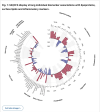
This is Figure 1: ME/CFS display strong individual biomarker associations with lipoproteins, surface lipids and inflammatory markers. It is presented as a clear finding.

I don't think you set out to prove that lipids are part of the mechanism of ME/CFS, but I do think that by selecting your comparison groups to have healthier lipid profiles than normal (C2 for this figure), that is what you have found. The figure caption talks about 'the strongest biomarker'.

The text says
ME/CFS lipoprotein associations included increased VLDL particle concentration and consequently all VLDL lipid components (FC, CE, PL and TG), triglycerides in all lipoprotein subclasses except for L-HDL-TG, ApoB and ApoB/ApoA1 ratio and inverse associations with HDL particle concentrations and ApoA1. Decreased levels of sphingomyelins, phosphatidylcholines and total cholines, higher levels of alanine, valine and glucose and total fatty acids were also associated with ME/CFS.

I understand that you aimed to make a diagnostic tool. I think that was an inappropriate aim at this time. We need funders to stop encouraging researchers to jump to that, before we have identified true differences.

But, Figure 1 and other comparisons are what makes the paper about lipids, it has nothing to do with me. The inappropriate comparisons are probably what makes the paper about lipids. Researchers will quote this paper in the mistaken belief that this is evidence of dysregulated lipids, lipoproteins and inflammatory markers.

This is why we've felt targeted because everything is clear in the paper, nothing you've brought up is new. Your criticism isn't that we did this wrong, it's that you would have liked to see us do ME vs general population. Again, that's already been published.
Among the criticisms is that you have made claims such as those in Figure 1 that are not supported by the evidence. My criticism is definitely that you did this wrong.
 
Last edited:
Back
Top Bottom