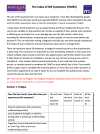
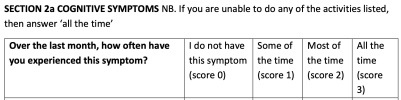
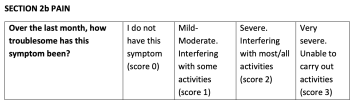
So the MEA have spend already incredibly limited funds raised by patients, on a long, impractical questionnaire, that used cherry-picked feedback, doesn't compare between patients or between patient responses, doesn't have a ceiling or a floor, merges mild with moderate and allows clinics to keep offering the same advice?
Yes.
And, I'm not a super fan of the DSQ Symptom Questionnaire, but it's difficult to see this as a big improvement of it. Here, the authors of TIMES explain why they thought the DSQ was not good enough:
They note that a lot of diagnostic criteria haven't been psychometrically validated. And then go on to note that the DSQ has been.
An exception is the DePaul Symptom Questionnaire (DSQ), a self-report measure of ME/CFS symptoms. The original version has 99 questions covering personal characteristics, history and symptoms11. Fifty-four symptoms are included which focus on the domains specified in one of the most widely used diagnostic criteria, the Clinical Canadian Criteria (CCC)12. The user is asked about the frequency and severity of each symptom over the previous six months on 5-point (0-4) Likert scales. These scores are then multiplied by 25 to create 100-point ‘intensity’ scale for each symptom. The ‘intensity’ is then averaged to create a composite symptom score. The original questionnaire has been modified over time such that original, expanded, brief, and paediatric versions are now available13. Furthermore, a subset of questions regarding post-exertional malaise (PEM, a cardinal symptom of ME/CFS) have been extracted to produce five and ten item PEM specific questionnaires14,15
.As part of a project to co-produce a clinical assessment toolkit for ME/CFS with people with ME/CFS and clinicians working in NHS specialist ME/CFS services, we reviewed the DSQ for inclusion in the toolkit as a measure of symptomology. Several limitations were identified by our ME/CFS and clinicians’ advisory groups. They noted overlap/repetition between some items; use of medical jargon and ‘American English’ that was difficult to understand in some instances. They also found references to exercise and exertion problematic (as their condition meant they could not exercise or exert themselves), and having questions about both severity and frequency of symptoms did not make sense in all items and made the questionnaire very lengthy. Finally, the timescale over which symptoms were assessed (the previous six months) did not reflect the diagnostic criteria used in the UK (previous three months)16.
Thus, we developed and evaluated a new assessment of ME/CFS symptoms focussing on the information needed for clinical assessment rather than diagnosis. This new assessment was called The Index of ME Symptoms (TIMES).
1. overlap/repetition
The DSQ covers 54 symptoms and, while it doesn't characterise PEM very well, it does try very hard. TIMES has 58 symptoms and I don't know what they did with PEM.
2. medical jargon and American English
There seems to be a lot of medical jargon in the scale names of the TIMES. In any case, it is not impossible to adjust the wording in tools to suit the audience - lots of scales are completely translated. This hardly seems like a big problem.
3. references to exercise and exertion problematic 'as their condition meant they could not exercise or exert themselves'
This is ridiculous. If you want to determine if people are doing less than they were (or are back to healthy levels of activity), it's completely valid to ask about exercise and exertion. And, for goodness sake, everyone who is living exerts in some way.
4. questions about severity and frequency did not make sense in all the items and made the questionnaire lengthy
The TIMES authors may have a point there, I'm not sure. They say that severity and frequency seemed to track together, and so they just chose one word, usually 'severity'. I don't think ticking both a severity box and a frequency box would take much longer than just making the one assessment about a symptom and having both does remove a bit of the ambiguity e.g. my PEM might be utterly awful, but perhaps I only had it for one day last month.
5. DSQ asks about previous 6 months.
The TIMES authors wanted something shorter than that, for use in the clinical setting where presumably people aren't in the clinics very long. Also because the NICE Guideline says symptoms only have to be present for 3 months for diagnosis. But, again, that is a tweak. It hardly necessitates a big process to make a new list of symptoms.
All up, and given that there are variations of the DSQ out there, including a brief version, I can't see why a big process was really needed to replace it. And, why not use FUNCAP to assess function rather than symptoms in a clinical setting? Or just use the 'so how have you been' question?