The question is still why some people end up with the bad autoantibodies and others don’t.
If I’ve understood it correctly, which is by no means a guarantee, the binding parts of the antibodies are generated randomly, so everyone will generate autoantibodies for everything.
Which events have allowed for the survival of pathogenic autoantibodies? How did they get past all of the checkpoints that are supposed to weed out autoantibodies with a strong enough affinity to self before they get out and about doing damage?
Yes! The question IS very much
"why some people end up with the bad autoantibodies and others don’t."
This process is very much non-random. There is randomness to the naive repertoire, but then a half-billion-year-old adaptive intelligence uses evolution to act on and improve immune responses to antigens. There are strong associations with HLA types and many of these diseases. IE its randomness x the right genetics x the right accident and virus to make JUST the exact type of molecular mimic mistake that results in a disease pathology.
And then - after their creation - "
Which events have allowed for the survival of pathogenic autoantibodies? How did they get past all of the checkpoints that are supposed to weed out autoantibodies with a strong enough affinity to self before they get out and about doing damage?"
^^^^ This is a very important point. For some reason - they are able to persist. A simple explanation would be that given tens of billions of clones - immunity is bound to be inherently fallible - and that evolution thinks it's better to have an immune system that sometimes creates a chronic immune condition than never pass on your genes from dying of smallpox or TB (as used to occur quite often).
Another would be that chronic restimulation from a viral infection you never clear, constantly re-priming the response hacks these processes - such as to EBV EBNA1 - could be such a mechanism causing MS).
Another could be the autoantigen is NOT truly self per-se - but a damaged form of the self antigen that only occurs in older cells or in certain cell types with certain diets. The above case actually is one. The true autoantigen above in the Robinson paper is a phosphorylated form of human EBNA1.
Many autoimmune and degenerative conditions are closely tied to oxidation performance and mitochondria. It is quite possible that 'transformed self' (ie oxidized self proteins) are more dominant autoantigens than their normal forms - and the prevalence of these varies with diet and time.
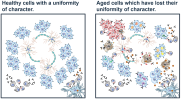
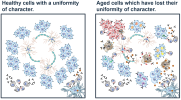
Immunity is trained on 'self' - but there is no such thing as a truly molecularly stable self. This gets catastrophically worse with age. Immunity must make mistakes and attack parts of the self that do not remain stable. A rather dull concept immunologists call 'inflammaging' (universal inflammation in aged tissue) I think might just be the 'normal behavior of a healthy immune system' to the inevitably transformed older body (via gene mutations, oxidative damage, etc).