An Open Letter to BACME re ME/CFS Guide to Therapy 2025

I've also posted this interview that I did with Jonathan earlier today:

Oh this is great to hear! Thanks @dave30th and @Jonathan Edwards lovely to hear you both, brings a smile to my face. Less Joy in the Morning, more Jo in the Morning

Audio only here for people who have youtube problems
https://u.pcloud.link/publink/show?code=VZwcEl5ZJdVmzM2igh0iIF9Uy3tyszU6CIik
 
I've also posted this interview that I did with Jonathan earlier today:
Why are these two British blokes looking so handsome even in older age?
I‘m sure it has something to do with just the right amount of After Eight consumption, but I can’t figure it out for the life of me!
How very frustrating!

Fellow S4ME members, are we going to riot over this or what are the plans for the weekend? :emoji_tea:
 
I thought this paragraph from a BACME document was informative:

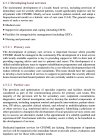
A Brief History of CFS/ME services within NHS
In May 2003, it was announced that a central budget of £8.5 million would be released to
the NHS in two phases to allow stepped development of CFS/ ME services in England. As
part of this initiative 13 centers and 36 local teams for adult services and 11 specialist teams
for children and young people were set up between 2004 and 2006
(http://www.bacme.info/document_uploads/POD_Docs/CFSMEServInvestProg0406.pdf). These services now form part of the British Association for Chronic Fatigue Syndrome/ ME,
in partnership with patient charities and services that were already established prior to 2004.

We are now left with a structure set up 20 years ago in the middle of the PACE age. This proved to be the wrong model. People with ME/CFS should have continued under physicians as they had before. I think this underlines the error of thinking that 'special', separate 'ME/CFS services' are a good thing. ME/CFS should be treated as an ordinary illness like any other, under physician-run clinics with domiciliary outreach.
 
Last edited:
Thinking more on the dysregulation and rehabilitation model and the way it’s used by some, you could apply this to just about any illness. It seems to speak of a mindset beyond ME/CFS that any illness can be seen as a physiological or psychological state performing outside its ‘normal’ parameters or range and rehabilitation as the attempt to return it to that normality. It’s incredibly broad, quite vague and all encompassing.

But okay, let’s accept that premise. Don’t you need to understand the system fully and what has gone wrong and why to even begin to be able to restore it? And we don’t!

In some ways it seems the approach wants to take us back to pre-Enlightenment thinking and abandon empiricism, evidence and rational thought in favour of natural philosophy. I suppose that is why there are the attempts to come up with lots of ‘measures’ of things, it’s a way of trying to show evidence while not actually understanding what you’re measuring or why.
 
A Brief History of CFS/ME services within NHS
In May 2003, it was announced that a central budget of £8.5 million would be released to
the NHS in two phases to allow stepped development of CFS/ ME services in England.
The timing there is interesting. The CMO report was released in 2002 and recommended the setting-up of clinics that would "adopt a biopsychosocial model or a holistic view of care", including CBT & GET:

cmo_bps.jpg

Thereafter interest by physicians dwindled away, effectively relegating ME/CFS to the hinterland - well, wasteland - of therapists and psychobabblers. Probably one of the most counterproductive things the charities ever supported.
 
The Oxford English Dictionary defines rehabilitation as:
The action of restoring someone to health or normal life through training and therapy after imprisonment, addiction, or illness.
It also generally refers to the process of restoring a person, object, or area to a former good condition or functional state.

I think that was what i was accredited in, in 1985.
Yes, the "after" is fundamental, and highlights how Sivan and Co. clearly feel there is no remaining illness in ME/CFS patients, only its lingering after effects that need to be rehabilitated from. An incredibly dangerous and arrogant assumption.

I think he emphasised the fact that many don't get better.
Seems a bit like shooting himself in the foot.
 
Last edited:
That link no longer works. Even when I go into Wayback Machine from the top, search for "fine trial" and then click on the link is shows me, it then comes up with an error, and no longer seems to be available. Has someone just pulled the plug on it I wonder?
The error only recently started and is a perfectly normal one for a service having issues, as it is if you try to access the archive of any site at the moment (I see errors for the bbc for example’. No conspiracy to see here.
503 Service Unavailable
No server is available to handle this request.
 
Thereafter interest by physicians dwindled away, effectively relegating ME/CFS to the hinterland - well, wasteland - of therapists and psychobabblers. Probably one of the most counterproductive things the charities ever supported.
I think it’s telling that even then there was talk of the need for domiciliary care for the severely affected. And it never happened.

We’re seeing some charities like the MEA make the same mistake now, two decades later, saying that services for mild/moderate that we know are imperfect are a route to better care for the severely affected. It doesn’t work like that, once bad ideas and services get embedded they are very difficult to budge and have a wider deleterious effect.

Let’s start with severe, do things properly and build from there.
 
I can do everything I used to, except I can’t do it for long or repeatedly.
Yes, I believe this is something medical science has not really got a handle on, the belief probably being "nothing to see here". But it is actually deeply fundamental to ME symptoms. Just to be clear I don't have ME but my wife has for 20 years or so, and it has become very clear to me that the problem is far more intricate than merely "lack of energy". It is very much about patterns of energy availability with respect to things such as time, energy expenditure, sleep patterns. And especially to note there are time delays between cause and effect, and because there is some element of cyclic repetitions in here, can be tricky to identify exactly what instance of a cause may be triggering a particular effect, the effects can be cumulative and I suspect quite complex.

I suspect a very useful study would be to track all the potential causes over time, together with the effects, and for each participant then graph them in various ways, not just w.r.t. time but w.r.t. other variables as well. Then compare those results for all the participants, and see if something consistent emerges for cause and effect. And yes, I do of course fully appreciate that doing too much floors people with ME, but the understanding of the finer detail is woefully lacking, and needs more research.
 
We’re seeing some charities like the MEA make the same mistake now, two decades later, saying that services for mild/moderate that we know are imperfect are a route to better care for the severely affected.

Absolutely, and advocacy groups calling for special mutidisciplinary ME/CFS services - just like what we have now "in the community" (which inevitably means cheap and useless). I think there may be some progress in getting these groups to see the problem. Maybe we shall see on Monday.
 
Dr Sivan has responded again.
Dr Sivan’s “everything is rehabilitation” email seems to take its spirit from the Trump administration’s tactics — redefining words to mean the opposite and using semantics to bully people.

Honestly, these are the people who are “experts” in ME/CFS in 2026? It absolutely makes me despair and this is why so many of us are driven to suicide. It is the ultimate in gaslighting to insist “everything” (including chemo!) is “rehabilitation” in an effort to get a population of patients who are made worse by exercise accept only rehab as a “treatment”. When the real goal is obfuscation and avoidance of spending government money on what they perceive as undeserving people who could actually get better if they just tried harder.
 
Back
Top Bottom