Why are patient pleas about subtyping and stratifying in studies seemingly falling on deaf ears?

sorry I'm a bit too sick to read and absorb all the comments, but what is the actual importance of subgroups for the MECFS?
I’ll try to summarize the concerns about subgrouping. Someone else can summarize the pro-subgrouping position.

A meaningful subgroup would have something different about their illness that causes them to respond differently to treatment. We have no evidence for this in ME. We know there’s variation in symptoms and severity, but we don’t know what type of variation, if any, makes a difference in drug response. At this stage, the odds that a researcher would identify a real subgroup based purely on symptoms are very low. There are serious concerns that post-trial “subgrouping” will produce false positives.

Hopefully that helps!
 
If the group effect is null, the treatment doesn't work for ME/CFS.
we really need something that addresses the underlying issue.
the odds that a researcher would identify a real subgroup based purely on symptoms are very low

In principle I agree (or really want to agree) with the statements above, and from a research methodology standpoint I am on board with the arguments laid out so well in this thread.

Practically though, I can empathize with and understand the impulse towards subgrouping.

Even using CCC criteria, patients can be dramatically different from each other, with different onset, disease course, and essentially zero overlapping symptoms.

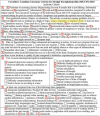
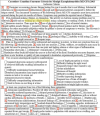
Consider two fictional patients for instance:
Growing up, Jane was always the smartest in her class, a math whiz. After graduating from a top university she went into finance, where she rapidly moved up the ranks thanks to her hard work, phenomenal memory, and elite analysis skills. A dynamic communicator, she was a highly sought after speaker at conferences and industry events.

But in her mid 30’s, things begin to change. Slowly. Almost imperceptibly at first. But a forgetful episode here and a loss train of thought there seemed like nothing to worry about- that’s just part of aging, right? As time went on though, Jane began to realize that something was not right. She was so worn down after work that she frequently cancelled plans. Her sleep got worse - trouble falling asleep, waking up multiple times a night, and waking at 3am every morning like clockwork. It’s “anxiety” or “hormones” or “burnout” they tell her. She wants to believe them, but she’s not convinced.

Other symptoms, new to her, began and became chronic - nausea, IBS. She can’t tolerate certain foods anymore, and strong smells make her sick. She had to stop wearing her favorite perfume due to how ill it now made her. Then the headaches started. Oh, the headaches. Behind her eyes and in the base of her skull. The constant ache and throbbing like a relentless drum beat.

She tried to push through for a while, but she kept losing ground. Her mind just couldn’t cut through the thick brain fog. And the harder she tried, the worse she felt. Even looking at her computer screen for more than a few minutes rendered her completely exhausted. Eventually, Jane took a leave of absence from work. She went to all the best doctors and had extensive workups, with no diagnosis. This went on for 8 months, and she celebrated her 39th birthday alone, in the quiet of her apartment.

Later that year, Jane saw a doctor, who seeing that all other options had been ruled out, evaluated her using the CCC criteria, and diagnosed her with ME/CFS.

CCC_Jane.png

John was a strong, athletic kid. He held several school records on his high school football team. After graduation, John went to work in an industrial machine shop, where they put his strength to work daily operating heavy equipment. On top of that, he was attending night classes at the local trade school to earn a welding certificate.

Two months after he turned 19, John had a flu-like illness. It lasted about a week, and then he was back on his feet. But something was different.

Right away he noticed that he was frequently out of breath walking up and down the stairs at work, and his heart felt like it was beating out of his chest. Even though his football days were over, John still liked to go to the gym after work to lift weights. But now, it seemed like working out was making him weaker instead of stronger. At night he would lay in bed and watch his muscles twitch uncontrollably. After some workouts that would have been no problem for him before, he now would come down with fevers, night sweats, a sore throat, and have to spend the next day in bed to recover. After a couple of months, he gave up going to the gym because this pattern was causing him to miss too much work.

John went to see the doctor, who reassured him that nothing was wrong - just “post viral fatigue.” But instead of improving, John continued to worsen. His muscles were constantly deeply achy, tired quickly, and took days to recover after normal tasks. He could sleep for 12 hours and still wake up feeling like he got hit by a truck. He could no longer tolerate the heat and noise of the machine shop.

In the fifth month after his initial infection, he crashed hard and was hospitalized for chest pain and heart palpitations.

Over the next few months he saw a number of specialists, and had many tests, all inconclusive. By this time John had been forced to quit his job, drop out of night classes, and spends most of the day in bed or the recliner next to it. He sleeps 12 hours a night, plus a couple of naps during the day, and is still physically exhausted. He cannot tolerate being upright for long due to feeling unwell, and the exacerbation of cardiac symptoms. He lost 20 lbs. He has an almost constant sore throat, fevers, and tender lymph nodes. The slightest physical activity, like folding laundry, makes all symptoms worse for several days.

Mentally he is as sharp as ever, and has no cognitive fatigue or impairment. While awake, he spends all his time on the computer gaming, or reading about his favorite sports teams.

A little over a year after his flu-like illness a doctor diagnosed him with ME/CFS using CCC.
CCC_John2.png


I understand that many of the best minds, who have thought about this illness for a long time, put a lot of effort into developing the criteria, and they are the best we have to go by.

However, they are just constructs - not inherently infallible - and have their own assumptions and biases built in (humans created them after all).

All that to say, if someone wanted to run a trial on only “Jane” type patients, or only “John” type patients, or suggests based on their symptoms that they might have different underlying mechanisms that would benefit from different treatments, to me that doesn’t seem totally unreasonable.

- No, I did not use AI to write the patient bios. It was a therapeutic creative outlet for me.
- Please don't miss the forest for the trees. If something isn't perfect about the fictional bios, don't analyze it to death like a research study and let it detract from the point. I could have just posted the forms with red X's.
- The simple fact is that patients can have no symptoms in common and have the same ME/CFS diagnosis.
- I chose to use CCC, but this same exercise can easily be done for IOM or any of the other consensus criteria.
 
All that to say, if someone wanted to run a trial on only “Jane” type patients, or only “John” type patients, or suggests based on their symptoms that they might have different underlying mechanisms that would benefit from different treatments, to me that doesn’t seem totally unreasonable.

Absolutely. There is every reason to target trials to smaller groups. But 'subsetting' or stratifying within a trial is different, and it is mostly a recipe for failure.

I think the argument here is directed at a straw man - much as you suggest.
 
It's not triggering and I didn't author what you quoted anyway. It was Trish who asked, quite reasonably, why anyone would prescribe a drug to treat tachycardia to people without tachycardia.

I'm only arguing against crap research, and that includes trialling drugs we have no reason to think work, and setting up trials with arbitrary categories we have no reason to think differentiate meaningful subsets.

If it continues, and if patients keep putting up with it, we'll still be here in another 20 years. I've already done 50 years with ME/CFS, so you'll forgive my world-weariness. Like a lot of people here I've seen cycles of poor work being repeated over and over, and believe me it gets very boring.
that's quite an interesting point when we put things into simple terms.

If we are at the stage of only testing things that most would agree are just going to help certain symptoms - some of which might indeed vary across different pwme - like tachycardia or perhaps more allergy-type symptoms then I think it is useful to and I can see why those who use x and know many others who depend on it might want something that allows for clinical decision-making to be justified in such a way those who currently get access and depend on it might feel it is precarious to the one person that does prescribe it and something/one else not stopping them etc.

On one thread we have points made about calling these things MCAS, POTS etc. being a problem when they might be 'part of ME/CFS' but in such a way that not every pwme has them and certain not to the same level or way.

But we have a several-pronged thing with research being needed. And of course care being needed. Yes we need to have research that is getting to the bottom of 'what is the main illness' or at least 'this thing really improves it' trials (which then might give clues and so on). But there was also the point including the James LInd stuff about testing things that work for symptoms that are known.

Even if we put aside debates over POTS, there are clinics for it in some places and within those it seems a common thing for POTS on its own is people saying exercise helps - which makes those who have ME/CFS in a catch 22 scenario, whether they are a subgroup of the POTS or pwme and the POTS symptoms are a subgroup of that.

Either way those with both might have reason to say looking into what helps vs the side-effects and downsides and impacts long-term (eg deterioration in ME/CFS from trying to do more exercise in the hope it helps the POTS symptoms) on those who only have one or the other. POTS without ME/CFS aren't going to have the downside issue from exercise making a vicious circle, and those who don't have POTS as you've said are taking a tachycardia drug when they don't have tachycardia.

For that group and most pwme if something could let them sit up for an hour when they can't without it, and has not caused long-term slow deterioration, that's a huge 'quality of life' difference (I hesitate using that term because we are into the Maslow 'cope/survive' territory) and putting % on something becomes hard because it is underlying so many other important functions someone can't do easily without having some sitting up for some timespan. Or standing if that's the thing.

And lots of pwme can't sit up or stand for long enough and it's a blight, but I don't know whether the symptoms put under POTS are the same as the generic OI or the 'laying flat' issue from a methodology or measure or 'improved' sense. Or almost could be the opposite in the sense of it being heart rate and blood pressure type differences and so meds to slow a racing heart when the issue is low blood pressure is it useful to note the different types of people and issue taking that same med separately? And what would be the methodology for that?

That's very different to recruiting without it being a representative sample that means it is at least externally valid to the entire population who can then be categorised by that combo of symptoms and then still saying 'in 50% of cases helps a lot, but some have unpleasant effects instead' or what not document as advice so it becomes a 'OK to try' clinical decision... if there were clinics etc. Because if you just recruit the people who have been going to person B for drug Z for a long time in an illness where energy is a precious commodity that will filter out those who didn't find it helped them/was worth the effort/exacerbated other things etc?

I guess there are similar issues if you talking about the types of symptoms that might be coming under the MCAS+ME/CFS umbrella and then getting advice from those who just know an x number of people who had CFS if they were to for example give advice suggesting because 90% don't have an issue then maybe the sensitivities of others aren't that which I think comes across in some eg nutritional advice etc.
 
There is strong evidence that POTS does not capture the nature of orthostatic intolerance in ME/CFS even if some myths get perpetuated

My current position, which I hope to post a lot more on in the current months, is that considering POTS is important but not sufficient. OI has at least three types, two of which are in opposition, but one of which does not even have a name yet and can occur in POTS and NMH patients (neurally mediated hypotension). I think this is critical for most patients. I am working on explaining why, but slowly as my life is too hectic right now.

This is because of the potential discovery of an enzyme deficit in the brain stem, announced at a conference in October last year, but for which I am not aware the paper has yet been published in a peer reviewed journal. The more I look at it, the more it explains, but for people with OI and exertion intolerance. Yet most with OI only know about POTS or NMH, we don't have a standardized test for the other one.

This enzyme is dopamine beta hydroxylase. An inherited deficit (presumably a snp but I have not been diving into that side of it) causes a symptom profile almost identical to ME. This was discovered in 1986. This enzyme makes noradrenaline (NA aka norepinephrine) in the LC in the brain stem. A simplified view of this is that a limitation in NA means the brain stem is not signalling the hypothalamus in a consistent fashion on the physiology in the rest of the body. So it is not adapting, not sending out signals for correcting physiology, a form of dysautonomia I suspect.

This not only explains nearly all symptoms, but why pacing, switching and resting work.

It also explains why my shotgun protocol in 1999 for CFS both worked, and failed. It was a broad and expensive cocktail of nutrients to push metabolism on every key pathway I could identify, titrated over a year to find the minimum dose of every substance that still work to try to avoid cumulative side effects. It would be about $400 a week in todays money, and I was running out of money, especially since I went to the CFS conference in Sydney at the time. I could barely shuffle across the room. By day five of the full protocol I could walk briskly for five hours, and felt like I could go all day. Then three or so days later the headaches started, too brutal for over the counter pain meds to even touch. I was forced to stop for both these reasons, and went back to university to finish my biochemistry degree.

Then October last year came the conference, which I read about on Health Rising. The dopamine beta hydroxylase deficiency explains nearly everything, but there are some differences from the heritable version. I really hope this can be replicated, and a simple test developed.

It also suggests that my protocol worked by boosting conversion of dopamine into noradrenaline. More NA means more autonomic regulation. Too much dopamine might however drive those headaches, and if NA is higher also drive higher blood pressure and sleep disruption, as side effects.

I am currently drawing up a list of supplements to drive dopamine synthesis, to raise dopamine so it can push more noradrenaline synthesis. I have no idea if it will work, and it might require several forms of titration to modify the headaches etc. I hope to post more on this in time, whether or not I am successful.
 
PS I suspect this also induced my temporary remissions of about six hours that occurred many times in the next few years after I started the protocol in 1999. It might, and only might, have been my brain trying to correct metabolism but failing because noradrenaline synthesis was no longer supported.
 
All that to say, if someone wanted to run a trial on only “Jane” type patients, or only “John” type patients, or suggests based on their symptoms that they might have different underlying mechanisms that would benefit from different treatments, to me that doesn’t seem totally unreasonable.
Making sure your cohort for a trial is as homogenous as possible is probably a good idea. That will by definition mean to exclude some, and create so-called subgroups.

Some of this is already being done by e.g. Fluge and Mella where they require the disease to have lasted at least two years and to have had a clearly identifiable infectious (or immunologically related) onset, in addition to NK cell levels above a certain threshold and being within a set severity range.
 
Back
Top Bottom