When High Scores Hide Realities: Enhancing Patient Survey Data Through Joint Display, 2026, Brierley

Dolphin

Senior Member (Voting Rights)

When High Scores Hide Realities: Enhancing Patient Survey Data Through Joint Display

Meaghan Brierley, PhD Fatemeh Vakilian, MA, MSc Mahnoush Rostami, MSc Health Systems Knowledge and Evaluation, Acute Care Alberta, Edmonton, Alberta, Canada

ABSTRACT

PURPOSE

Patient surveys often include closed- and open-ended responses that are usually reported separately, and links between them rarely explored, limiting interpretive depth. We outline a strategy that integrates quantitative and qualitative survey data in a joint display which enables combined analysis and findings to inform and improve programs for patients.

METHODS

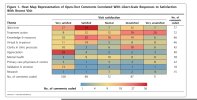
Data were drawn from a patient experience survey implemented in Alberta’s long COVID Inter-professional Outpatient Program (IPOP). A joint display of Likert-scale satisfaction ratings and themed open-text feedback was developed to examine connections between the structured responses and qualitative insights.

RESULTS

We integrated quantitative survey satisfaction ratings with themes from the qualitative analysis of open-text comments in a joint display. Examining these data sets together added an analytical layer and uncovered nuanced experiences not evident in Likert-scale responses alone. By aligning satisfaction scores with themes, the joint display surfaced contradictory and paradoxical findings that would otherwise be hidden.

CONCLUSIONS

Aligning Likert-scale responses with thematic analysis of open-text reveals subtleties that may be obscured by scores alone. Understanding the narratives behind ratings is essential to evaluate health care programming, particularly when surveys are the primary mechanism for incorporating patient voices into service planning and delivery.

Ann Fam Med 2026;24:153-158. https://doi.org/10.1370/afm.250474
 

News Release 23-Mar-2026

Joint display method for patient surveys reveals deeper insights into patient satisfaction​

When high scores hide realities: enhancing patient survey data through joint display

Peer-Reviewed Publication
American Academy of Family Physicians


FacebookXLinkedInWeChatBlueskyMessageWhatsAppEmail

Methodology

Joint Display Method for Patient Surveys Reveals Deeper Insights Into Patient Satisfaction

Background: Many patient surveys include both numerical ratings and written comments, responses that are frequently analyzed separately, which can limit what researchers learn from the data. This report demonstrates a method for analyzing survey ratings and open-text comments together. Researchers used survey data from Alberta, Canada’s Long COVID Interprofessional Outpatient Program (IPOP), which provided multidisciplinary care for adults with COVID-19 infection and symptoms lasting at least 12 weeks.

What They Found: A total of 360 surveys were completed by 306 patients across three IPOP clinics. Overall satisfaction scores were high, with the following results::


  • 45% of respondents reported being very satisfied with their most recent visit
  • 29% were satisfied
  • 11% were neutral
  • 8% were unsatisfied
  • 7% were very unsatisfied
Researchers created a “joint display” table that placed satisfaction scores alongside the themes from qualitative feedback. Examining the responses together revealed patterns between satisfaction ratings and patient experiences that were not visible from the numeric scores alone. For example, some patients indicated high satisfaction scores while still expressing concerns about their care. Other patients chose low satisfaction rates but still provided suggestions for improvement.

Implications: For this long COVID program evaluation, pairing satisfaction scores with open-text comments gave a fuller view of patient experience than scores alone.

When High Scores Hide Realities: Enhancing Patient Survey Data Through Joint Display

Meaghan Brierley, PhD, et al

Health Systems Knowledge and Evaluation, Acute Care Alberta, Edmonton, Alberta, Canada


Journal​

The Annals of Family Medicine

Article Title​

Joint Display Method for Patient Surveys Reveals Deeper Insights Into Patient Satisfaction

Article Publication Date​

23-Mar-2026
 
All that work to downplay patients' dissatisfaction with treatment action.

1000087941.jpg

Perhaps the most surprising result was found under the theme of treatment action. Those who were very satisfied appreciated empathetic care and constructive feedback, while those who were very unsatisfied complained about a lack of proactive treatment.
How dare they complain!!
 
Back
Top Bottom