Evergreen
Senior Member (Voting Rights)
Randomized Controlled Trial
In Vivo2007 Sep-Oct;21(5):707-13.
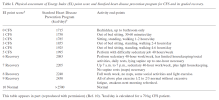
Patients were given valacyclovir at 14.3 mg/kg every 6 hours. The validated Energy Index (EI) point score assessing physical functional capacity, Holter monitor, multigated (radionuclide) MUGA rest/stress ventriculographic examination, EBV serum IgM viral capsid antibodies (VCA), and EBV early antigen diffuse (EA) were followed.
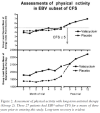
After six-months, Group 1 CFS patients receiving valacyclovir experienced an increased mean least square EI point score +1.12 units (122 kcal/day), while the placebo cohort increased +0.42 EI units (65 kcal/day).
EI point scores at Group 2 increased progressively. Sinus tachycardias decreased and abnormal cardiac wall motion improved. Serum antibody titers to EBV VCA IgM decreased. Patients resumed normal activities.
Link to download full text pdf
In Vivo2007 Sep-Oct;21(5):707-13.
Valacyclovir treatment in Epstein-Barr virus subset chronic fatigue syndrome: thirty-six months follow-up
A Martin Lerner, Safedin H Beqaj, Robert G Deeter, James T FitzgeraldAbstract
We hypothesized that subset classification of Epstein-Barr virus (EBV) in chronic fatigue syndrome (CFS) is required. At first, a blinded-random placebo-controlled trial of valacyclovir in EBV CFS subset was performed (Group 1), and this EBV subset was followed for thirty-six months (Group 2).Patients were given valacyclovir at 14.3 mg/kg every 6 hours. The validated Energy Index (EI) point score assessing physical functional capacity, Holter monitor, multigated (radionuclide) MUGA rest/stress ventriculographic examination, EBV serum IgM viral capsid antibodies (VCA), and EBV early antigen diffuse (EA) were followed.
After six-months, Group 1 CFS patients receiving valacyclovir experienced an increased mean least square EI point score +1.12 units (122 kcal/day), while the placebo cohort increased +0.42 EI units (65 kcal/day).
EI point scores at Group 2 increased progressively. Sinus tachycardias decreased and abnormal cardiac wall motion improved. Serum antibody titers to EBV VCA IgM decreased. Patients resumed normal activities.
Link to download full text pdf
Last edited: