The role of hypocortisolism in chronic fatigue syndrome
Abstract
Abstract
Background: There is accumulating evidence of hypothalamic-pituitary-adrenal (HPA) axis hypofunction in chronic fatigue syndrome (CFS). However, knowledge of this hypofunction has so far come exclusively from research in adulthood, and its clinical significance remains unclear. The objective of the current study was to assess the role of the HPA-axis in adolescent CFS and recovery from adolescent CFS.
Method: Before treatment, we compared the salivary cortisol awakening response of 108 diagnosed adolescent CFS patients with that of a reference group of 38 healthy peers. Salivary cortisol awakening response was measured again after 6 months of treatment in CFS patients.
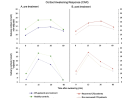
Results: Pre-treatment salivary cortisol levels were significantly lower in CFS-patients than in healthy controls. After treatment recovered patients had a significant rise in salivary cortisol output attaining normalization, whereas non-recovered patients improved slightly, but not significantly. The hypocortisolism found in CFS-patients was significantly correlated to the amount of sleep. Logistic regression analysis showed that an increase of one standard deviation in the difference between pre- and post-treatment salivary cortisol awakening response was associated with a 93% higher odds of recovery (adjusted OR 1.93 (1.18 to 3.17), p=0.009). Pre-treatment salivary cortisol did not predict recovery.
Conclusions: Hypocortisolism is associated with adolescent CFS. It is not pre-treatment cortisol but its change to normalization that is associated with treatment success. We suggest that this finding may have clinical implications regarding the adaptation of future treatment strategies.
Web | DOI | Psychoneuroendocrinology
Nijhof, Sanne L.; Rutten, Juliette M.T.M.; Uiterwaal, Cuno S.P.M.; Bleijenberg, Gijs; Kimpen, Jan L.L.; Putte, Elise M. van de
Abstract
Abstract
Background: There is accumulating evidence of hypothalamic-pituitary-adrenal (HPA) axis hypofunction in chronic fatigue syndrome (CFS). However, knowledge of this hypofunction has so far come exclusively from research in adulthood, and its clinical significance remains unclear. The objective of the current study was to assess the role of the HPA-axis in adolescent CFS and recovery from adolescent CFS.
Method: Before treatment, we compared the salivary cortisol awakening response of 108 diagnosed adolescent CFS patients with that of a reference group of 38 healthy peers. Salivary cortisol awakening response was measured again after 6 months of treatment in CFS patients.
Results: Pre-treatment salivary cortisol levels were significantly lower in CFS-patients than in healthy controls. After treatment recovered patients had a significant rise in salivary cortisol output attaining normalization, whereas non-recovered patients improved slightly, but not significantly. The hypocortisolism found in CFS-patients was significantly correlated to the amount of sleep. Logistic regression analysis showed that an increase of one standard deviation in the difference between pre- and post-treatment salivary cortisol awakening response was associated with a 93% higher odds of recovery (adjusted OR 1.93 (1.18 to 3.17), p=0.009). Pre-treatment salivary cortisol did not predict recovery.
Conclusions: Hypocortisolism is associated with adolescent CFS. It is not pre-treatment cortisol but its change to normalization that is associated with treatment success. We suggest that this finding may have clinical implications regarding the adaptation of future treatment strategies.
Web | DOI | Psychoneuroendocrinology