The Effect of Fluvoxamine and Metformin for Fatigue in Patients With Long COVID, 2026, Reis et al

Hutan

Moderator
Staff member
The Effect of Fluvoxamine and Metformin for Fatigue in Patients With Long COVID

Reis, Gilmar; dos Santos Moreira Silva, Eduardo Augusto; Medeiros Silva, Daniela Carla; Thabane, Lehana; Ferreira, Thiago Santiago; Reis, Luiza Lanna França; Figueiredo Guimaraes Almeida, Ana Paula; Menezes Amaral, Marcela; Savassi, Leonardo Cançado Monteiro; de Souza Campos, Vitoria Helena; Campos Simplicio, Maria Izabel; Barra Ribeiro, Luciene; de Souza Medeiros, Thalyne; Campos Siqueira, Thais; Vieira, Taynara Silva; Drumond Rausse, Nayara; Garofolo, Tereza Cristina; Fagundes Silva, Eliane Carreiro; Harari, Ofir; D’Urso, Gennaro; Forrest, Jamie I.; Park, Jay; Nachega, Jean B.; Lindsell, Christopher; Glenn, Jeffrey S.; Thorlund, Kristian; Dybul, Mark; Mills, Edward J.; Reis, Gilmar; dos Santos Moreira Silva, Eduardo Augusto; Medeiros Silva, Daniela Carla; Campos Simplicio, Maria Izabel; Dybul, Mark; Mills, Edward J.; Cameron, William; Orbinski, James; Singh, Sonal; Thorlund, Kristian; Haggstrom, Jonas; Nogueira, Ana M.R.; Drumont, Nayara S.; Vieira, João V.B.; Gonçalves, Kenia S.G.; Martins, Aline L.J.; Vieira, Tainara S.; Suterio, Lineria H.M.; Ferreira, Thiago Santiago; Menezes Amaral, Marcela; Barra Ribeiro, Luciene; Campos, Vania Regina; Muniz De Oliveira, Rosemary; Oliveira França, Carla Stefany; Guimarães Darcena, Kenia Sthéfane; Fagundes Silva, Eliane Carreiro; Garofolo, Tereza Cristina; De Rezende Oliveira, Nicole Avelar; Campos Siqueira, Thais; Ferreira Boari, Nicole; De Jesus Martins, Aline Lucia; Simplicio De Oliveira De Araujo, Luana Grazielle; De Souza Medeiros, Thalyne; De A Olveira, Janaina Leyne; Reis Garcia, Bruno; Barbosa Silveira, João Victor; Ferreira Couto, Larissa; A. R., Kelly Cristina; Vasconcelos, Paula Luana; de Souza Campos, Vitoria Helena; Reis, Luiza Lanna França; Da Silva, Ingrid Emanuele; Celso Dos Santos, Onalia; Vasconcelos Santos, Paula Luana; Bitarães, Carina; Guimaraes Darcena, Kenia Sthefhane; Figueiredo Guimaraes De Almeida, Ana Paula; Soares Cardoso, Maria Vitoria; Loiola Silva, Mayra Darlliane; Mendes Veloso, Ivana Aparecida; Oliveira Brandão, Jessica; Savassi, Leonardo Cançado Monteiro; Soares, Felipe César; Costa Ferreira, Thais Nara; Pinheiro, Diniz Antonio; Domingues Guimarães, Heron; Viana da Rocha, Augusto; Soares de Oliveira, Hilton; de Resende Amaral, Tânia Maria; Bigodinho, Paulo; Dias Duarte Tomé, Nádia Cristina; Guimarães, Guilherme; Gonçalves, Dulce Pimenta; Oswaldo, Ângelo; Resende do Nascimento, Glauciane

Abstract
Abstract

Background and Objective:
Postacute sequelae of SARS-CoV-2, or long COVID, presents a major therapeutic challenge, with fatigue being a prevalent and debilitating symptom.
Objective: To assess the efficacy of fluvoxamine and metformin for long COVID fatigue.

Method
Design: Randomized, placebo-controlled, adaptive trial. (ClinicalTrials.gov: NCT06128967)
Setting: Outpatient sites in Brazil.
Participants: 399 adults with fatigue persisting 90 or more days after confirmed SARS-CoV-2 infection.
Intervention: Participants were randomly assigned to fluvoxamine (100 mg twice daily), metformin (750 mg twice daily), or matching placebo for 60 days.
Measurements: The primary outcome was change in Fatigue Severity Scale (FSS) score.

Results:
Fluvoxamine showed a significant reduction in fatigue compared with placebo at day 60 (mean difference, −0.43 [95% credible interval {CrI}, −0.80 to −0.07]), with a sustained effect at day 90 (mean difference, −0.58 [CrI, −0.98 to −0.16]). Fluvoxamine also improved quality-of-life scores with high posterior probability. Metformin showed no significant benefit. Adverse events were less frequent with fluvoxamine (20.0%) than with metformin (28.8%) or placebo (29.7%). Grade 3 and higher adverse events were rare across all groups.

Limitations:
The 90-day follow-up period limits conclusions about the durability of treatment effects, and the exclusive focus on fatigue as the primary outcome does not address other prevalent long COVID symptoms, leaving fluvoxamine's broader therapeutic utility uncertain.

Conclusion:
Fluvoxamine, but not metformin, may be an effective treatment for reducing fatigue and improving quality of life in patients with long COVID.

(minor changes to abstract format for readability)

Web | DOI | PDF | Annals of Internal Medicine | Open access
 
Last edited:
Eligible participants were adults (aged ≥18 years) with a single index episode of SARS-CoV-2 infection confirmed by laboratory testing or, where testing was not available, by clinician diagnosis or self-report and with new or worsening fatigue persisting 90 to less than 365 days after the acute illness. Inclusion required moderate to severe fatigue (mean Fatigue Severity Scale [FSS] score ≥4) and symptoms that the investigator judged not to be attributable to another identifiable cause.
Note that participants had had fatigue following COVID-19 for between 90 and 365 days. So, the chance of natural improvement should be quite high - it will be interesting to see what it was in the placebo arm.

Participants were randomly assigned in a 1:1:1 ratio to fluvoxamine, metformin, or matching placebo using a centralized, web-based randomization system stratified by site with variable block sizes. Placebo tablets were manufactured to be indistinguishable from active medications in appearance, packaging, and schedule; no separate matching algorithm beyond randomization was used. Study medications were administered orally twice daily for 60 days. Participants, site personnel, investigators, and outcome assessors were blinded to treatment allocation.
It's sounding good - three arms including a placebo, lots of blinding. The study size is good. But, fatigue can have a lot of causes.

Participants with diabetes who were receiving long-term metformin therapy were not eligible for the metformin group and were enrolled only in the fluvoxamine or placebo group. Participants receiving long-term metformin assigned to the placebo group were excluded from comparisons with the metformin group.
The inclusions of people with diabetes who are already receiving metformin seems like a complication. I think we'll need to see how many people were in that group.

Participants received oral metformin extended-release (750 mg twice daily), oral fluvoxamine (100 mg twice daily), or oral matching placebo for 60 days.
 
Last edited:
Outcomes:
The primary outcome was change in FSS score from baseline to day 60. The FSS is a validated 9-item self-reported measure of fatigue severity, with each item scored on a 7-point Likert scale; the total score is calculated as the mean of the 9 item scores (range, 1 to 7), with higher scores indicating greater fatigue.
Secondary outcomes included change in FSS score at day 90; quality of life, assessed by the 5-level EuroQol 5-dimensional questionnaire (EQ-5D-5L) at days 30, 60, and 90; longitudinal analysis of FSS score over time; and recovery (defined as recorded FSS score <3). Safety end points included incidence of adverse events and serious adverse events.

Fatigue Severity Scale
During the past week, I have found that: Disagree Agree 1234567

1. My motivation is lower when I am fatigued.

2. Exercise brings on my fatigue.

3. I am easily fatigued.

4. Fatigue interferes with my physical functioning.

5. Fatigue causes frequent problems for me.

6. My fatigue prevents sustained physical functioning.

7. Fatigue interferes with carrying out certain duties and responsibilities.

8. Fatigue is among my three most disabling symptoms.

9. Fatigue interferes with my work, family, or social life.
 
We enrolled a total of 399 participants between 18 October 2023 and 10 February 2025 and randomly assigned them to fluvoxamine (n = 150), metformin (n = 111), or placebo (n = 138)
It looks as though they kept recruiting until they had 130 participants report to day 90 follow-up for fluvoxamine and the placebo. they stopped recruiting for metformin early because an early analysis indicated it was not effective. This means that there was some unblinding for at least some of the researchers.
Interim analyses were scheduled at 25%, 50%, and 75% of the target sample size; 2 of 4 planned analyses were conducted. Adaptive stopping criteria for efficacy and futility were prespecified.
Only 109 participants attended the Day 90 followup in the metformin group.
 
Also Opipramol is another sigma agonist that a couple of patients (maybe one) has reported positive results on.

Both Opipramol and fluv have about the same binding affinity for sigma one. Fluv doesn’t touch the dopamine receptors—opi does. Fluv has affinity for SERT—opi does not.

I don’t really know if you can say one is really “cleaner” than another.

 
Last edited:
Drop outs
138 were allocated to the placebo, with 130 making it to 90 days
150 were allocated to fluvoxamine, with 130 making it to 90 days
111 were allocated to metformin, with 109 making it to 90 days

So, there were more dropouts in the fluvoxamine group. That may have affected things.

The characteristics of patients in Table 1 are given for the people who were allocated to the treatments.
76.7% of the fluvoxamine group were female, whereas 85.5% of the placebo group were female. That makes it possible that ME/CFS-type disease was less prevalent in the fluvoxamine groups.
The FSS score was a bit lower in the fluvoxamine group (5.6) than in the placebo group (5.9) - so fatigue was on average a bit more severe in the placebo group.
 
Primary Outcome Results (Day 60)

the primary end point (change in FSS score from baseline to day 60). Fluvoxamine reduced fatigue compared with placebo, with a mean treatment effect (difference in change from baseline relative to placebo) of −0.43 points (95% CrI, −0.80 to −0.07 points) and a 99.0% posterior probability of superiority. This benefit was sustained at day 90 (secondary end point), with a mean difference of −0.58 (CrI, −0.98 to −0.16) and a 99.7% probability of superiority (Supplement Figure 1, available at Annals.org). Metformin showed no evidence of benefit (day 60 treatment effect, −0.03 [CrI, −0.42 to 0.37; probability, 56.0%]; day 90 treatment effect, −0.04 [CrI, −0.47 to 0.38; probability, 57.8%]).
They report that fluvoxamine reduced fatigue by 0.43 more than the placebo. (Keeping in mind, this is for a scale from 1 to 7). I'm not yet sure if that is adjusted for various baseline characteristics or not.

I think it's questionable whether that average benefit is clinically useful. I think there is a good chance that, on average, slightly more people allocated to the placebo had more severe and more ME/CFS-type fatigue that was more resistant to natural improvement over time (given there were more females and more severe baseline fatigue in the placebo group).

I guess it is possible that an anti-depressant might make a small change in the way people answer the FSS i.e. they might answer questions more positively. I doubt that the possible side effects are worth it for such a small and questionable level of benefit, unless there are significant benefits for other symptoms.

For sure, metformin is not looking to be useful.
 
Last edited:
Some really good thoughts here, particularly in the conclusion:

It’s also worth mentioning that we’ve sort of seen this fluvoxamine story before, and it didn’t pan out as well as hoped. Earlier, I mentioned that — back in 2021 — I covered the randomized trial from this same group, showing a benefit of fluvoxamine for primary COVID infection. However, subsequent trials in other countries, including the United States, did not bear that benefit out. This happens; no one study is definitive, after all, but it certainly gives me pause. I’d like to see some replication before we reach for fluvoxamine for PASC fatigue.

A final issue comes up when we think about what makes fluvoxamine special among the SSRIs. Sure, there’s that sigma-1 effect that theoretically reduces brain inflammation. But there’s something else. Fluvoxamine, among all the SSRIs, is the most potent inhibitor of the liver enzyme CYP1A2, an enzyme that is responsible for breaking down, among other things, caffeine.

That’s right, fluvoxamine dramatically increases the half-life of caffeine from 5 hours to over 30 hours. In a study where the primary outcome is fatigue, this seems like a potentially important mechanism. It was not explored in the paper.
 
They report that fluvoxamine reduced fatigue by 0.43 more than the placebo. (Keeping in mind, this is for a scale from 1 to 7). I'm not yet sure if that is adjusted for various baseline characteristics or not.

I think it's questionable whether that average benefit is clinically useful. I think there is a good chance that the people allocated to the placebo had more severe and more ME/CFS-type fatigue that was more resistant to natural improvement over time (given there were more females and more severe baseline fatigue in the placebo group).
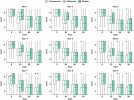
Looking at the final results, it also appears that all three groups significantly improved by the end of the 90 day period, with slightly greater improvement among the fluvoxamine group, but every group saw scores drop to near half what they were at the start.
 
Participants were randomly assigned to fluvoxamine (100 mg twice daily).

This is a middle range dose for depression. It would be good if further research could do a dose/response study to see if lower dosages could be effective.
 
It would be good if further research could do a dose/response study to see if lower dosages could be effective.
Or perhaps higher doses? A result -0.43 on the FSS in the context of a probably poorly matched placebo group isn't very impressive.


Secondary outcomes - EQ-5D-5L - a measure of quality of life
I'm assuming the scoring range is 0 to 1

Score change over placebo for fluvoxamine
Day 30: 0.10
Day 60: 0.06
Day 90: 0.07
(keeping in mind the treatment stopped at Day 60.).

So, again, a not very remarkable benefit.
 
I'd like to see the distributions of baseline FSS scores for the people in each treatment group who actually contributed data to the Day 60 and Day 90 assessments. The treatment differences at Day 60 and Day 90 might be explained by different percentages of people dropping out of the groups for the later assessments (with the dropouts more likely to have unresolving fatigue).

All models were adjusted for baseline FSS score, site, age, and sex, except for the longitudinal model where baseline FSS scores were used as time 0 observations.

It seems likely that the authors used the FSS scores at baseline for the 150 people allocated to fluvoxamine (mean 5.60). But then, 12 people dropped out for the 60 day assessment, and 20 weren't present for the 90 day assessment. If these people tended to be the most fatigued, that could affect the results. 20/150 is 13%

In contrast, in the placebo group (baseline mean 5.90), only 5 people dropped out of the 60 day assessment and 8 people weren't present for the 90 day assessment. 8/138 is 6%

The metformin group had very little chance of benefitting from survivorship bias (baseline mean 5.60). Only 2 people dropped out of the 60 day assessment, and 2 people weren't present for the 90 day assessment. 2/111 is 2%

If the baseline FSS score made the fluvoxamine participants in followup assessments looks worse as a group at baseline than they actually were, and participants with worse fatigue at baseline were less likely to recover, then the model adjustments might have contributed to the positive result for fluvoxamine. I get uneasy with adjustments that we can't actually see.

The improvement across all groups mostly like natural recovery to me.
Thank you for the charts. I agree. There looks to be a lot of natural recovery going on, as would be expected with participants in their first year of Long COVID.

I think that makes it less likely that the fluvoxamine is having a real effect here, as it means a symptom-relief mechanism like that suggested in the Medscape article can't account for the differences at Day 90 when the drug is not being taken. The Medscape article suggested that the drug might be slowing the breakdown of caffeine and so creating a sort-of sustained release stimulant.
 
Primary Outcome Results (Day 60)


They report that fluvoxamine reduced fatigue by 0.43 more than the placebo. (Keeping in mind, this is for a scale from 1 to 7). I'm not yet sure if that is adjusted for various baseline characteristics or not.

I think it's questionable whether that average benefit is clinically useful. I think there is a good chance that the people allocated to the placebo had more severe and more ME/CFS-type fatigue that was more resistant to natural improvement over time (given there were more females and more severe baseline fatigue in the placebo group).

I guess it is possible that an anti-depressant might make a small change in the way people answer the FSS i.e. they might answer questions more positively. I doubt that the possible side effects are worth it for such a small and questionable level of benefit, unless there are significant benefits for other symptoms.

For sure, metformin is not looking to be useful.

Also, day 60 - was that the only measuring point?

It feels like little was learned from the Nice analysis of ME/CFS treatments in the guideline and the need to look at long term measurements if not.

There are probably quite a few things out there that could make us feel more peppy, particularly when combined with the promise it might work and not being so severe and/or with bitter experience from going at things 'to see if I feel better and can do x' (only to find out much later on you aren't being clever or cheating the illness and are getting worse)

We might a lot of us use PEM to emphasise to those around us that just because we scraped energy together to eg make it to a vital medical appointment 'that day' and seemed OK for 5mins doesn't mean it isn't going to hit us hugely at home where noone will see for a far longer time than they imagine (not the minimisation bps seem to be working on)

But the other real, and bigger probably, issue certainly until you get to many, many years in is the cumulative 'just over' stuff. Someone else mentioned summer vs winter and I understand that effect - it's outside heatwaves easier on the body but that means it is also easier to overdo things particularly when you are really ill and only have small things you'd be doing anyway. Getting excited about 'feeling enthusiastic and zipped' isn't making the illness better and can actually be a bit of a nightmare stage of me/cfs because you actually are pushing limits and not getting good rest and actually less able to rely on your body, but just pushing it to be reliable with alarms and so on. That easily in the early day hits in the realisation of that and as a massive crash over 60 days in (certainly if it didn't 'get going' until a few weeks in because you are 'seeing if you feel anything' etc first).

Just like daily strong coffee many times a day might seem to work for those it agrees with and you just make that tough morning one stronger or have a second cup. But it isn't tackling the illness at all, and the kick in the bum when it all crashes down xmonths down the line

Plus antidepressants classically can at least take time if not make some feel worse in the initial month or two (making feeling back to where one was in the first place like an improvement) so I find it a choice of timeframe that needs questions and has some explaining to be done
 

NEWS RELEASE 30-MAR-2026

Common antidepressant eases fatigue associated with long COVID, study finds

Peer-Reviewed Publication
MCMASTER UNIVERSITY
A global research team co‑led by McMaster University has identified one of the first medications shown to meaningfully reduce fatigue in people living with long COVID – a breakthrough for millions still struggling with persistent symptoms years after the pandemic began.
The randomized, placebo‑controlled clinical trial found that fluvoxamine, a low‑cost and widely available antidepressant, significantly improved fatigue and quality of life among adults with long COVID. The findings were published March 31, 2026 in the Annals of Internal Medicine.
Fatigue is the most common and debilitating symptom of long COVID, leaving many people unable to work, care for their families, or resume their normal lives. Despite its global impact, few proven treatments exist.
“This is an important step forward for patients who have been desperate for evidence‑based options,” says Edward Mills, senior author, professor in McMaster’s Department of Health Research Methods, Evidence, and Impact, and co‑principal investigator of the trial. “Fluvoxamine showed consistent and meaningful benefits, and because it's already widely used and well understood, it has clear potential for clinical use.”
The study was co‑led by researchers in Canada, Brazil, and the United States, with clinical sites in the city of Belo Horizonte and across Minas Gerais, Brazil. The REVIVE-TOGETHER trial team included partners from McMaster University, the University of British Columbia, Stanford University, the University of Pittsburgh, Duke University, Georgetown University, and multiple Brazilian institutions.
The trial enrolled 399 adults in Brazil who continued to experience fatigue for at least 90 days after a confirmed SARS‑CoV‑2 infection. Participants were randomly assigned to receive fluvoxamine (sold under the brand name Luvox), metformin (a common diabetes medication), or placebo for 60 days.
“We wanted to test whether two existing, widely available, and affordable medications could help. Both had biological reasons to think they might work against long COVID fatigue, but neither had been rigorously tested for this purpose in a proper clinical trial,” says Mills.
The researchers found fluvoxamine reduced fatigue more than placebo, with evidence showing a 99 per cent probability the drug outperformed the placebo. The medication also produced improvements in overall quality of life across multiple measures.
Previous research has showed metformin reduces the risk of developing long COVID when taken during the acute phase of infection, and this research showed it offers no meaningful benefit in helping people with fatigue symptoms of established long COVID.
The study used a sophisticated Bayesian adaptive design, allowing researchers to stop treatment arms early when results became clear – a method that accelerates evidence generation while maintaining scientific rigour.
“The trial used a sophisticated adaptive design that allowed it to reach conclusions more efficiently than traditional trials, stopping early when the evidence was clear enough – a design innovation as important as the findings themselves,” says Gilmar Reis, lead author, researcher with Cardresearch, a Brazilian clinical research center based in Belo Horizonte. Reis is also a part-time associate professor at McMaster.
Long COVID remains a major public health challenge, affecting an estimated 65 million people worldwide. Yet most medical guidelines still offer only supportive care, such as pacing and symptom management, due to the lack of proven treatments. The researchers emphasize that while fluvoxamine offers a promising option for managing fatigue, long COVID is a complex condition with multiple symptoms and biological pathways. Further studies are needed to understand who benefits most, how the medication works, and how it might be combined with other emerging treatments.
“This trial gives clinicians their first strong evidence for a medication that helps reduce long COVID fatigue. Patients want something they can try today – and this finding brings us closer to that reality,” says Jamie Forrest, corresponding author and postdoctoral research fellow at the University of British Columbia.
The research was funded by The Latona Foundation.
Available for interview:
Edward Mills: millsej@mcmaster.ca
  • Senior author of the study and co‑principal investigator of the trial
  • Professor in McMaster’s Department of Health Research Methods, Evidence, and Impact
Gilmar Reis: reisg1@mcmaster.ca
  • Lead author of the study and co‑principal investigator of the trial
  • Associate professor in McMaster’s Department of Health Research Methods, Evidence, and Impact
Media contact: stranj4@mcmaster.ca

JOURNAL

Annals of Internal Medicine

 
My question on reading this was, if fluvoxamine did indeed have an effect, did it improve mood or fatigue?
Given the association of depression with fatigue, we should note that patients with a diagnosis of major depressive disorder or those taking antidepressant medications were excluded from this trial.

However, participants with depressive symptoms (in the absence of a formal major depressive disorder diagnosis) were not excluded, reflecting the real-world comorbidity of mood symptoms in long COVID.

This design choice was intentional as persons with long COVID have varying degrees of mood symptoms (30), and excluding people with depressive symptoms would have biased the sample.

We did not assess whether the observed reduction in fatigue reflects improvement in depression (major disorder or symptoms) or effects mediated through nonmood pathways relevant to the pathophysiology of long COVID.

We acknowledge that fatigue is a multidimensional symptom that occurs independent of depression and is associated with nonpsychiatric conditions such as postviral syndromes, inflammatory disorders, and chronic fatigue syndrome.

Clarifying these relationships will require future studies incorporating structured psychiatric assessments and biological measures.

But I'd really like to hear @hibiscuswahine's take on this study.
 
Only able to skim through very quickly but agree that the higher missingness in the fluvoxamine arm is curious - by Day 60, 8% vs 4% placebo; by day 90, 13% vs 6% (with metformin at 2%). I'm not sure if the result would still remain in fluvoxamine's favour even if you assumed the missing patients were the worst (fluvoxamine starts from a slightly better baseline, and the treatment effect is from a baseline adjusted model). The paper says that the missing data were handled by the multiple-imputation-by-chained-equations method (the Bayesian models were fit with formulas of the form Day_{60,90} ~ Product + Day_0 + Site + Age + Sex). A sensitivity analysis might have helped? They also don't give reasons for the dropouts as far as I can see?

In any event the effect is not a large one, and if an antidepressant is successful in producing a mood-elevating effect it might well result in a small positive shift in FSS scores - and the FSS includes a question involving motivation - without having any effect on the underlying cause of the LC. Looking at ClinicalTrials.gov there are a couple of other fluvoxamine trials for LC registered (link, link) so more definitive answers are probably forthcoming.

Fluvoxamine has never been tested in ME/CFS as far as I know although I remember there have been a small number of trials of other SSRIs as well as TCAs, MAOIs and the SNRI duloxetine.
 
Back
Top Bottom