Should those who pushed BPS theories be held to account, once the biological basis of ME/CFS is understood?

They have to wriggle fast though, saving face by scooping off the layers of egg won't work anymore.
Many of them knew for years.

Who of the earlier BPS crowd said: "a third would get better anyway, a third might get better and another third would not get better"?

I'm still doing the quotes the Dutch way, sorry I can't find the right way, you'll get it.


Alastair Miller is, I am sure, on record stating the "one third recover, one third ...., one third ...."

Whilst looking for the quote from Miller I came across a similar statement from him, but relating to the percentage of ME patients who either improve, stay the same or become worse from CBT/GET. The quote is from Alastair Miller's Presentation to Forward ME on the 20th January 2015.


Alastair Miller: 2.10 "Members asked Dr Miller to clarify his statement about the proportion of patients that get worse after CBT or GET. Dr Miller said the correct position was that two thirds show some improvement and the other third show no change – or in some cases they get worse."


Miller: 2.6 "Data from the NOD study was showing that some patients were worse after CBT or GET, some remained the same and at least one third showed improvement."


The full Forward ME Minutes
is worth reading, for a number of statements, about whether or not the [2007] NICE Guideline needed to be updated.


Miller: 2.5 "Dr Miller said he accepted the Guideline had its limitations but there was not yet an evidence base for other therapies."

.
 
Last edited:
Ah,

From the Facebook Page 'Tom Kindlon's ME CFS & related page: News, Research and more's post'
4/10/2020


'Dr Alastair Miller's misleading claims about effectiveness of the English NHS (rehab) ME/CFS clinics at a Royal Society of Medicine webinar in Sept 2020
----
As Dr David Tuller reported*, the Royal Society of Medicine conducted an online webinar recently called “Long COVID: Understanding the shadow of the virus.”


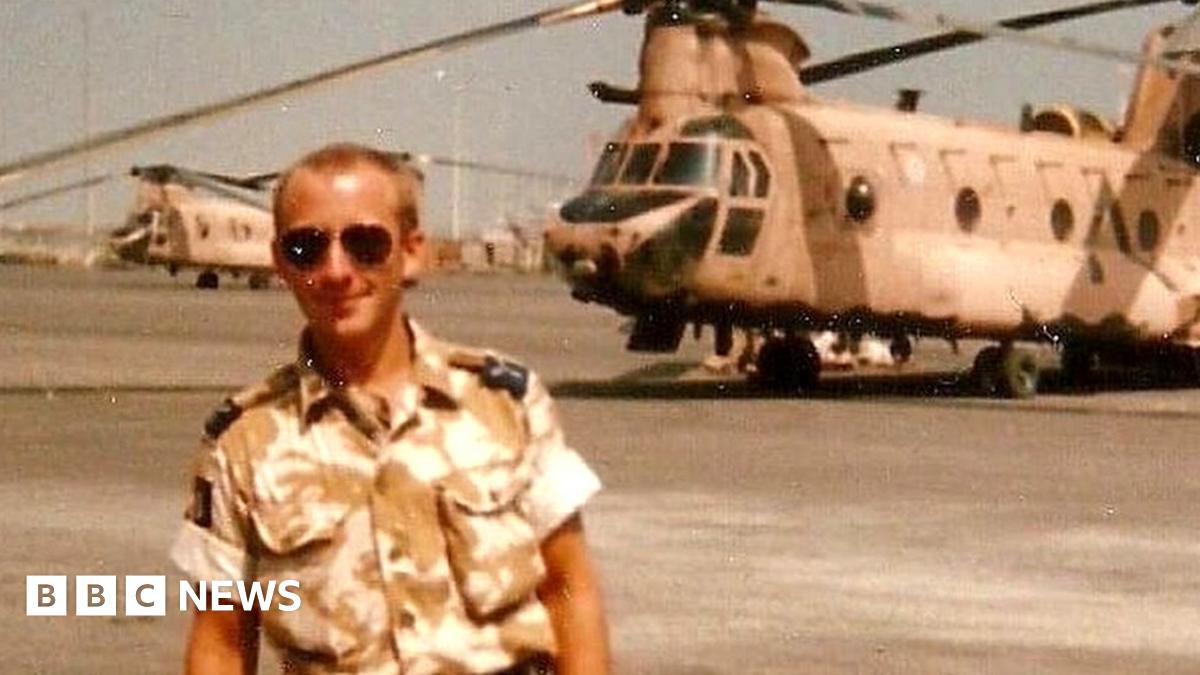
Among others, it featured Dr Alastair Miller (an infectious disease expert from Liverpool who used to run a local ME/CFS clinic) who claimed with regard to ME/CFS:

"And from our results, which are pretty much in line with PACE and all the other centers that are using these therapies, we reckoned that about one third of our patients made a complete recovery and go back to a pre-morbid existence, about a third made an improvement but still had some symptoms, and about a third did not recover.”


Fortunately, we don't have to depend on Dr Miller's claims: we actually have a published paper on the English NHS (rehab) ME/CFS clinics**.

A quick review of the data shows that Dr Miller's claims don't add up:

(From table 3)
At 1 year after initial assessment
I have been able to return to work or increase my hours: 18.0%
I have stopped working or reduced my hours: 34.8%

(From Table 6)
At 2- to 5-year follow-up
I have been able to return to work or increase my hours: 23.7%
I have stopped working or reduced my hours: 34.9%

(From table 4)
At 1 year after initial assessment
Do you think that you are still suffering from CFS/ME? No: 2.8% Uncertain: 10%
Note, that "no" and "uncertain" would also include those who now consider CFS/ME to be a misdiagnosis; it doesn't mean they are fully healthy

(From table 6)
Do you think that you are still suffering from CFS/ME?
At 2 years. No: 5.0% Uncertain: 8.8%
At 3 years: No: 2.4% Uncertain: 7.2%
At 4 years: No: 6.6% Uncertain: 11.3%
At 5 years: No: 8.2% Uncertain: 9.2%


Again, note that "no" and "uncertain" would also include those who now consider CFS/ME to be a misdiagnosis; it doesn't mean they are fully healthy

*Trial By Error: That Royal Society of Medicine Webinar on Long-Covid https://www.virology.ws/.../tria-by-error-royal-society.../

**Specialist treatment of chronic fatigue syndrome/ME: a cohort study among adult patients in England" https://bmchealthservres.biomedcentral.com/.../s12913-017...
 
Last edited:
Trial By Error 'That Royal Society of Medicine Webinar on Long Covid'.
1/10/2020

' .... the Royal Society of Medicine conducted an online webinar called “Long COVID: Understanding the shadow of the virus.”


Alastair Miller: “The PACE trial…has had a lot of bad press…That study along with a number of other meta-analyses have shown benefits of CBT and graded exercise, and that’s the approach that we used in Liverpool. And from our results, which are pretty much in line with PACE and all the other centers that are using these therapies, we reckoned that about one third of our patients made a complete recovery and go back to a pre-morbid existence, about a third made an improvement but still had some symptoms, and about a third did not recover.”

Miller stressed that “compromise” was key to progress with post-viral fatigue syndrome and chronic fatigue syndrome, and, presumably, most cases of post-Covid syndrome. The compromise, he said, was between someone thinking they can “just blast this out of your system” with exercise and “someone saying, Oh, God, I’m so fatigued I’m just going to sit in the wheelchair.”

.
 
Last edited:
IIRC the 1/3 stuff started with Wessely, a decade or two back.
It's a pretty common bullshit technique, when someone has a belief they can't back up. I've seen it applied in may contexts unrelated to health. Also the kind of nonsense one might hear from a loud group of obnoxious drunks who are "solving the world's problems" which are all "easy to solve, if only you have the guts for it".

Also, about your average sports commentator analysis: "Well, Jim, this game could go either way, one team might score more points and win, or maybe the other team will score more points and win, or maybe it will end in a tie, now back to you in the studio for a series of sports gambling ads barely disguised as analysis".
 
Wessely, in a New Scientist interview in 2009:

How successful is your treatment of CFS?
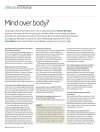
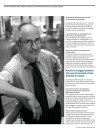
Roughly a third of people completely recover and a third show good improvement. About a third we can't do much for.
 

Attachments

  • Wessely Interview in New Scientist 2009 - 1.jpg
    Wessely Interview in New Scientist 2009 - 1.jpg
    1,022.6 KB · Views: 4
  • Wessely Interview in New Scientist 2009 - 2.jpg
    Wessely Interview in New Scientist 2009 - 2.jpg
    649.2 KB · Views: 4
Wessely, in a New Scientist interview in 2009:

How successful is your treatment of CFS?
Roughly a third of people completely recover and a third show good improvement. About a third we can't do much for.
I know you were sharing it for the one third, one third thing quote but

"Often there is an organic trigger...can get trapped in vicious circles of monitoring their symptoms, restricting their activities beyond what is necessary and getting frustrated or demoralised. This causes more symptoms, more concerns and more physical changes, so much so that what started it all off is no longer what is keeping it going"

Holy wow. Arrow of causation completely reversed. I have never read his understanding of the illness in his own words. This is truly shocking; total and complete mischaracterisation. Where is the proof?

Also "His research into the causes of conditions like chronic fatigue syndrome and Gulf war syndrome have led to hate mail"

Again, where's the proof? Show us this hate mail?
Justified criticism due to being fundamentally wrong his not "hate mail"

For reference, because I am really annoyed now

Re: GWS "the key to whether somebody fell ill was a gene known as PON1, which plays an important role in breaking down toxic chemicals in the body"
from Sarin gas blamed for Gulf War syndrome

Not "monitoring their symptoms"

Although the irony of "sometimes people fall into the hands of charlatans who give them bogus explanations"
 
Back
Top Bottom