Rethinking measurement of health outcomes in Long COVID: complexities, challenges and considerations
The reality of Long COVID emerged soon after the beginning of the COVID-19 pandemic. More than five years later, thousands of articles have been published with multiple case definitions, heterogenous populations, and numerous measurement instruments, yielding a massive amount of evidence. Health outcome measurement is vital for identifying health challenges, changes in health status and predicting future health states for people with Long COVID. Nevertheless, distinct issues of measurement require attention in the context of Long COVID.
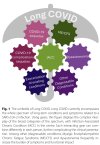
In this commentary, we discuss complexities, challenges and considerations associated with health outcome measurement in research and clinical practice with people with Long COVID. Specifically, we address: (i) identifying the population in the context of variable terminology, definitions and symptoms affecting people with Long COVID; (ii) identifying the complexity of health constructs, often multidimensional, to measure with numerous health-related consequences associated with Long COVID; (iii) identifying the purpose of measurement while taking into account the dynamic nature of Long COVID and (iv) identifying appropriate outcome measures used with people with Long COVID and their limitations.
We highlight important considerations for measurement in research and clinical practice, including the impacts of the various symptoms and the dynamic nature of Long COVID. We provide examples of outcome measures used to date in the context of Long COVID to illustrate the complexities throughout, with a glimpse at wider consequences.
We conclude with a brief discussion of considerations to help pave the way forward for the improvement in health outcomes measurement in Long COVID research and clinical practice. Advancing knowledge on Long COVID requires a return to the fundamentals of measurement science. It is critical to appropriately assess the measurement properties of existing instruments for their ability to accurately and reliably measure health-related constructs associated with this condition. Identifying limitations of currently used tools is also essential to prevent perpetuation of issues in the development of condition-specific measurement instruments for Long COVID. This, in turn, will help pave the way for more robust measurement and improved data interpretation in the context of Long COVID.
Web | DOI | PDF | Health and Quality of Life Outcomes | Open Access
Bhéreur, Anne; McDuff, Kiera; Naye, Florian; Lemay, Louise; Grenier, Annie-Danielle; O’Hara, Margaret E; Nathanson, Julia; Lavoie, Kim L; Sasseville, Maxime; Kadakia, Zeal; Décary, Simon; Munblit, Daniel; O’Brien, Kelly K
The reality of Long COVID emerged soon after the beginning of the COVID-19 pandemic. More than five years later, thousands of articles have been published with multiple case definitions, heterogenous populations, and numerous measurement instruments, yielding a massive amount of evidence. Health outcome measurement is vital for identifying health challenges, changes in health status and predicting future health states for people with Long COVID. Nevertheless, distinct issues of measurement require attention in the context of Long COVID.
In this commentary, we discuss complexities, challenges and considerations associated with health outcome measurement in research and clinical practice with people with Long COVID. Specifically, we address: (i) identifying the population in the context of variable terminology, definitions and symptoms affecting people with Long COVID; (ii) identifying the complexity of health constructs, often multidimensional, to measure with numerous health-related consequences associated with Long COVID; (iii) identifying the purpose of measurement while taking into account the dynamic nature of Long COVID and (iv) identifying appropriate outcome measures used with people with Long COVID and their limitations.
We highlight important considerations for measurement in research and clinical practice, including the impacts of the various symptoms and the dynamic nature of Long COVID. We provide examples of outcome measures used to date in the context of Long COVID to illustrate the complexities throughout, with a glimpse at wider consequences.
We conclude with a brief discussion of considerations to help pave the way forward for the improvement in health outcomes measurement in Long COVID research and clinical practice. Advancing knowledge on Long COVID requires a return to the fundamentals of measurement science. It is critical to appropriately assess the measurement properties of existing instruments for their ability to accurately and reliably measure health-related constructs associated with this condition. Identifying limitations of currently used tools is also essential to prevent perpetuation of issues in the development of condition-specific measurement instruments for Long COVID. This, in turn, will help pave the way for more robust measurement and improved data interpretation in the context of Long COVID.
Web | DOI | PDF | Health and Quality of Life Outcomes | Open Access