MrMagoo
Senior Member (Voting Rights)
Tuller-ception!I would add a 4th concept: the claims made by the authors are not only unsupported by the data reported in their study, and the other studies they cite, they actively contradict it.

Tuller-ception!I would add a 4th concept: the claims made by the authors are not only unsupported by the data reported in their study, and the other studies they cite, they actively contradict it.


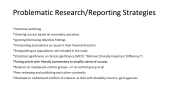
I find this difficult, you don't necessarily know if the analytic approach you planned can be done with the data you end up having. It might not fit the planned statistical tests assumptions, which may or may not break the analysis if changes are not made.- registered in advance, with no deviation from the registered protocol for the initial reporting and analysis

Thanks PagesofME. That was a very interesting listen, I haven't quite got to the end.For everyone who can't quite understand what CBT atcually looks like in practice I can highly recommend an interview by Dan of Post-Exertional Mayonnaise on CBT for patients with ME/CFS with Eliza Charley from Australia.
It's a cult like movement that involves brainwashing.