Evergreen
Senior Member (Voting Rights)
Randomized Controlled Trial
J Med Virol
2013 Dec;85(12):2101-9.
doi: 10.1002/jmv.23713. Epub 2013 Aug 19.
Thirty CFS patients with elevated IgG antibody titers against HHV-6 and EBV were randomized 2:1 to receive valganciclovir (VGCV) or placebo for 6 months in a double-blind, placebo-controlled trial.
Clinical endpoints aimed at measuring physical and mental fatigue included the Multidimensional Fatigue Inventory (MFI-20) and Fatigue Severity Scale (FSS) scores, self-reported cognitive function, and physician-determined responder status.
Biological endpoints included monocyte and neutrophil counts and cytokine levels.
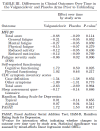
VGCV patients experienced a greater improvement by MFI-20 at 9 months from baseline compared to placebo patients but this difference was not statistically significant.
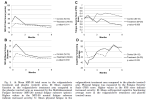
However, statistically significant differences in trajectories between groups were observed in MFI-20 mental fatigue subscore (P = 0.039), FSS score (P = 0.006), and cognitive function (P = 0.025). VGCV patients experienced these improvements within the first 3 months and maintained that benefit over the remaining 9 months.
Patients in the VGCV arm were 7.4 times more likely to be classified as responders (P = 0.029). In the VGCV arm, monocyte counts decreased (P < 0.001), neutrophil counts increased (P = 0.037) and cytokines were more likely to evolve towards a Th1-profile (P < 0.001).
Viral IgG antibody titers did not differ between arms.
VGCV may have clinical benefit in a subset of CFS patients independent of placebo effect, possibly mediated by immunomodulation and/or antiviral effect.
Further investigation with longer treatment duration and a larger sample size is warranted.
Link
PDF
J Med Virol
2013 Dec;85(12):2101-9.
doi: 10.1002/jmv.23713. Epub 2013 Aug 19.
Randomized clinical trial to evaluate the efficacy and safety of valganciclovir in a subset of patients with chronic fatigue syndrome
Jose G Montoya, Andreas M Kogelnik, Munveer Bhangoo, Mitchell R Lunn, Louis Flamand, Lindsey E Merrihew, Tessa Watt, Jessica T Kubo, Jane Paik, Manisha DesaiAbstract
There is no known treatment for chronic fatigue syndrome (CFS). Little is known about its pathogenesis. Human herpesvirus 6 (HHV-6) and Epstein-Barr virus (EBV) have been proposed as infectious triggers.Thirty CFS patients with elevated IgG antibody titers against HHV-6 and EBV were randomized 2:1 to receive valganciclovir (VGCV) or placebo for 6 months in a double-blind, placebo-controlled trial.
Clinical endpoints aimed at measuring physical and mental fatigue included the Multidimensional Fatigue Inventory (MFI-20) and Fatigue Severity Scale (FSS) scores, self-reported cognitive function, and physician-determined responder status.
Biological endpoints included monocyte and neutrophil counts and cytokine levels.
VGCV patients experienced a greater improvement by MFI-20 at 9 months from baseline compared to placebo patients but this difference was not statistically significant.
However, statistically significant differences in trajectories between groups were observed in MFI-20 mental fatigue subscore (P = 0.039), FSS score (P = 0.006), and cognitive function (P = 0.025). VGCV patients experienced these improvements within the first 3 months and maintained that benefit over the remaining 9 months.
Patients in the VGCV arm were 7.4 times more likely to be classified as responders (P = 0.029). In the VGCV arm, monocyte counts decreased (P < 0.001), neutrophil counts increased (P = 0.037) and cytokines were more likely to evolve towards a Th1-profile (P < 0.001).
Viral IgG antibody titers did not differ between arms.
VGCV may have clinical benefit in a subset of CFS patients independent of placebo effect, possibly mediated by immunomodulation and/or antiviral effect.
Further investigation with longer treatment duration and a larger sample size is warranted.
Link
Last edited: