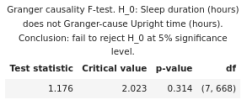
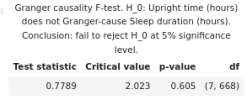
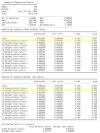
I'm sorry to see Iodine wasn't in your analysis as it is easy to miss, and I am very curious to how it is correlated with nutrients in other countries than Norway since we are one of the few special cases with little-to-none iodine fortification in food.
Ah, sorry, after seeing your post, I realized that the large image above with all the time series did not actually include all the raw nutrients in the first column. It was after the initial filtering for null data. I updated it with the full list of nutrients. Iodine is there, but I filtered it out because in roughly half of the individual food entries I saved, iodine data was missing, and I thought it would thus likely be too inaccurate.
But here is the correlation matrix with no nutrients removed (except those where every single value is 0):
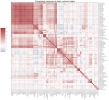
For iodine, I see correlations with with sodium, fluoride, and ash, which is probably because my main source of iodine is fortified table salt, which includes those others (ash is another with a lot of missing data. I didn't know what it was, but it's
apparently a crude measure of total mineral content.) Also smaller correlations with B6 and potassium.
- I didn't see a comparison against nutrient needs
Yeah, it might be interesting. But I'm just totally out of steam for this project at this point.
- A weekly or even monthly intake might be better to look for associations as for some nutrients you don't need to eat them every day to have enough of them in your body to maintain function
Yes maybe, though the sample size of data points might be too small to detect associations with upright time if grouping into weekly or monthly intake.
- For the same reason above, removing outlier foods/high nutrient peaks might not be necessary as your body stores some nutrients for later use, and others are excreted etc. There's not a lot of them, but for example nuts, olive oil and omega-3 supplements would be foods that could influence cell membrane fluidity, which could influence blood flow. These foods are also high in fats which would be stored in your body for a while and not just influence the specific day they were eaten.
Good point about there potentially being interesting associations with these peaks, though the reason I removed them was more because that as I understand it, many large outliers could make the specific statistical test I was using unreliable.
- Food combinations matter, for example in the heat map zinc seems to be consumed together with fibre. If I saw this in a client's data I would ask if they consumed a lot of whole grains together with zinc rich foods, or if the zinc also comes from the whole grains. Zinc in whole grains have different bioavailability depending on how the grains have been prepared, so even if it looks to be an adequate intake on paper it could be deficient.
As a very rough look at the sources of zinc, I combined the total nutrient intake for each food. So this shows which foods were responsible for the most zinc, and also how much each food contributed in fiber:
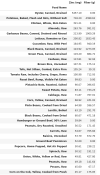
Oysters provided the most zinc over the year, even though I only ate them about 15 times throughout the year. They have a huge amount of zinc and they were excluded from the main analysis for this reason, as the outliers were extremely high. Apart from that, it looks like potatoes were the second highest source of zinc at 718 mg over the year. I do eat a lot of potatoes, and it looks like potatoes are also my leading source of fiber, so that probably explains the correlation.
A general note as it didn't seem to affect your analysis much: I'm not sure how well it works to remove nutrients with > 0.2 missing values. Since Cronometer has amino acids and lacks iodine I'm assuming it's based on US data, but at the same time food composition datatables often contain "borrowed foods" from other food composition datatables. If the Cronometer database "borrows" from for example Norway, you would not get amino acid information (but you could get fatty acid information). If I used this cutoff in the Norwegian food composition datatable I would lose a lot of information as few foods have fatty acids for example, since that is a rather new addition and not all foods have been analyzed with it in mind.
Cronometer borrows a lot from the USDA database, and fills in from other sources like scientific papers, and imputing based on similar foods. It's a good point about thresholds, but I was most concerned with accurate data, so wanted as little missing data as possible.
I wonder if number of days in a row/in a week/month with "adequate" nutrient intake would create different results. Though on a personal note I eat pretty similarly from day to day and I still have symptoms. The joker would be that we don't know if something happens in our bodies that increase the need for/excretion of specific nutrients so that even if intake doesn't change the effect on the body might still not be the same. Maybe nutrient intake around times where there is a change in time spent upright (+- two weeks maybe?) could say something about that.
Interesting thoughts, maybe there could be all sorts of less straightforward associations like this.