Neither Metformin nor Ursodeoxycholic Acid Effectively Treats Postacute Sequelae of COVID-19
BACKGROUND
There is no proven treatment to alleviate symptoms of postacute sequelae of SARS-CoV-2 infection (PASC), despite its substantial public health burden.
OBJECTIVE
To evaluate the efficacy of metformin and ursodeoxycholic acid (UDCA) in improving PASC symptoms in adults.
DESIGN
Double-blind, placebo-controlled, randomized clinical trial. (Clinical Research Information Service: KCT0009342)
SETTING
Two tertiary hospitals in South Korea, July 2024 to April 2025.
PARTICIPANTS
Of 666 adults screened, 396 with a PASC index score of 12 or greater were randomly assigned.
INTERVENTION
Oral metformin (uptitrated to 1500 mg/d), UDCA (900 mg once daily), or double placebo for 14 days (1:1:1).
MEASUREMENTS
Proportion of participants achieving PASC recovery (index score <12) at 8 weeks.
RESULTS
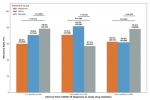
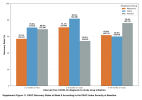
Among 396 randomized participants (median age, 36 years [IQR, 28 to 49 years]; 72% women), 132 received metformin, 132 received UDCA, and 132 received placebo. The mean interval from SARS-CoV-2 infection was 9.8 months (SD, 7.5). The mean baseline PASC score was 19.3 (SD, 5.7). Recovery occurred in 63.6% (84 of 132) with metformin, 68.2% (90 of 132) with UDCA, and 68.2% (90 of 132) with placebo. Mean changes in PASC scores from baseline to week 8 were −10.05 (95% CI, −11.35 to −8.76) with metformin and −10.62 (CI, −11.79 to −9.45) with UDCA, compared with −10.43 (CI, −11.69 to −9.18) with placebo.
LIMITATION
Findings may not be generalizable to patients with more severe or persistent long COVID.
CONCLUSION
A 2-week course of metformin or UDCA did not significantly improve recovery from PASC.
PRIMARY FUNDING SOURCE
National Institute of Infectious Diseases, National Institute of Health, South Korea
Web | DOI | PDF | Annals of Internal Medicine | Paywall
So Yun Lim; Jacob Lee; Euijin Chang; Ji-Soo Kwon; Choi Young Jang; Yubin Seo; Jin Ju Park; Sun Hee Na; Hyejin Park; Hyeon Mu Jang; Sung-Cheol Yun; Sung-Han Kim
BACKGROUND
There is no proven treatment to alleviate symptoms of postacute sequelae of SARS-CoV-2 infection (PASC), despite its substantial public health burden.
OBJECTIVE
To evaluate the efficacy of metformin and ursodeoxycholic acid (UDCA) in improving PASC symptoms in adults.
DESIGN
Double-blind, placebo-controlled, randomized clinical trial. (Clinical Research Information Service: KCT0009342)
SETTING
Two tertiary hospitals in South Korea, July 2024 to April 2025.
PARTICIPANTS
Of 666 adults screened, 396 with a PASC index score of 12 or greater were randomly assigned.
INTERVENTION
Oral metformin (uptitrated to 1500 mg/d), UDCA (900 mg once daily), or double placebo for 14 days (1:1:1).
MEASUREMENTS
Proportion of participants achieving PASC recovery (index score <12) at 8 weeks.
RESULTS
Among 396 randomized participants (median age, 36 years [IQR, 28 to 49 years]; 72% women), 132 received metformin, 132 received UDCA, and 132 received placebo. The mean interval from SARS-CoV-2 infection was 9.8 months (SD, 7.5). The mean baseline PASC score was 19.3 (SD, 5.7). Recovery occurred in 63.6% (84 of 132) with metformin, 68.2% (90 of 132) with UDCA, and 68.2% (90 of 132) with placebo. Mean changes in PASC scores from baseline to week 8 were −10.05 (95% CI, −11.35 to −8.76) with metformin and −10.62 (CI, −11.79 to −9.45) with UDCA, compared with −10.43 (CI, −11.69 to −9.18) with placebo.
LIMITATION
Findings may not be generalizable to patients with more severe or persistent long COVID.
CONCLUSION
A 2-week course of metformin or UDCA did not significantly improve recovery from PASC.
PRIMARY FUNDING SOURCE
National Institute of Infectious Diseases, National Institute of Health, South Korea
Web | DOI | PDF | Annals of Internal Medicine | Paywall