For people who have recovered from diagnoses characterised by persistent fatigue, a new understanding of symptoms seems to have been key to recovery. This is the conclusion of a study from Linköping University, Sweden. The researchers have identified common steps and turning points in patients’...
www.eurekalert.org
NEWS RELEASE 10-MAR-2026
New insights aided recovery from persistent fatigue
Peer-Reviewed Publication
LINKÖPING UNIVERSITY
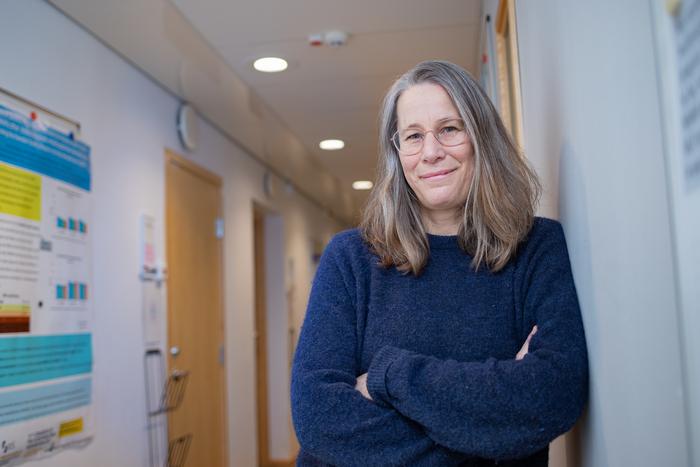 IMAGE:
HANNAH LINNROS, PHD STUDENT AT LINKÖPING UNIVERSITY AND CLINICAL PSYCHOLOGIST AT LINKÖPING UNIVERSITY HOSPITAL, SWEDEN.
view more
CREDIT: CHARLOTTE PERHAMMAR/LINKÖPING UNIVERSITY
For people who have recovered from diagnoses characterised by persistent fatigue, a new understanding of symptoms seems to have been key to recovery. This is the conclusion of a study from Linköping University, Sweden. The researchers have identified common steps and turning points in patients’ stories, which can contribute to new ways of understanding and rehabilitating these conditions.
The medical term for severe tiredness or exhaustion that does not pass, regardless of the amount of rest, is fatigue. Persistent fatigue is a predominant symptom in diagnoses such as post-COVID-19 condition (or long COVID), exhaustion disorder (a locally used diagnosis part of the Swedish version of the International Classification of Disease ICD-10-SE) and chronic fatigue syndrome, also known as CFS/ME.
“There’s very little research on how people experience recovery from these conditions. They are very much left to fight their own battles. We wanted to find out what healthcare can do and learn from people’s experiences of recovery,” says Hannah Linnros, PhD student at Linköping University and clinical psychologist at Linköping University Hospital.
Sufferers are often very negatively affected by fatigue, which severely limits their functioning and well-being. Although fatigue greatly reduces quality of life and is a common reason for people to seek medical care, there is a lack of consensus on what causes it and how it should be treated. The diagnoses and conditions are much debated among researchers and in society at large.
To get a deeper understanding of the path to recovery, Hannah Linnros has interviewed fourteen adults who had been on long-term sick leave with at least one of the diagnoses post-COVID-19 condition, exhaustion disorder or chronic fatigue syndrome. Several of them had been bed-bound for longer periods of time and their lives had been very limited. When participating in the study, they had all recovered and were working or studying.
In interviews, they described the course of their recovery. The researchers analysed their stories to identify crucial factors and events in the recovery process and how these were related.
“We saw basically the same pattern in all the interviews. They had had to seek knowledge by themselves, mainly outside the healthcare system. They had tried to understand what had happened to them and sought ways to feel better and cope with their everyday lives,” says Hannah Linnros.
The researchers found several recurring steps in the participants’ recovery process. In the beginning, most of them felt that they were in a hopeless situation. They had sought care, but felt that they did not get answers as to why they felt sick or whether it was possible to get well and, if so, how. That was when they started to search for knowledge about what they could do to change their situation.
An important turning point came when they found a helpful explanation for their symptoms that integrated psychological and bodily processes. This reduced their fear of fatigue in particular, and gave them hope that they could feel well again. Based on the new understanding, they then began to try out and evaluate different things that helped them regain function and began to feel better. They had tried a variety of experiences that could affect how the body reacts and contributes to better balance in the nervous system, such as yoga, meditations, breathing exercises and other bodily techniques. Several of them had followed private treatment programmes online.
At the end of their recovery process, the interviewees shifted their focus towards living meaningful lives even though some symptoms remained.
The researchers believe that healthcare needs to be open to newer models of explanation for severe fatigue and other long-term symptoms, where knowledge about the brain and other bodily processes is integrated.
“We believe that the results can be of importance to healthcare. Although we don’t yet know everything about these conditions, healthcare needs to be able to convey more recent knowledge about what role the brain and imbalance in our survival systems can play in severe fatigue and other long-term symptoms. It’s essential to confirm that the symptoms and suffering are real and that there may be paths to improve well-being. Our hope is that in the future, healthcare will be able to better support the patient to find these paths,” says Hannah Linnros.
She explains that the process has yielded important experiences for many of those who have recovered.
“The people in the study consistently saw recovery as a learning and change process. You don’t go back to life exactly as it was before,” says Hannah Linnros.
Professor Lars-Christer Hydén at Linköping University led the study published in the journal, and it was funded with support from Region Östergötland. Anna Andreasson, associate professor at Stockholm University and Karolinska Institutet and visiting professor at Linköping University, and Anna-Karin Norlin, affiliated researcher at Linköping University and specialist in general medicine, also contributed to the study.
Article:
Narratives of recovery from persistent fatigue: A stepwise learning process, Hannah Linnros, Anna Andreasson, Anna-Karin Norlin and Lars-Christer Hydén,
Scandinavian Journal of Primary Health Care, published on 28 February 2026, doi:
https://doi.org/10.1080/02813432.2026.2637743
JOURNAL
Scandinavian Journal of Primary Health Care
DOI
10.1080/02813432.2026.2637743
SUBJECT OF RESEARCH
People
ARTICLE TITLE
Narratives of recovery from persistent fatigue: A stepwise learning process
ARTICLE PUBLICATION DATE
28-Feb-2026
COI STATEMENT
No potential conflict of interest was reported by the authors.







 "even though some symptoms remained"
