Microcirculatory impairment and increased arterial stiffness in pediatric Long COVID patients
PURPOSE
The exact pathogenesis of Long COVID remains unclear. Microvascular and endothelial dysfunction, established contributors to SARS-CoV-2-related conditions, appear to play a role in pediatric Long COVID.
METHODS
At the Childrens University Hospital of LMU Munich, we conducted a comparative cohort study including pediatric Long COVID patients. Microcirculation was assessed using sublingual sidestream dark field (SDF) imaging, analyzing the microvascular flow index (MFI), the total vessel density (TVD), and the proportion of perfused vessels (PPV). Endothelial function and arterial stiffness were evaluated using peripheral arterial tonometry (EndoPAT), measuring reactive hyperemia index (RHI) and augmentation index (AIx@75).
RESULTS
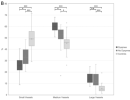
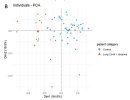
We analyzed 37 pediatric Long COVID patients (13.5 ± 2.6 years; 22 females) with persisting symptoms (> 4 weeks) and 46 healthy controls (12.4 ± 4.8 years; 21 females). Patients exhibited significant microcirculatory alterations, with reduced MFI (2.59 [IQR, 2.38–2.75] vs. 2.83 [IQR, 2.69–2.96]; p = .003), TVD (16.12 [IQR, 15.24–17.86] mm/mm2 vs. 19.38 [IQR, 17.58–20.57] mm/mm2; p < .001), and PPV (13.58 [IQR, 12.72–14.89]% vs. 17.67 [IQR, 16.60–19.32]%; p < .001). Microcirculatory changes varied with clinical phenotype and were most pronounced in patients presenting with dyspnea.We analyzed 37 pediatric Long COVID patients (13.5 ± 2.6 years; 22 females) with persisting symptoms (> 4 weeks) and 46 healthy controls (12.4 ± 4.8 years; 21 females). Patients exhibited significant microcirculatory alterations, with reduced MFI (2.59 [IQR, 2.38–2.75] vs. 2.83 [IQR, 2.69–2.96]; p = .003), TVD (16.12 [IQR, 15.24–17.86] mm/mm2 vs. 19.38 [IQR, 17.58–20.57] mm/mm2; p < .001), and PPV (13.58 [IQR, 12.72–14.89]% vs. 17.67 [IQR, 16.60–19.32]%; p < .001). Microcirculatory changes varied with clinical phenotype and were most pronounced in patients presenting with dyspnea.
CONCLUSION
We demonstrate measurable vascular alterations in pediatric Long COVID, including microvessel reduction and increased arterial stiffness. Our findings support a role of vascular changes in Long COVID and highlight the importance of integrating cardiovascular monitoring and follow-up into the management of affected children.
WHAT IS KNOWN
• Microvascular and endothelial dysfunction appear to play a role in SARS-CoV-2-related diseases.
• Adults with Long COVID show persistent capillary rarefaction and endothelial impairment supporting a vascular mechanism underlying ongoing symptoms.
WHAT IS NEW
• Pediatric Long COVID is likewise associated with significant microvascular damage and furthermore with increased arterial stiffness.
• Children with dyspnea exhibit a distinct vascular phenotype characterized by marked capillary loss, indicating a potential microvascular origin of persistent respiratory symptoms.
Web | DOI | PDF | European Journal of Pediatrics | Open Access
Boever, Julie; Jakob, André; Paetzold, Clara; Gomes, Delphina; Birzele, Lena T; Baalmann, Katrin; Haas, Nikolaus A; Nussbaum, Claudia
PURPOSE
The exact pathogenesis of Long COVID remains unclear. Microvascular and endothelial dysfunction, established contributors to SARS-CoV-2-related conditions, appear to play a role in pediatric Long COVID.
METHODS
At the Childrens University Hospital of LMU Munich, we conducted a comparative cohort study including pediatric Long COVID patients. Microcirculation was assessed using sublingual sidestream dark field (SDF) imaging, analyzing the microvascular flow index (MFI), the total vessel density (TVD), and the proportion of perfused vessels (PPV). Endothelial function and arterial stiffness were evaluated using peripheral arterial tonometry (EndoPAT), measuring reactive hyperemia index (RHI) and augmentation index (AIx@75).
RESULTS
We analyzed 37 pediatric Long COVID patients (13.5 ± 2.6 years; 22 females) with persisting symptoms (> 4 weeks) and 46 healthy controls (12.4 ± 4.8 years; 21 females). Patients exhibited significant microcirculatory alterations, with reduced MFI (2.59 [IQR, 2.38–2.75] vs. 2.83 [IQR, 2.69–2.96]; p = .003), TVD (16.12 [IQR, 15.24–17.86] mm/mm2 vs. 19.38 [IQR, 17.58–20.57] mm/mm2; p < .001), and PPV (13.58 [IQR, 12.72–14.89]% vs. 17.67 [IQR, 16.60–19.32]%; p < .001). Microcirculatory changes varied with clinical phenotype and were most pronounced in patients presenting with dyspnea.We analyzed 37 pediatric Long COVID patients (13.5 ± 2.6 years; 22 females) with persisting symptoms (> 4 weeks) and 46 healthy controls (12.4 ± 4.8 years; 21 females). Patients exhibited significant microcirculatory alterations, with reduced MFI (2.59 [IQR, 2.38–2.75] vs. 2.83 [IQR, 2.69–2.96]; p = .003), TVD (16.12 [IQR, 15.24–17.86] mm/mm2 vs. 19.38 [IQR, 17.58–20.57] mm/mm2; p < .001), and PPV (13.58 [IQR, 12.72–14.89]% vs. 17.67 [IQR, 16.60–19.32]%; p < .001). Microcirculatory changes varied with clinical phenotype and were most pronounced in patients presenting with dyspnea.
CONCLUSION
We demonstrate measurable vascular alterations in pediatric Long COVID, including microvessel reduction and increased arterial stiffness. Our findings support a role of vascular changes in Long COVID and highlight the importance of integrating cardiovascular monitoring and follow-up into the management of affected children.
WHAT IS KNOWN
• Microvascular and endothelial dysfunction appear to play a role in SARS-CoV-2-related diseases.
• Adults with Long COVID show persistent capillary rarefaction and endothelial impairment supporting a vascular mechanism underlying ongoing symptoms.
WHAT IS NEW
• Pediatric Long COVID is likewise associated with significant microvascular damage and furthermore with increased arterial stiffness.
• Children with dyspnea exhibit a distinct vascular phenotype characterized by marked capillary loss, indicating a potential microvascular origin of persistent respiratory symptoms.
Web | DOI | PDF | European Journal of Pediatrics | Open Access