Long-lived plasma cell (LLPC) theory - Similarities between CFS and Lupus?

As a rule infection does not trigger autoimmunity. Almost everyone thinks it does but the evidence is strongly against, with the possible atypical exception of Gullain Barre syndrome. So a parallel with lupus does not fit here - one of the cornerstones of our Qeios piece arguments.

B cells with the wrong antibody gene rearrangements occur purely by chance but it would be possible for a variety of circumstances, including possibly infection, to facilitate the expansion of bad clones with plasma cell formation. It is hard to see how exertion would trigger this though. I think it is more likely that once the immune error has developed, then exertion triggers some short term signalling pathway that is sensitised in some way by the immunology.

Lupus is one of many autoantibody driven diseases. If ME/CFS involves autoantibodies then it fits in with all of them maybe. I initiated the use of B cell depleting treatment for lupus in 2000 with Maria Leandro and published the first study shortly after. Rituximab works very well but trials have been badly designed until recently. So we know that some of the autoantibodies come from short lived plasma cells in lupus but some hang around and come from long lived cells. That was the basis of Maria's PhD thesis.


 
we know EBV and Lupus and B cells are linked so thats why ritux works for Lupus.

I am not aware that we know of any link between EBV and lupus, despite various hyped proposals!
Maria Leandro and I introduced the use of rituximab for lupus without any reference to EBV, just B cells, which for lupus are a no-brainer. We know it is caused by antibodies.
 
The really bizarre thing is that at the time I wasn't particularly interested in lupus. But none of the lupus people seemed to wake up to the potential of rituximab. One or two did - Robert Eisenberg and John Looney in the States, but they were a bit slow about getting things started so Maria and I got there first. And weirdly, they thought rtuximab would help by stopping B cells presenting antigen to helper T cells.

The reason why that is weird is that helper T cells help B cells make antibodies and we knew the antibodies were causing the damage through immune complexes. So they were suggesting that killing B cell would stop antibody production by stopping T cells helping B cells make antibody. But hang on, if the B cells were dead, no T cell could help them anyway!

This is the level of 'cutting edge clinical immunology I am afraid. Robert and John were lovely people but I never got my head around what they were suggesting. (And the presentation to T cell stuff is still written into reviews today, by those who do a good job of emulating ChatGPT by repeating what they read.)
 
Might have asked this before but what is the possibility of LLPCs producing pathogenic AABs somehow inducing the SLPCs/B cells to produce more of the same pathogenic AAB? Like a teaching process.

It is what one would predict from basic B cell biology and is the basis of Edwards, Cambridge and Abrahams, Immunology 1999, and was the whole reason for using rituximab for autoimmunity. The B cell system is designed to be a positive feedback chain reaction that only switches off if antigen is no longer present. For autoantigens that may not happen so the process continues. But the feedback is on B cells, not on plasma cells, which are permanently committed to what they were going to do anyway.
 
So in theory, if it is LLPCs, then not getting rid of them fully or beyond a certain point forces the system back to the original set point like homeostasis. Then the new faulty B cells become faulty plasma cells and the symptoms come back.

In the latest trial updates Fluge reports temporary improvement then worsening of symptoms in the first two Dara shots in the 4 LC patients. I wonder if that could explain it. They conclude 1 shot is not enough for sure.
 
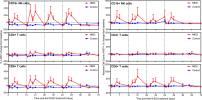
For this one, frequency of total NK cells wasn't different between multiple myeloma responders and nonresponders in either bone marrow or blood.

What was different was higher proportion of CD16+ NK cells and lower TIM-3+ NK and HLA-DR+ NK cells in the bone marrow in responders. I'm not sure if they looked at the frequency of CD16+ NK cells specifically in the blood.

NK Cell Phenotype Is Associated With Response and Resistance to Daratumumab in Relapsed/Refractory Multiple Myeloma, 2023
Anktiva boosts CD16+ NK cells dramatically (but in Monkeys)


Attachments

  • image.png
    image.png
    1.1 MB · Views: 2
Back
Top Bottom