John Mac
Senior Member (Voting Rights)
Full title: Large-scale investigation confirms TRPM3 ion channel dysfunction in Myalgic Encephalomyelitis/Chronic Fatigue Syndrome
Introduction: Myalgic Encephalomyelitis/Chronic Fatigue Syndrome (ME/CFS) is a chronic disease hallmarked by multiple systemic symptoms, including neurocognitive, respiratory, immunological, gastrointestinal and cardiovascular impairment that worsen following physical and mental exertion. ME/CFS is characterized by an elusive pathomechanism, profound impact on quality of life and an absence of diagnostic tests or evidence-based treatments. Transient Receptor Potential Melastatin 3 (TRPM3) ion channel has been suggested as a potential biomarker and target for therapeutics in people with ME/CFS, supported by a series of publications reporting genetic and protein changes. This study aimed to undertake a multi-site large-scale investigation to determine the consistency of TRPM3 ion channel dysfunction in people with ME/CFS.
Methods: TRPM3 ion channel activity was assessed in two distinct laboratory sites by independent investigators using whole-cell patch-clamp recordings performed in isolated natural killer (NK) cells from 36 ME/CFS participants characterized according to the Canadian Consensus Criteria and 42 healthy controls. The Mann-Whitney U test was used to compare endogenous TRPM3-like currents between cohorts. The effect of location was determined using a covariance analysis, while antagonist sensitivity was determined using Fisher's Exact test.
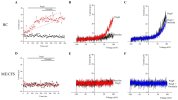
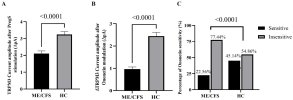
Results: Electrophysiological experiments revealed a significant reduction in TRPM3 function in NK cells from individuals diagnosed with ME/CFS compared with controls in all parameters analyzed. Importantly, there was no significant effect of the laboratory sites on the results of this investigation, which confirms TRPM3 as a consistent biomarker for ME/CFS.
Conclusion: The current large-sample-size study confirmed previous results regarding TRPM3 ion channel dysfunction in NK cells in ME/CFS, demonstrating involvement of TRPM3 in the pathomechanism of this condition. Therefore, this multiple-site investigation offers strong evidence demonstrating TRPM3 as a potential biomarker for the diagnosis of ME/CFS, given the accumulating evidence.
 www.frontiersin.org
Introduction: Myalgic Encephalomyelitis/Chronic Fatigue Syndrome (ME/CFS) is a chronic disease hallmarked by multiple systemic symptoms, including neurocognitive, respiratory, immunological, gastrointestinal and cardiovascular impairment that worsen following physical and mental exertion. ME/CFS is characterized by an elusive pathomechanism, profound impact on quality of life and an absence of diagnostic tests or evidence-based treatments. Transient Receptor Potential Melastatin 3 (TRPM3) ion channel has been suggested as a potential biomarker and target for therapeutics in people with ME/CFS, supported by a series of publications reporting genetic and protein changes. This study aimed to undertake a multi-site large-scale investigation to determine the consistency of TRPM3 ion channel dysfunction in people with ME/CFS.
Methods: TRPM3 ion channel activity was assessed in two distinct laboratory sites by independent investigators using whole-cell patch-clamp recordings performed in isolated natural killer (NK) cells from 36 ME/CFS participants characterized according to the Canadian Consensus Criteria and 42 healthy controls. The Mann-Whitney U test was used to compare endogenous TRPM3-like currents between cohorts. The effect of location was determined using a covariance analysis, while antagonist sensitivity was determined using Fisher's Exact test.
Results: Electrophysiological experiments revealed a significant reduction in TRPM3 function in NK cells from individuals diagnosed with ME/CFS compared with controls in all parameters analyzed. Importantly, there was no significant effect of the laboratory sites on the results of this investigation, which confirms TRPM3 as a consistent biomarker for ME/CFS.
Conclusion: The current large-sample-size study confirmed previous results regarding TRPM3 ion channel dysfunction in NK cells in ME/CFS, demonstrating involvement of TRPM3 in the pathomechanism of this condition. Therefore, this multiple-site investigation offers strong evidence demonstrating TRPM3 as a potential biomarker for the diagnosis of ME/CFS, given the accumulating evidence.
Frontiers | Large-scale investigation confirms TRPM3 ion channel dysfunction in Myalgic Encephalomyelitis/Chronic Fatigue Syndrome
IntroductionMyalgic Encephalomyelitis/Chronic Fatigue Syndrome (ME/CFS) is a chronic disease hallmarked by multiple systemic symptoms, such as neurocognitive...
www.frontiersin.org