From Facebook
'The first presentation at the Berlin conference was by Prof. Chris Ponting from Edinburgh University on the big genetic study called DecodeME. He made a strong statement that ME/CFS heritability is...

www.facebook.com
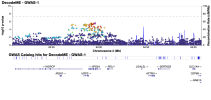
'The first presentation at the Berlin conference was by Prof. Chris Ponting from Edinburgh University on the big genetic study called DecodeME.
He made a strong statement that ME/CFS heritability is exclusively enriched in neural tissues.
Ponting said that the genetic analysis of ME/CFS has substantial overlap with fibromyalgia and that for both, the genetic risk is focused on the brain, and neurons in particular.
There’s no direct genetic evidence for immune-related pathogenesis outside neural tissue. They hoped to have found a genetic association in the HLA region because that would have been a strong signal that ME/CFS has autoimmunity, but they did not find that.
Someone asked if the genetics highlights certain cell-types in the nervous system: is it more microglia or more synaptic function? Ponting answered that they are doing this analysis right now, but “everything we have right now says it’s neurons, not glia. There are indications for synaptic protein genes being involved.”
DecodeME also did an analysis where they compared patients with high and low symptom burden based on 67 questionnaire responses, but did not find a significant difference in the genetics. Genes that came close to significance are RORA, SPP2/TRPM8, and RARRES2.
Ponting also explained why DecodeME hasn't published yet. They want to do additional analysis (HLA, fine-mapping, gene-based analysis, genetic correlations, comorbidity genetics, etc). These are all nearly done except the analysis of the X chromosome, which is still ongoing.
Lastly, he pleaded for long-read sequencing of the HLA region to get a better resolution and analysis of rare genetic variants.
This will be done in SequenceME, which is looking for additional funding so that it can read all the DecodeME samples with higher resolution.
Interestingly, an analysis of rare variants from the UK biobank already pointed to mutations of the gene BTN2A1, which is involved in T-cell activation. It also came up in DecodeME, so it could be an important lead for research on the immune system in ME/CFS.'
.


 github.com