Immune Dysregulation and Persistent Symptoms: Insights into T Cell Dynamics in Post-COVID among Athletes from the CoSmo-S Study
BACKGROUND
Over 10% of all SARS-CoV-2 infections lead to persistent symptoms, a condition called post-COVID condition (PCC). For elite athletes, whose performance is central, PCC poses significant challenges. It is suggested that immune cells, particularly regulatory and effector T cells, play a key role in symptom persistence nonetheless it has not yet been investigated.
OBJECTIVE
This study investigates immune dynamics after SARS-CoV-2 infection and assesses whether symptom persistence is accompanied by T cell dysregulation in highly trained athletes.
METHODS
Thirty-six highly trained athletes were included in this study after experiencing SARS-CoV-2 infection. Athletes’ data were analyzed 2–4 weeks after infection (T0) and 3–4 months later (T1). They were categorized into two groups: those with persistent symptoms (PS) and those without (SF). Their immune cell distribution was assessed via flow cytometry.
RESULTS
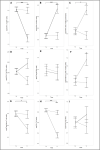
In the PS group, there was an increase in T helper (Th) cell 17 and Th2 cells from T0 to T1, whereas in the SF group, these cell types either decreased or remained unchanged, respectively. Furthermore, Th1 cells decreased and natural (NK) cells increased from T0 to T1 in the PS group, while no changes were observed in the SF group. No changes were observed in Tregs nor in other cell types.
CONCLUSION
This dysregulation of the immune system toward humoral immunity indexed by a rise in Th2 and Th17 cells and a decrease in Th1 cells over time could be indicative of a possible virus persistence contributing to persistent symptoms.
CLINICAL TRIAL REGISTRATION
The study has been registered in the German Clinical Trials Register (DRKS00023717).
Web | DOI | PDF | Journal of Clinical Immunology | Open Access
Ringleb, Miriam; Bizjak, Daniel Alexander; Nieß, Andreas Michael; Notbohm, Hannah; Predel, Hans-Georg; Puta, Christian; Steinacker, Jürgen Michael; Widmann, Manuel; Zacher, Jonas; Bloch, Wilhelm; Javelle, Florian
BACKGROUND
Over 10% of all SARS-CoV-2 infections lead to persistent symptoms, a condition called post-COVID condition (PCC). For elite athletes, whose performance is central, PCC poses significant challenges. It is suggested that immune cells, particularly regulatory and effector T cells, play a key role in symptom persistence nonetheless it has not yet been investigated.
OBJECTIVE
This study investigates immune dynamics after SARS-CoV-2 infection and assesses whether symptom persistence is accompanied by T cell dysregulation in highly trained athletes.
METHODS
Thirty-six highly trained athletes were included in this study after experiencing SARS-CoV-2 infection. Athletes’ data were analyzed 2–4 weeks after infection (T0) and 3–4 months later (T1). They were categorized into two groups: those with persistent symptoms (PS) and those without (SF). Their immune cell distribution was assessed via flow cytometry.
RESULTS
In the PS group, there was an increase in T helper (Th) cell 17 and Th2 cells from T0 to T1, whereas in the SF group, these cell types either decreased or remained unchanged, respectively. Furthermore, Th1 cells decreased and natural (NK) cells increased from T0 to T1 in the PS group, while no changes were observed in the SF group. No changes were observed in Tregs nor in other cell types.
CONCLUSION
This dysregulation of the immune system toward humoral immunity indexed by a rise in Th2 and Th17 cells and a decrease in Th1 cells over time could be indicative of a possible virus persistence contributing to persistent symptoms.
CLINICAL TRIAL REGISTRATION
The study has been registered in the German Clinical Trials Register (DRKS00023717).
Web | DOI | PDF | Journal of Clinical Immunology | Open Access