Identifying post-exertional malaise subtypes: Differentiating physical and mental PEM manifestations, 2026, Tuzzolino et al

Nightsong

Senior Member (Voting Rights)
Abstract:
Myalgic Encephalomyelitis/Chronic Fatigue Syndrome (ME/CFS) is a chronic illness with post-exertional malaise (PEM) as a key symptom. This study categorized participants with ME/CFS who met PEM criteria into four groups based on severity of physical and mental PEM: severe physical PEM (Physical group), severe mental PEM (Mental group), both severe (Both group), or neither severe (Neither group).

A control group was also included. The Both group exhibited the highest symptom severity, while the Neither group displayed lower scores. The Neither group experienced less disability than other ME/CFS subtypes but was significantly more disabled than Controls. Health assessments revealed that Controls had the highest functioning, followed by the Neither group, with the Both group showing greatest impairment.

These results indicate distinct PEM subtypes, emphasizing the need to recognize different manifestations of this complex symptom. Future research should include diverse control groups, longitudinal data, and biological measures to further understand PEM subtypes.

Link | PDF (J. Health Psychol., February 2026)
 
Last edited:
This study categorized participants with ME/CFS who met PEM criteria into four groups based on severity of physical and mental PEM: severe physical PEM (Physical group), severe mental PEM (Mental group), both severe (Both group), or neither severe (Neither group).

A control group was also included. The Both group exhibited the highest symptom severity, while the Neither group displayed lower scores. The Neither group experienced less disability than other ME/CFS subtypes but was significantly more disabled than Controls. Health assessments revealed that Controls had the highest functioning, followed by the Neither group, with the Both group showing greatest impairment.
This seems self-evident. I really don't know what the aim was here.

PDF (J. Health Psychol., February 2026, open access)
There's a paywall for me.
 
There's a paywall for me.
Fixed, sorry about that.

A few notes, then:

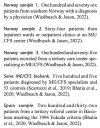
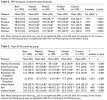
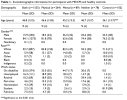
The study "utilized an aggregated international sample from Japan, Norway, Spain, the United Kingdom, Amsterdam, and the United States". Some were physician diagnoses; some met Fukuda, etc. Pre-COVID. PEM measurement was via the short-form DSQ-PEM; five PEM items scored by frequency & severity into a 0-100 composite. One item used as mental PEM marker ("mentally tired after the slightest effort") and one as physical PEM marker ("minimum exercise makes you physically tired"). Outcomes: symptom scores; SF-36 function/quality-of-life subscales; "energy quotient" (a pacing/energy-envelope related measure). Controls were younger than ME/CFS patients overall - they controlled for age statistically but still caution on interpretation. 2068 participants, of which 1966 self-reported having ME/CFS and 102 controls. The "both" group was by far the largest (n=1535) and the "neither" group the smallest (n=78).

I haven't been able to read through thoroughly but it doesn't seem to tell us a great deal more than we already knew.

1a.jpg 1b.jpg 2.jpg 3.jpg
 
These results indicate distinct PEM subtypes,

I am not sure how they define the subtypes as 'distinct'. There is variation, but we knew that. I doubt you can draw any conclusions from differences in other features of the subsets. They are very likely to reflect ascertainment variations as much as any real differences - if indeed 'real differences' mean anything in the context of comparing different people's symptoms.
 
Regarding the covariates, we found that age significantly predicted the heavy, soreness, minimum, and drained symptoms. However, we were surprised in the direction of the effects as our results indicated that an increase in age is associated with reduced (i.e. less burdened) symptom scores. One explanation for this finding could be that as our sample aged, they had a better understanding of their functional capacity and could better manage the illness and its symptoms.

With respect to the covariates, age was significant in predicting the Physical Functioning and Vitality measures. This was expected as functional capacity and vitality decrease as one ages. However, we were surprised to find that age was not a significant predictor of the General Health and Physical Role Limitations measurements, as we expected these aspects to significantly worsen with age.

Notably, we found that the ME/CFS groups were not as burdened by emotional issues compared to the Control group as the PEM subgroups tended to score slightly higher for the Emotional Role Limitations aspect and scored relatively similar for the Mental Health aspect. This finding contrasts with previous research that has found an association between reduced quality of life and greater susceptibility to depression and suicide among individuals with ME/CFS. One explanation for this difference may be related to the high proportion of students in the Control group, whose worse levels of mental health and emotional limitations could stem from academic-related stress.

Notably, those who stayed within their energy envelope represented the largest proportion of each group, with about half of participants from each group staying within their energy boundaries. This finding supports how pacing, which involves balancing activity levels to avoid PEM crashes and maintain stable functioning, can be used as a strategy to manage PEM symptoms. However, given our results, pacing may not be practical for those with severe symptom burdens as seen among those in the Both group.
 
Back
Top Bottom