Nightsong
Senior Member (Voting Rights)
Abstract:
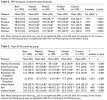
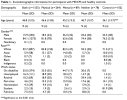
Myalgic Encephalomyelitis/Chronic Fatigue Syndrome (ME/CFS) is a chronic illness with post-exertional malaise (PEM) as a key symptom. This study categorized participants with ME/CFS who met PEM criteria into four groups based on severity of physical and mental PEM: severe physical PEM (Physical group), severe mental PEM (Mental group), both severe (Both group), or neither severe (Neither group).
A control group was also included. The Both group exhibited the highest symptom severity, while the Neither group displayed lower scores. The Neither group experienced less disability than other ME/CFS subtypes but was significantly more disabled than Controls. Health assessments revealed that Controls had the highest functioning, followed by the Neither group, with the Both group showing greatest impairment.
These results indicate distinct PEM subtypes, emphasizing the need to recognize different manifestations of this complex symptom. Future research should include diverse control groups, longitudinal data, and biological measures to further understand PEM subtypes.
Link | PDF (J. Health Psychol., February 2026)
Myalgic Encephalomyelitis/Chronic Fatigue Syndrome (ME/CFS) is a chronic illness with post-exertional malaise (PEM) as a key symptom. This study categorized participants with ME/CFS who met PEM criteria into four groups based on severity of physical and mental PEM: severe physical PEM (Physical group), severe mental PEM (Mental group), both severe (Both group), or neither severe (Neither group).
A control group was also included. The Both group exhibited the highest symptom severity, while the Neither group displayed lower scores. The Neither group experienced less disability than other ME/CFS subtypes but was significantly more disabled than Controls. Health assessments revealed that Controls had the highest functioning, followed by the Neither group, with the Both group showing greatest impairment.
These results indicate distinct PEM subtypes, emphasizing the need to recognize different manifestations of this complex symptom. Future research should include diverse control groups, longitudinal data, and biological measures to further understand PEM subtypes.
Link | PDF (J. Health Psychol., February 2026)
Last edited: