Review Hyperbaric Oxygen Therapy on Long COVID Symptoms: A Breath of Fresh Air, 2026, Zoccali et al

TiredMathematician

Established Member (Voting Rights)
Hyperbaric Oxygen Therapy on Long COVID Symptoms: A Breath of Fresh Air

Zoccali, Federica; Fratini, Chiara; Pennacchia, Fiorenza; Cascone, Francesca; de Vincentiis, Marco; Petrella, Carla; Barbato, Christian; Minni, Antonio

Abstract
Long COVID is defined as “the continuation or development of new symptoms 3 months after the initial SARS-CoV-2 infection, with these symptoms lasting for at least 2 months with no other explanations”, as reported by the World Health Organization. A growing number of people are dealing with a variety of lingering symptoms even after recovering from an acute infection. These can include fatigue, muscle pain, shortness of breath, headaches, cognitive issues, neurodegenerative symptoms, anxiety, depression, and a feeling of hopelessness, and therapeutic options for long COVID are investigated. The potential of hyperbaric oxygen therapy (HBOT) to improve chronic fatigue, cognitive impairments, and neurological disorders has been established; therefore, the use of HBOT to treat long COVID has also been studied. The aim of this literature search is to analyze the state of the art of a potential role of HBOT to improve chronic fatigue, cognitive impairments and neurological disorders. A literature analysis was performed, focusing on the clinical efficacy of HBOT for treating long COVID symptoms. The results from January 2021 to October 2025, using a standard registry database, showed 21 studies, including one case report, ten randomized controlled trial, eight systematic reviews and three studies regarding the molecular mechanism and markers changing after HBOT. They suggested that HBOT can improve quality of life, fatigue, cognition, neuropsychiatric symptoms and cardiopulmonary functions. HBOT is a safe treatment and has shown some benefits for long COVID symptoms. To precisely define indications, protocols, and post-treatment evaluations, we need to conduct more in-depth, large-scale studies.

Web | DOI | Diseases
 
Last edited:
The results from January 2021 to October 2025, using a standard registry database, showed 21 studies, including one case report, ten randomized controlled trial [sic], eight systematic reviews and three studies regarding the molecular mechanism and markers changing after HBOT. [emphasis mine]
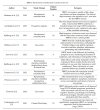
Of the 21 studies selected, one was a case report [23], 10 were randomized controlled trials (Table 1), seven were systematic reviews (Table 2) and three studies regarding the molecular mechanism and markers changing after HBOT (Table 3). [emphasis mine]

These sections claim that 10 RCTs are included in the review.

However, looking at Table 1 (and the studies themselves), 5 of these are actually case series or single-arm studies. Of the 5 RCTs, 1 is only a protocol (ref 29) for another study in this review (ref 26), and 1 (ref 24) is an extended follow-up up of another trial in the review (ref 30).

This leaves by my estimation only 3 unique RCTs in which HBOT is compared to sham treatment (refs 26/29, 31, and 24/30).

(Strangely, for the trial by Kjellberg et al. (Refs 26 and 29) they cited the protocol and interim publication, but not the final published study, which was published in April 2025 and so should have been included as their search goes up to October 2025.)

1000097166.jpg
 
These sections claim that 10 RCTs are included in the review.

However, looking at Table 1 (and the studies themselves), 5 of these are actually case series or single-arm studies. Of the 5 RCTs, 1 is only a protocol (ref 29) for another study in this review (ref 26), and 1 (ref 24) is an extended follow-up up of another trial in the review (ref 30).

This leaves by my estimation only 3 unique RCTs in which HBOT is compared to sham treatment (refs 26/29, 31, and 24/30).
Good catch. That's very strange and misleading, especially when using the wrong number prominently in the abstract.
 
Having seen some patients in online groups reporting feeling worse after HBOT, I wish I was able to check all studies included in this review to see what they reported about worsening of the symptoms. Maybe I wouldn't find much as the authors say e.g.:
Across the studies included in this review, individual patient clinical characteristics were frequently unreported, with most articles providing only aggregate descriptions of symptoms that improved or not following HBOT.
which is an even bigger problem.

Admittedly, I couldn't really focus while going through the paper, so I might've missed something. I didn't notice much about side effects or worsening of the symptoms apart from perhaps Table 1, Synopsis for references [25] and [26]:
The main improvements were seen in cognitive tasks. It seems that HBOT could have a beneficial impact on long COVID symptoms, but it is important to stay vigilant for any signs of the condition worsening.
High frequency of adverse events was observed but the data safety monitory board assessed HBOT to have a safety profile.
and another reference to [26] in the text:
Conversely, Kjellberg et al. [26] described high frequency of adverse events following HBOT and D’Hoore et al. [31] reported no significant differences in subjective symptoms, functional scores, and cognitive performance between any groups analyzed.

In Discussion (4.5) they say:
Although HBOT has shown several benefits for prolonged COVID symptoms, it is still difficult to debate whether HBOT treatment for prolonged COVID is effective or not. It has been shown to be effective in reducing or modifying many multi-organ symptoms in a lasting way and without side effects, but more rigorous large-scale randomized clinical trials are needed to establish guidelines, treatment protocols, and post-treatment assessments.

(my bolding in quotations)


And another thing that interests me is how long the patients were followed up for after the end of the treatment. Anecdotally from the patient groups, the benefits seem to wear off after stopping the treatment and for some HBOT seems to become less effective after a big crash. I see in Table 1, Synopsis for reference [24]:
The clinical improvements were reported even 1 year after the last HBOT session.

And in the main text:
The fact that the trials [29,35] are still ongoing and did not all follow up with the people over time could have also made it harder to figure out what the results really meant and to compare them to each other.
 
Last edited:
Have there ever been any successful HBOT studies for LC that met the bare minimum requirements for trial methodology?

I remember at lot of hype around flawed studies and some null results in the better ones.
 
Have there ever been any successful HBOT studies for LC that met the bare minimum requirements for trial methodology?

I remember at lot of hype around flawed studies and some null results in the better ones.
That's a good summary of what I remember, too.

Also, can't help but notice that in order to produce this review they included 21 study, 7 of which were systematic reviews (they say 8 in the abstract but then the numbers don't add up; they mention 7 in the results section and Table 2).

Soon the number of reviews, systematic reviews and systematic reviews of systematic reviews is going to be larger than the number of experimental studies they're based on. As many iterations as you need for the sake of publishing and amplifying the weak findings... This is not a personal critique of the authors or their work, rather a sad observation of what is being valued and rewarded in academia.
 
21 studies, including one case report, ten randomized controlled trial, eight systematic reviews and three studies regarding the molecular mechanism and markers changing after HBOT
This is a ridiculously high studies-to-reviews ratio. It all seems like the entire focus in this discipline is to do studies and reviews, without any further consideration. The studies get done. Reviews get produced. Repeat.

Nothing ever actually gets done. The quality never increases, there is zero incremental progress, just a loop of doing the same useless thing over and over again. Between this and NFTs, I genuinely don't know which is more useless.
 
Back
Top Bottom