How do we know that common immune suppressants don’t work in ME?

Is this in ME/LC or other conditions?
Other conditions mostly--lupus, RA, psoriasis. JAK inhibitors are fairly new (within the last ~10-15 years) and anifrolumab is very new.

Those cases might not be 100% applicable to ME/CFS because those are all active inflammatory diseases and JAK inhibitors tend not to be used as first-line therapies. But either way it means we shouldn't expect it to have a similar timeline as something like a TNF blocker even in ME/CFS

And what do you think of the idea of a Saphnelo pilot trial in MECFS?
Might be fruitful. Though if we expect people to get worse before they get better (and possibly not get better) I think it would warrant special considerations and a PI that is both experienced with the drug and with ME/CFS. Not sure how many people fit the bill. [Edit: might be necessary to have evidence that the pathway is relevant before playing around with it]
 
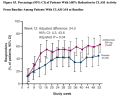
Interferon modulators have weird dynamics compared to most other immunomodulators. For both saphnelo and more standard JAK-inhibitors, the most common report is that people feel worse for a few weeks/months and then it starts to show clinical benefit. My best guess is it has something to do with a compensatory mechanism, probably tied to constitutive interferon production.

But presumably it will depend entirely on what pathology is being treated?

In most other situations I imagine that interferons are implicated in long term loops without actually producing symptoms themselves?

Edit: I see the context is lupus, RA, etc. I think a longer time to response might be expected there.

Of course there might be a long loop in ME/CFS but then I am beginning to lose track of the rationale.
 
What kinds of evidence would be sufficient for a trial like that, in your opinion?

And could your blood sample study possibly provide some?
I'm probably not the best person to ask. I'm both biased towards thinking interferon might be involved and overly cautious at the prospect of causing permanent harm. I'm more thinking that hard evidence would convince someone with the right background that this is a worthwhile rabbit hole to chase down in a trial

I'm hoping I can produce some results that help to that end. Whether it actually works out is a toss up
 
But presumably it will depend entirely on what pathology is being treated?

In most other situations I imagine that interferons are implicated in long term loops without actually producing symptoms themselves?

Edit: I see the context is lupus, RA, etc. I think a longer time to response might be expected there.
The claim that we should see an immediate effect is an assumption, also based on a different pathway in different contexts. There might be many possible reasons why JAK inhibitors take longer lupus, RA, etc. Which is exactly my point. We don't know why things act immediately in some cases and take longer in others. So immediate efficacy shouldn't be our default assumption.

Of course there might be a long loop in ME/CFS but then I am beginning to lose track of the rationale.
The rationale would be if the "long loop" is maintained by transient interferon signaling. Which is a leap, but an entirely plausible one because we already know that's how constitutive interferon signaling works. Spontaneous low level interferon production maintains background levels of proteins involved in the JAK-STAT pathway.

So a blockade would not be expected to work immediately if the intracellular proteins are still upregulated--especially if other immune signaling stimulates some of the same downstream proteins. But given enough time it might allow things to wind down, for chromatin to close up in the absence of re-stimulation, etc. I've just been analyzing a couple million cell's worth of data showing that 24-hour exposure of multiple cell types to widely used JAK inhibitors (tofacitinib) slightly lowers constitutive ISG levels but doesn't ablate it.
 
Back
Top Bottom