

You are using an out of date browser. It may not display this or other websites correctly.
You should upgrade or use an alternative browser.
You should upgrade or use an alternative browser.
FatigueSense app
- Thread starter Dolphin
- Start date
Thank you for the time and detail that has gone into the feedback here.
To clarify, FatigueSense is a research beta and part of an ongoing co-design process. It is not a medical tool and has not been developed or positioned as a condition-specific solution for ME/CFS.
The app includes clear disclaimers around predictions and generated insights and the outputs are based on user-provided and wearable data, and are intended to support personal reflection and pattern awareness, not to provide clinical advice.(as mentioned on our website)
As with any early-stage research product, there will be limitations, and it will not be suitable or helpful for everyone. That is expected at this stage.
We are currently working with a broader group of users, and feedback has been mixed. Some individuals are finding certain features helpful and are actively contributing to improvements, while others have highlighted areas that clearly need refinement. Both types of input are important and are being used to guide ongoing updates and feature development.
The app is being iterated continuously based on structured feedback, testing, and co-design sessions. This means what exists today is not final, and changes are being made as we learn what works and what does not across different user needs.
We fully recognise that the app may not be appropriate for everyone at this stage, and that is completely valid. The points raised here have been noted and will be considered as part of ongoing development.
To clarify, FatigueSense is a research beta and part of an ongoing co-design process. It is not a medical tool and has not been developed or positioned as a condition-specific solution for ME/CFS.
The app includes clear disclaimers around predictions and generated insights and the outputs are based on user-provided and wearable data, and are intended to support personal reflection and pattern awareness, not to provide clinical advice.(as mentioned on our website)
As with any early-stage research product, there will be limitations, and it will not be suitable or helpful for everyone. That is expected at this stage.
We are currently working with a broader group of users, and feedback has been mixed. Some individuals are finding certain features helpful and are actively contributing to improvements, while others have highlighted areas that clearly need refinement. Both types of input are important and are being used to guide ongoing updates and feature development.
The app is being iterated continuously based on structured feedback, testing, and co-design sessions. This means what exists today is not final, and changes are being made as we learn what works and what does not across different user needs.
We fully recognise that the app may not be appropriate for everyone at this stage, and that is completely valid. The points raised here have been noted and will be considered as part of ongoing development.
Felis Catus
Senior Member (Voting Rights)
Hi @nanay , could you respond to @Utsikt 's posts, please?Then you probably won’t mind addressing my previous comments regarding commercialisation of the app through a health tech startup?
@nanay - would you be able to elaborate on the this from your website?
Edinburgh Venture Builder
If this is this programme,Enterprise and venture support linked to the University of Edinburgh.
How does that align with this previous statement of yours:Venture Builder Incubator is designed for ambitious postgraduate students, early career researchers and academics who are looking to transform their deep tech or data-driven research into a viable business.
Finally, I think it’s important to emphasise context: this is early-stage...


The mention of the Edinburgh Venture Builder incubator on the website relates to a small amount of support we received to facilitate early user engagement and design work, specifically around PPIE activities and shaping the user-facing aspects of the app.
The support is not tied to commercialisation, nor does it mean the project is being actively positioned as a startup product. The work we’re doing remains very much early-stage and research-led, focused on understanding fatigue, user needs, and how digital biomarkers might be meaningfully applied in practice.
The programme was referenced on the website simply for transparency around the type of support we’ve accessed, rather than to suggest that FatigueSense is currently being commercialised.

Jonathan Edwards
Senior Member (Voting Rights)
To clarify,
But don't you see, @nanay, that none of this "clarification" justifies this app. It is obviously intended as a 'medical tool' - what else could it be? It is obviously intended to provide advice - what else would it be for?
Research is about testing the value of ideas or things. Asking people if they like an app in this context tells us nothing useful about its value. (And if this is not a medical tool or providing advice what value exactly are we looking for?) Surely you must be aware that this is not the way medical research should work?

Thank you for continuing to engage with us, @nanay. Of course I accept that this s a beta app in development and not intended as medical advice etc etc. That's partly why I felt it worth my while to participate in testing it, as I'm experienced enough and confident enough with pacing to be sure I wouldn't fall into the trap of following bad advice, so it was safe for my health to test it.
My problem with it is the whole premise on which the output to clients is based seems to be to give advice, not just analysis of data in a clear form for patients to interpret for themselves. While you persevere in using AI to write feedback, and providing activity plans it will continue to be completely inappropriate for sick people, in particular ones whose health depends on them not listening to advice on how much activity to do, but rather on learning to interpret the 'data' they receive from current symptoms, not just day by day, but minute by minute.
For example, today the app told me to do activities in 20 minute sessions and that light walking is fine. If I followed either of those pieces of advice, I know from experience I would crash badly and probably be very much sicker for days or weeks. And crashing in ME/CFS means PEM from which I may never return to baseline. It's simply too risky for an app, however clever, to provide advice for people with ME/CFS.
However the model refines such advice according to what I feed in and what my app provides, that will never be appropriate for me, as I need to gauge all the time whether I need to stop an activity and take a break and for how long depending on my symptoms.
I think a major mistake with this app is assuming fatigue and the person's perceived energy are the key features to be recorded and used for planning. They are not. OI, pain, physical and cognitive fatigability, nausea, flu like malaise and other symptoms all feed into the signals I get from my body.
People with ME/CFS are desperate to find ways to make our lives more managable, and the promising features of this app of being able to automatically feed in data from wearables we already own makes it an attractive sounding proposition. That will draw people in and those less clued up by experience and examination of research evidence and shared experiences as we have here may fall into the trap of thinking the app is providing medically valid advice, regardless of any disclaimers. That is a serious risk which would make the development of this app into a commercial or clinical product unethical if it continues its current approach of using AI and providing plans and advice for people to follow.
My problem with it is the whole premise on which the output to clients is based seems to be to give advice, not just analysis of data in a clear form for patients to interpret for themselves. While you persevere in using AI to write feedback, and providing activity plans it will continue to be completely inappropriate for sick people, in particular ones whose health depends on them not listening to advice on how much activity to do, but rather on learning to interpret the 'data' they receive from current symptoms, not just day by day, but minute by minute.
For example, today the app told me to do activities in 20 minute sessions and that light walking is fine. If I followed either of those pieces of advice, I know from experience I would crash badly and probably be very much sicker for days or weeks. And crashing in ME/CFS means PEM from which I may never return to baseline. It's simply too risky for an app, however clever, to provide advice for people with ME/CFS.
However the model refines such advice according to what I feed in and what my app provides, that will never be appropriate for me, as I need to gauge all the time whether I need to stop an activity and take a break and for how long depending on my symptoms.
I think a major mistake with this app is assuming fatigue and the person's perceived energy are the key features to be recorded and used for planning. They are not. OI, pain, physical and cognitive fatigability, nausea, flu like malaise and other symptoms all feed into the signals I get from my body.
People with ME/CFS are desperate to find ways to make our lives more managable, and the promising features of this app of being able to automatically feed in data from wearables we already own makes it an attractive sounding proposition. That will draw people in and those less clued up by experience and examination of research evidence and shared experiences as we have here may fall into the trap of thinking the app is providing medically valid advice, regardless of any disclaimers. That is a serious risk which would make the development of this app into a commercial or clinical product unethical if it continues its current approach of using AI and providing plans and advice for people to follow.

Utsikt
Senior Member (Voting Rights)
So you’re doing patient involvement, but this has nothing to do with medicine at all?The mention of the Edinburgh Venture Builder incubator on the website relates to a small amount of support we received to facilitate early user engagement and design work, specifically around PPIE activities and shaping the user-facing aspects of the app.
It’a irrelevant what it’s currently being positioned as.The support is not tied to commercialisation, nor does it mean the project is being actively positioned as a startup product.
To be clear: do you have any financial ties to this company? Employment, ownership, stocks, options, etc.?
If so, why was that not disclosed in the publications?
So there is still a plan to commercialise it at some point (assuming it works)?The programme was referenced on the website simply for transparency around the type of support we’ve accessed, rather than to suggest that FatigueSense is currently being commercialised.
Last edited:

MrMagoo
Senior Member (Voting Rights)
What’s a digital biomarker please?The mention of the Edinburgh Venture Builder incubator on the website relates to a small amount of support we received to facilitate early user engagement and design work, specifically around PPIE activities and shaping the user-facing aspects of the app.
The support is not tied to commercialisation, nor does it mean the project is being actively positioned as a startup product. The work we’re doing remains very much early-stage and research-led, focused on understanding fatigue, user needs, and how digital biomarkers might be meaningfully applied in practice.
The programme was referenced on the website simply for transparency around the type of support we’ve accessed, rather than to suggest that FatigueSense is currently being commercialised.
Thank you for the feedback .Thank you for continuing to engage with us, @nanay. Of course I accept that this s a beta app in development and not intended as medical advice etc etc. That's partly why I felt it worth my while to participate in testing it, as I'm experienced enough and confident enough with pacing to be sure I wouldn't fall into the trap of following bad advice, so it was safe for my health to test it.
My problem with it is the whole premise on which the output to clients is based seems to be to give advice, not just analysis of data in a clear form for patients to interpret for themselves. While you persevere in using AI to write feedback, and providing activity plans it will continue to be completely inappropriate for sick people, in particular ones whose health depends on them not listening to advice on how much activity to do, but rather on learning to interpret the 'data' they receive from current symptoms, not just day by day, but minute by minute.
For example, today the app told me to do activities in 20 minute sessions and that light walking is fine. If I followed either of those pieces of advice, I know from experience I would crash badly and probably be very much sicker for days or weeks. And crashing in ME/CFS means PEM from which I may never return to baseline. It's simply too risky for an app, however clever, to provide advice for people with ME/CFS.
However the model refines such advice according to what I feed in and what my app provides, that will never be appropriate for me, as I need to gauge all the time whether I need to stop an activity and take a break and for how long depending on my symptoms.
I think a major mistake with this app is assuming fatigue and the person's perceived energy are the key features to be recorded and used for planning. They are not. OI, pain, physical and cognitive fatigability, nausea, flu like malaise and other symptoms all feed into the signals I get from my body.
People with ME/CFS are desperate to find ways to make our lives more managable, and the promising features of this app of being able to automatically feed in data from wearables we already own makes it an attractive sounding proposition. That will draw people in and those less clued up by experience and examination of research evidence and shared experiences as we have here may fall into the trap of thinking the app is providing medically valid advice, regardless of any disclaimers. That is a serious risk which would make the development of this app into a commercial or clinical product unethical if it continues its current approach of using AI and providing plans and advice for people to follow.
The points raised here have been noted and will be considered as part of ongoing development.
What’s a digital biomarker please?
A digital biomarker is simply a measurable signal from a device that reflects a person’s physical state. For example, data from wearables like Fitbit, Garmin, or Apple Watch such as heart rate, steps, sleep, and activity levels.
So you’re doing patient involvement, but this has nothing to do with medicine at all?
It’a irrelevant what it’s currently being positioned as.
To be clear: do you have any financial ties to this company? Employment, ownership, stocks, options, etc.?
If so, why was that not disclosed in the publications?
So there is still a plan to commercialise it at some point (assuming it works)?
Thanks for the questions. We’ve shared all relevant information publicly in our materials and aren’t able to expand further in a forum setting. We joined this space to learn from lived experience, and the feedback here is being helpful in the app’s development stages.
Utsikt
Senior Member (Voting Rights)
You have clearly not shared all relevant information. All conflicts of interests related to the scientific publications have to be disclosed as a matter of policy by Frontiers.Thanks for the questions. We’ve shared all relevant information publicly in our materials and aren’t able to expand further in a forum setting.
I’m not asking you for the details, I’m asking you what’s essentially a yes or no question:
Do you have any financial or commercial interests related to the research, the app or the health tech startup?
As a reminder from the feasibility paper published 18.11.25:
You have gone from saying that this is purely for research purposes in the start of the thread, to saying that’s it not currently being commercialised. On your profile, there’s talk about a health tech startup, which is obviously commercial.The remaining authors declare that the research was conducted in the absence of any commercial or financial relationships that could be construed as a potential conflict of interest.
Last edited:
MrMagoo
Senior Member (Voting Rights)
That’s a confusing nameA digital biomarker is simply a measurable signal from a device that reflects a person’s physical state. For example, data from wearables like Fitbit, Garmin, or Apple Watch such as heart rate, steps, sleep, and activity levels.

ahimsa
Senior Member (Voting Rights)
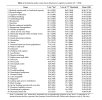
Just to add to this comment, I think a lot of people, including healthcare professionals and researchers, don't realize how many different symptoms people with ME/CFS get, especially after any exertion.'Fatigue' when used as a term to describe an aspect of some physical diseases is a completely different thing from physically healthy fatigue, and can't be fixed by the same methods of getting more sleep, relaxing, getting more exercise and so on. It's not a lifestyle problem, it's symptom of illness. In the case of ME/CFS it's not, for many of us, the most disabling symptom.
I've attached a table from a 2019 study (https://pmc.ncbi.nlm.nih.gov/articles/PMC6468435/pdf/diagnostics-09-00026.pdf) that shows "symptoms made worse due to physical or cognitive exertion." I don't get all of these symptoms but I get about half of them.
@nanay - if you're still here this table might be helpful info.
Attachments

ahimsa
Senior Member (Voting Rights)
Funny video!
I confess that I never understood what "brain twangs" actually are.
Laughed out loud at “brain twangs”!
I have sent in my feedback to the app developers and deleted it as well.
@Jonathan Edwards re: how I was helped by occupational therapists:
* they had me do an activity diary - at the time I was doing extremely little. For the more severe a carer may need to do the diary. They did point out a couple of things I could do differently based on this which helped reduce my symptoms. For example I had the habit of doing as much as I could each time I sat up, thinking that it was better to do it then than to sit up another time in the day. Turned out it was actually better in my case to sit up more times and do less each time.
* they sourced for me a commode wheelchair, a regular wheelchair for getting between rooms, a shower chair that actually worked in my bathroom, and a step for the bathtub. I know this isn’t pacing but just a general FYI also part of what OTs provide, for those who haven’t had access to one. They had other tool suggestions that I didn’t take up such as a long handled hair brush that could have made brushing easier.
* they helped me think about activity in terms of breaking things down into every separate piece of exertion. This way when i had started to feel like I could perhaps do more, I had a way of working my way up to new activities. Just jumping into showering from no showering, even if you have been stable for a while and are feeling that you have improved, is a big jump and we should not be doing any big jumps. So in order to shower first I spent a couple of months working on walking to the bathroom, then sitting in the bathroom longer and longer until it was the length of a shower, then doing the movements to pretend to wash myself, then doing all that after climbing into the shower, then actually turning on the shower and hearing the noise while pretending to wash, then actually doing the shower with the physical activity, the sound, the feeling of the water, etc all at once. The idea being that if any step of this is too much you will only trigger sub-crash symptoms, or a milder crash, rather than if you just jumped in the shower and ended up going way over.*** I know this can sound like the dreaded “pacing up” but you’re only meant to do this if you are feeling stable for a while and think you’ve improved. Plus I’ve seen way too many people feel improved and then crash because they did a big jump. If you feel improved you still need to take it super slowly. Endless people on Reddit surprised they can’t just get up and do laundry without crashing one day because they are feeling good, even though they haven’t done laundry without crashing in years. Better to get a few mild symptoms from just carrying the hamper to the machine and know you can’t do it, than to just do the whole thing and be out for two weeks. I haven’t crashed at all during my (lucky and for which I am extremely grateful) improvement period (touch wood!!).
* they made clear that if you are doing something different one day you will need to remove some other activity to make space for it in your budget. Again this seems obvious but again I see people make huge mistakes on this over and over.
* But the main thing is that they validated my experiences, knew what PEM was, knew I shouldn’t be getting out of bed like my GP was telling me to do, were available to answer all my detailed questions (of which there were many, I was so naive** at the time), and were willing to do extremely short and remote appointments to always stay under my trigger line.
* They also supported me in my desire to return to work (once I had improved to thinking it was possible) by communicating with my employer and line manager about my condition and limitations and making clear that I needed a very long phased return, WFH, and maximum flexibility for any chance of success. Convincing work to let me back in after a year off was not easy and I don’t think I could have hung on to my job without their help. I’d surely be unemployed now if so because I need so many accommodations.
** I literally thought maybe somewhere there was a list of how much exertion every possible activity was and I could use that to pace, hahaha, cute.
*** to my awareness, evidence that going further over the line causes a worse crash is yet another thing we still need! But I think we have all had the experience to know this is usually the case unfortunately.
I have sent in my feedback to the app developers and deleted it as well.
@Jonathan Edwards re: how I was helped by occupational therapists:
* they had me do an activity diary - at the time I was doing extremely little. For the more severe a carer may need to do the diary. They did point out a couple of things I could do differently based on this which helped reduce my symptoms. For example I had the habit of doing as much as I could each time I sat up, thinking that it was better to do it then than to sit up another time in the day. Turned out it was actually better in my case to sit up more times and do less each time.
* they sourced for me a commode wheelchair, a regular wheelchair for getting between rooms, a shower chair that actually worked in my bathroom, and a step for the bathtub. I know this isn’t pacing but just a general FYI also part of what OTs provide, for those who haven’t had access to one. They had other tool suggestions that I didn’t take up such as a long handled hair brush that could have made brushing easier.
* they helped me think about activity in terms of breaking things down into every separate piece of exertion. This way when i had started to feel like I could perhaps do more, I had a way of working my way up to new activities. Just jumping into showering from no showering, even if you have been stable for a while and are feeling that you have improved, is a big jump and we should not be doing any big jumps. So in order to shower first I spent a couple of months working on walking to the bathroom, then sitting in the bathroom longer and longer until it was the length of a shower, then doing the movements to pretend to wash myself, then doing all that after climbing into the shower, then actually turning on the shower and hearing the noise while pretending to wash, then actually doing the shower with the physical activity, the sound, the feeling of the water, etc all at once. The idea being that if any step of this is too much you will only trigger sub-crash symptoms, or a milder crash, rather than if you just jumped in the shower and ended up going way over.*** I know this can sound like the dreaded “pacing up” but you’re only meant to do this if you are feeling stable for a while and think you’ve improved. Plus I’ve seen way too many people feel improved and then crash because they did a big jump. If you feel improved you still need to take it super slowly. Endless people on Reddit surprised they can’t just get up and do laundry without crashing one day because they are feeling good, even though they haven’t done laundry without crashing in years. Better to get a few mild symptoms from just carrying the hamper to the machine and know you can’t do it, than to just do the whole thing and be out for two weeks. I haven’t crashed at all during my (lucky and for which I am extremely grateful) improvement period (touch wood!!).
* they made clear that if you are doing something different one day you will need to remove some other activity to make space for it in your budget. Again this seems obvious but again I see people make huge mistakes on this over and over.
* But the main thing is that they validated my experiences, knew what PEM was, knew I shouldn’t be getting out of bed like my GP was telling me to do, were available to answer all my detailed questions (of which there were many, I was so naive** at the time), and were willing to do extremely short and remote appointments to always stay under my trigger line.
* They also supported me in my desire to return to work (once I had improved to thinking it was possible) by communicating with my employer and line manager about my condition and limitations and making clear that I needed a very long phased return, WFH, and maximum flexibility for any chance of success. Convincing work to let me back in after a year off was not easy and I don’t think I could have hung on to my job without their help. I’d surely be unemployed now if so because I need so many accommodations.
** I literally thought maybe somewhere there was a list of how much exertion every possible activity was and I could use that to pace, hahaha, cute.
*** to my awareness, evidence that going further over the line causes a worse crash is yet another thing we still need! But I think we have all had the experience to know this is usually the case unfortunately.
Do you want to share it here? If not, can you just list a few points you raised. I'm interested to know if we found the same issues.I have sent in my feedback to the app developers and deleted it as well.
Thank you for your description of how the OT helped you. It sounds like you had a useful experience. I agree the approach you describe of gradual introduction of each activity in stages was fine for you as your health was improving, so the purpose was to make the change in activity level gradual enough to avoid major crashes.
The problem many of us come across is that this approach is applied to people whose health is not improving, so they are repeatedly pushed into crashes, and can make their illness worse. This is what I see in the BACME approach, where they seem to think that diary keeping is the starting point for improvement for everyone, and sell it as a way to create improvement.
You were also lucky to get an OT who included aids and adaptiations and equipment in their service. My experience with the local ME service run by OTs only did the diary keeping bit in a general way with no sensible help on how to break up activities, and no equipment advice or provision. That was dismissed as someone else's job.
@Trish the OTs I saw were through the long COVID service. I did later have one appointment with the CFS service and they did nothing really. I was never sure if it was because I’d already been through the long COVID service or if they’re like that with everyone. The people from the CFS service did observe me transferring to my shower chair and the OT remarked on my range of motion, surprised it was totally normal. That confused me. Why wouldn’t it be normal? My problem is PEM. PEM PEM PEM PEM. I can do all the moves.
One other thing the long COVID OTs commented on that I thought was interesting was the Chalder Fatigue scale they have to use. Despite having improved in function quite a lot by the time I was discharged, my score on Chalder didn’t change at all. They told me that it often didn’t. Makes you weep for any research done using Chalder. You can’t get any outcome information from a scale like that.
I should have copied my feedback to the Fatigue sense app! Essentially I included that it wasn’t helpful for me, that “fatigue” for us is different from other diseases & doesn’t respond to exercise, positive thoughts etc, that it kept saying my pacing wasn’t working when in fact it’s working very well. I admittedly didn’t do as thorough a job as you did!
One other thing the long COVID OTs commented on that I thought was interesting was the Chalder Fatigue scale they have to use. Despite having improved in function quite a lot by the time I was discharged, my score on Chalder didn’t change at all. They told me that it often didn’t. Makes you weep for any research done using Chalder. You can’t get any outcome information from a scale like that.
I should have copied my feedback to the Fatigue sense app! Essentially I included that it wasn’t helpful for me, that “fatigue” for us is different from other diseases & doesn’t respond to exercise, positive thoughts etc, that it kept saying my pacing wasn’t working when in fact it’s working very well. I admittedly didn’t do as thorough a job as you did!