Exercise-induced activation of ventromedial hypothalamic steroidogenic factor-1 neurons mediates improvements in endurance 2026 Betley et al

Andy

Senior Member (Voting rights)
Highlights
• The brain is a key intermediate for physiological improvement following exercise
• Exercise strengthens inputs to and increases the activity of VMH SF1 neurons
• Activation of VMH SF1 neurons following exercise is required to improve endurance
• Exogenous activation of VMH SF1 neurons following exercise enhances endurance gains

Summary
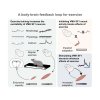
Repeated exercise produces robust physiological benefits and is the leading lifestyle intervention for human health. The benefits from exercise training result from the remodeling of skeletomuscular, cardiovascular, metabolic, and endocrine systems. In mice, we find that activation of the central nervous system following exercise is essential for subsequent endurance performance and metabolism benefits. Ventromedial hypothalamic steroidogenic factor-1 (SF1) neurons are activated following exercise, and repeated training results in increased post-exercise SF1 neuron activation. Exercise training increases the intrinsic excitability and density of excitatory synapses on SF1 neurons, suggesting that exercise history is encoded through hypothalamic plasticity. Inhibition of SF1 neuron output blocks endurance gains and metabolic improvements that result from exercise training. Conversely, stimulation of SF1 neurons following exercise enhances gains in endurance. These results demonstrate that exercise-induced hypothalamic SF1 neuron activity is essential for the coordination of physiological improvements following exercise training.

Open access
 
Maybe in PEM the neurons are backfiring.
It might be relevant in exercise intolerance but I don't know how much it would be relevant in PEM specifically. This paper and prior studies on this neuron population all point to them being highly sensitive glucose regulators. VO2 max is normal when these neurons are knocked down--the main difference seems to be how long activity can be sustained, which makes perfect sense if the SF1 neurons are responsible for quickly mobilizing additional glucose after local reserves have run out. The piece on endurance improvement seems to largely be driven by transcriptional changes in the muscle itself, which doesn't happen when the glucose uptick doesn't happen

In PEM the story seems to include impairment right off the bat, so I'm not sure this neuron population would explain much.
 
But they might feed signals to other cells telling them that resources are being stretched and then might send signals saying everything is OK now, after a delay period to make sure it really is, and that might backfire?

We know that neural control systems are hugely complex in terms og knock on effects
 
Thread @DrDominicNgon Brain's Role in Exercise Adaptation

**Tl;dr: Exercise → brain processes it → body adapts. Remove the middle step and nothing happens.**


1) A signal in your brain - fired AFTER exercise - decides whether your body adapts at all.
Block? Training did nothing.
Boost? 2x the work output and 3x the endurance gains.
This might be the most important exercise paper in years. Here's what they found

2) The standard model of fitness: you exercise -> muscles damaged -> repair stronger.
The brain? It benefits from exercise, sure - but it doesn't drive the adaptation. Or so we thought.
This team tested that assumption directly.

3) Deep in the **hypothalamus, there's a cluster of brain cells called SF1 neurons that regulate metabolism.**

Experiment:
1. 2 groups of mice - one with SF1 neurons silenced, one normal
2. Run both groups through the same training
3. Compare performance

4) Finding #1: No SF1 output = no fitness gains.
They silenced SF1 neurons, then ran identical training for 3 weeks.
- Normal mice -> progressively fitter
- Silenced mice -> zero improvement
But why? Exercise should trigger gene changes in muscles - were those still happening?

5) Finding #2: Without SF1, muscle never gets the signal to adapt.
- After exercise, control mice showed robust gene expression changes in muscle.
- Silenced mice? Almost NOTHING.
So SF1 output is important but does exercise actually change these neurons?

6) Finding #3: Exercise doesn't just activate your brain - it rewires it.
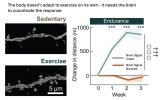
After repeated exercise, SF1 neurons structurally changed.
- Dendritic spines doubled
- Firing rate tripled
So this region changes with training - but when does it need to be active?

7) Finding #4: Block the post-exercise signal → no adaptation.
They blocked SF1 for just 15 minutes POST-EXERCISE. That alone prevented endurance gains.
Ok so blocking the signal erases gains. But what happens if you amplify it instead?

8) Finding #5: Boost the post-exercise signal → faster adaptation.
They stimulated SF1 neurons for 1 hour after each session.
- Mice broke through performance plateaus
- More distance, higher speeds, more total work
- Outperformed controls across the board


IMG_2430.jpegIMG_2429.jpeg
 
I would love to see a study on SF1 Neurons in ME/CFS.

If I had to describe the essence of the illness, it could be described more as difficulty recovering from exertion, or sustaining it over days/weeks, than an inability to exert myself (or presence of chronic fatigue).

So many times have I started some project or even just an activity, feeling genuinely ready, motivated and well enough, only to discover later that I can't tolerate it for long.

This happens on small time frames, like a day with more demanding activities than usual, and also over longer time frames (months into some life project). The capacity to tolerate the activity tends to degrade over time instead of improving.

Some degree of adaptation is possible by staying within limits but there is something seriously abnormal in this area. Other people are baffled and tend to initially disbelieve in the illness because it's so counterintuitive. I often understimate it myself.

Maybe the SF1 Neurons are a good fit.
 
Last edited:
I would love to see a study on SF1 Neurons in ME/CFS.

If I had to describe the essence of the illness, it could be described more as difficulty recovering from exertion, or sustaining it over days/weeks, than an inability to exert myself (or presence of chronic fatigue).

So many times have I started some project or even just an activity, feeling genuinely ready, motivated and well enough, only to discover later that I can't tolerate it for long.

This happens on small time frames, like a day with more demanding activities than usual, and also over longer time frames (months into some life project). The capacity to tolerate the activity tends to degrade over time instead of improving.

Some degree of adaptation is possible by staying within limits but there is something seriously abnormal in this area. Other people are baffled and tend to initially disbelieve in the illness because it's so counterintuitive. I often understimate it myself.

Maybe the SF1 Neurons are a good fit.
Not long after I was first diagnosed, I was introduced to the partner of a former co-worker who was already a couple decades into ME/CFS. One of the first things he told me was about his experiences with novelty and fatigue - specifically, that when starting something new, whether cognitive of physical - it could be alphabetizing his music collection, learning a new skill, doing a bit of gardening, or attempting a short walk - it would often feel fine, manageable, even pleasurable while it was relatively new, but that once it became routine, once he got accustomed to it, it would quickly test or exceed his limits, and both motivation and ability would rapidly fall away.

In my own experience, I have noticed something similar, although perhaps not to quite the same extreme that he reported. In any event, I think I can say that the general pattern that doing more of a thing tends to slowly diminish rather than expand capacity seems broadly true for me as well.
 
As an additional note from personal experience: the last few years before my diagnosis, I was still extremely active, working out, running every day, going on multi-week hikes, etc. and was tracking various "fitness metrics" very closely. I became enormously frustrated and concerned that no matter what I did (HIIT, "zone 1/2 training," etc.) I was not becoming more "fit" in that my heart rate averages and endurance remained essentially a flat line for years on end, despite my best efforts. Now, this may or may not be connected to ME/CFS as I also have a number of other pulmonary and cardiovascular issues, but I thought I'd mention it.

Once I stopped exercising and became sedentary, it all crashed very, very quickly.
 
I've been able to increase my 'fitness' from planking every other day. I started with 4 seconds months ago, and now I'm up to 70 seconds, and it's becoming easier as the weeks/months go. I feel stronger. I also do leg lifts every morning, one minute on each leg. I can lift light weights and do 20 squats as long as I spread these exercises out.

I can not increase my 'fitness' from power walking, I've stayed at the same level for over 25 years. I don't experience delayed PEM as long as I stay within my limits.
 
I've been able to increase my 'fitness' from planking every other day. I started with 4 seconds months ago, and now I'm up to 70 seconds, and it's becoming easier as the weeks/months go. I feel stronger. I also do leg lifts every morning, one minute on each leg. I can lift light weights and do 20 squats as long as I spread these exercises out.

I can not increase my 'fitness' from power walking, I've stayed at the same level for over 25 years. I don't experience delayed PEM as long as I stay within my limits.
Yes, "fitness" is a frustratingly inexact term, I suppose. I think it is possible that what you describe agrees with my own experiences in that I was able to gain muscle mass and could lift heavier things as a result of strength training, though my progress paled in comparison with that of my partner - it was specifically "cardio" fitness that would not budge (e.g. how long can you run at a slow pace before tiring or having your heart rate exceed a certain threshold).
 
  • Like
Reactions: Mij
Back
Top Bottom