Do you have any ideas for topics for PRIME seminars?

Andy

Senior Member (Voting rights)
PRIME is a project that launched in Oct 2025 (main discussion thread for the project can be found here). Its aim is to build ME/CFS research capacity in the UK through a number of ways, including holding a number of seminars on various relevant topics over the course of the 4 year funded period.

The first of these seminars was on "How Artificial Intelligence/Machine Learning methods can enhance ME/CFS molecular or genetic biomarker discovery" (discussion thread for this event can be found here). PRIME currently have a number of ideas for future seminars but are also open to ideas, so I have created this thread to get suggestions from the forum hive mind.

Please post below any ideas that you might have on topics that you might feel need to have more awareness brought to it, that could be used to bring together researchers in relevant fields who aren't currently involved in ME/CFS research, or for almost any other reason that would help to build up research infrastructure. Thanks in advance.
 
That's great that they're asking for suggestions! I haven't really thought this one through but given our desperate need for proper clinical care, I wonder if there's any kind of research seminar that could help bring a focus on the need for proper physician-led clinics to feed researchers with properly diagnosed PwME - or that could even be a first step to getting such an exemplar clinic set up. Something that would attract an audience of potentially interested clinicians.

A bit of an arm-waving idea but maybe someone could build a better suggestion off the back of it?
 
Agree it’s great to be seeking ideas. And also that it’s a tricky one, there are so many potential questions! Maybe we need some scope to narrow things down?A few potential things that immediately spring to mind

  • How we can involve more patients who are severely affected in research?
  • What will be needed to deliver treatments to severely affected patients, how can we start building this now?

  • Are there low tech or low cost ways we can involve patients in gathering useful data for research?
  • How do we use existing data to attract new researchers?
  • Are there new/novel techniques we can involve make use of to use existing data?
  • What are the most interesting current research avenues and what’s missing? (Maybe using the lists of papers @ME/CFS Science Blog or @SNT Gatchaman have as a starting point)

  • What skills or knowledge do patients need to be most use to projects?
  • What do patients need from researchers and what do researchers need from patients?

  • Metabolism beyond energy, what do shifts in metabolic pathways mean for immune and other cell populations? (okay I’d just like to find a way for @DMissa and co to present and discuss their ideas)
  • Interfering Interferon (as above but for @jnmaciuch)
  • Is ME/CFS a signalling problem? (Could be an interesting angle for getting neuroscience involved and an area we’ve discussed on here)
 
  • Metabolism beyond energy, what do shifts in metabolic pathways mean for immune and other cell populations? (okay I’d just like to find a way for @DMissa and co to present and discuss their ideas)
  • Interfering Interferon (as above but for @jnmaciuch)
  • Is ME/CFS a signalling problem? (Could be an interesting angle for getting neuroscience involved and an area we’ve discussed on here)
Perhaps a day where the researchers who have a immume signalling loop theory can present their research/theorising and what their next steps to prove or falsify their hypothesis would be.

If we think it's likely a signalling problem perhaps presenting the aformentioned theories plus the Edwards/Cambridge/Cliff hypothesis and one or two others to the PRIME network could produce some useful networking that leads to experiments being set up, and maybe lead to somebody having a brainwave that leads to a breakthrough?
 
I would love for negative findings to get some more attention. I don’t know if this would be the right place for that, but I think the field might benefit from a broader discussion about where people have looked and found nothing unusual.

A call to publish (or at least pre-print or Qeios) negative replication attempts might also be a good thing.
 
Patients as a resource would be an interesting topic, particularly for researchers new to the field. Not only standard PPI-type approaches, but involving patients in project design—they'll be such an important part of any new infrastructure. I imagine this is already on the list, though!

Another thought is about making links with clinicians. At some point a useful treatment will be found, and at the moment there's a big gap where treatment infrastructure would usually be. We'd need specialists to assess people for treatment and manage them whilst they're on it. Which are going to be the first centres to do it? (You'd think somebody would be interested in becoming a UK trailblazer.) This isn't really a seminar on its own, but it might be a strand of other one.
 
To me the pain thing seems to tie in with how our body senses other things, heat, noise, light, tiredness, internal changes of all sorts…

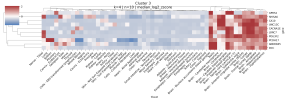
Genes of interest, from the DecodeME candidates it’s probably these which are all seem to show similar relative expression in the brain and are involved in synapses, receptors, signalling etc (ANKRD45, CA10, CACNA1E, DCC, GPR52, LRRC7, PCDH17, POU3F2, SHISA6, UNC13C). But I’m not sure if it’s the actual genes that matter as much as where they lead us.

IMG_4042.png

Actually, maybe for a session or part of one, I would also be interested in what the experts can make of looking at patterns of tissue expression like this in the original DecodeME and the PrecisonLife candidate gene sets and where that could point us.
 
Last edited:
Maybe one on Replication in ME/CFS. (Gather interest in better protocols and more replication attemps).

I agree with @hotblack on having ones about severe ME and @Utsikt about negative findings.

Maybe also one on Long COVID and Post-COVID ME/CFS. As in looking at the construct of long covid, how post covid me/cfs does and doesnt get included into „Long COVID“ research, and maybe advocating for more subtyping / better disentangling of the Long COVID concept and subtypes?
 
Also sorry to double comment but something I‘d want more awareness of in the field is the methodological ups and downs of questionnaires. So maybe a questionnaire themed one.
What place do they have in ME/CFS research?
What ones are commonly used?
What problems do they have (DSQ, HADS, CSI…)?

That‘s something I‘d love more awareness of in the field, the limitations of questionnaires. And as decode ME showed perhaps good ones can be built for specific purposes. So having the Decode team speak on how they built theirs. Perhaps also FUNCAP team.
Could be great.
 
I like the point @Utsikt made on negative findings and the suggestion @Yann04 makes on questionnaires is great given how much they’re used and misused.

Perhaps they could both be covered by a session on best practices or lessons learnt for ME/CFS research. There’s a lot we’ve learnt on what not to do, but also on what is good. Some general but some specific to ME/CFS, so a sort of introduction to the field to help newcomers not make the same mistakes again? And what the team in Edinburgh as well as some of the other researchers on here in particular have learnt from working with patients or in the field in general and how they approach projects because of that could be useful.
 
If just two of the 8 gene regions provide leads I think we will have a story that the medical science world will get quite excited about. In the last few months I have contacted two colleagues in other fields who I thought might be interested and both of them jumped at the chance to explore the disease.
Thank you for bringing in all these new people! Is there anything that you think that they and the other new people you've been trying to bring on board would be interested in having a seminar on?

Also, could an interested clinician set up an NHS clinic off their own bat or does it have to be mandated from the top? If the former, is there any kind of seminar that could bring or help interested clinicians, such as hearing from other clinicians who have set up clinics in 'new' areas?
 
Does the forum have a favourite candidate gene to focus on? Could it be the basis of a seminar?

We probably need a series with deep dives on all, but I'd vote for RABGAP1L, also pinged in the fibromyalgia GWAS study. Rho GTPases are fundamental in cell signalling, linking extracellular environment and intracellular signalling.

From Rho GTPase signaling in cancer progression and dissemination (2021) —

Rho GTPases are a family of small G proteins that regulate cytoskeleton dynamics, cell morphology and polarity, cell motility, vesicle trafficking, cell cycle progression, cell survival, cell growth, and differentiation

Upstream of Rho GEFs/GAPs, extracellular signals such as cytokines, adhesion to the extracellular matrix (ECM), or mechanical signals can activate Rho GTPase signaling,

Rho GTPase signaling contributes to the maintenance of a rewired metabolism in cancer cells.

Rho GTPases are master regulators of actin dynamics,

From The RHO Family GTPases: Mechanisms of Regulation and Signaling (2021) —

The GTPase reaction is of great medical significance, since any disruption of this reaction such as that caused by inhibitory mutations in genes encoding GAP proteins results in persistent downstream signaling.
 
Back
Top Bottom