Demarcation between science and pseudoscience: Still a Problem?

@Utsikt @Trish @Peter T @Yann04 @bobbler @Kitty @hotblack

Let's pretend for a moment that my OP was simply:

Do you believe there's a universally agreed upon dedintion or method of telling the difference between science and pseudoscience?
@hallmarkOvME you have not in any way justified why you think this question is relevant to discuss in relation to someone using the phrase «pseudoscience» in plain language discussions on S4ME. You have asserted that it’s problematic (edit: because it supposedly kills discussions), but never explained why (edit: or provided examples of that happening).

Some members, like @Jonathan Edwards has already made the argument that we’re not really dealing with edge cases. Others have pointed out that using the phrase doesn’t stop anyone else from engaging in the discussion, it merely signifies that the user doesn’t think it’s worth their time.
why I feel merely labeling something pseudoscience or pseudoscientific in the middle of critical conversations tends to unduly divert or abruptly kill discourse of scientific topics
I can’t help but point out that you’re doing exactly what you’re accusing everyone else of now: you’re asserting categorically that something belongs to one of two categories. I thought the line wasn’t clear, so what gives you the authority to decide what is science?
 
Last edited:
Pseudoscience is basically like cheating at Scrabble. If you try and get triple wrod score by spelling hyperbolic with two l's you are cheating. You might have been told that hyperbolic was spelled with two l's but most likely you are hoping nobody will notice.

If you are playing Scrabble it is perfectly acceptable to say someone putting down hyperbollic is cheating. I see no great difference here. If the cheating is not obvious then it is good to point out what is not allowed but if it is obvious to anyone familiar with the topic in hand it gets tedious.
 
Let's pretend for a moment that my OP was simply:

Do you believe there's a universally agreed upon method of telling the difference between science and pseudoscience?

If yes, what is it?

If not, why not?

In
If you feel you've already answered these--as I've little doubt some of you will feel you do--just say, "see my last comment" or something like that.

I'll address whatever comments or questions remain from the responses from before whatever, if anything, this rewind generates--after the pretending runs its own course--starting with why I feel merely labeling something pseudoscience or pseudoscientific in the middle of critical conversations tends to unduly divert or abruptly kill discourse of scientific topics.
Ok well I’ve concluded for myself this is wasting others energy… if you don’t answer questions, reply when others have made effort to engage with you, or explain non-sensical aspects of your text when politely asked - you haven’t clarified what you are going on about

I’d be happy to be proved wrong if you want to start writing details examples and explaining your assertions rather than just flinging random questions demanding others answer those now etc.


Your last para makes no sense to me, if you want to ‘adddress something’ you’ve had your entire thread to write it … nothing is stopping you other than yourself?
 
Last edited by a moderator:
It's seems taken for granted that the Problem of Demarcation--distinguishing between science and pseudoscience--is no longer problematic, even though it's more problem than ever.
No, the problem of distinguishing between science and pseudoscience isn't taken for granted on the forum at all. Quite the opposite.

The use of a word like pseudoscience without elaboration does not mean that the user doesn't accept that sometimes it might be hard to tell if something is pseudoscience.

An analogy:
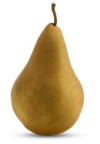
If someone sees the picture below, it's fine to say it is of a pear. There is no need to instead list out the qualities of a pear, and in fact it might become annoying if someone kept doing that, rather than using the appropriate noun.
1769284792037.png

If someone uses the word 'pear' it doesn't mean that they don't accept that it can be hard to work out if the round crisp nashi fruit is in fact a pear. 'Pear' is still a useful word, it means something to many English speakers. If someone needs to ask 'what about this thing makes it a pear?', they can. On this forum, there will usually be someone who will respond to a genuine question with a clarification.

Actually, you will find on the forum plenty of examples of concern about the difficulty of distinguishing between science and pseudoscience, both our own difficulty and the difficulty so many others have when nonsense is wrapped up in the trappings of science.
 
I sincerely was not expecting my OP to ruffle so many feathers so intensely. I apologize for not choosing some of my words and phrases more conscientiously, and for not applying more wisdom in constructing my sentences and paragraphs.

I confess I find some of the heat I sense coming off some of your reactions to be hard to handle, especially amidst my current state fatigue and malaise. But I'll do my best respond while I'm up for air.

@Trish said, "This forum is not a philosophical debating chamber...."

I hear that. I apogize if my lack of clarity in my OP conteributed to ceeating the impression that I see it as auch. The problem have with it, though, is that science itself is a philosophy.* It's a branch of epistemology invented by, and developed by, philosophers. It's also, for me, as Richard Rorty noted (in the introduction to one of his papers compilations I forget the title of, but want say, "Objectivity, Truth and Relativism"?), a form of therapy, or theapeutic, a strategy for coping with reality. (I paraphrase from memory, so forgive me if I butchered it.)

As far as demarcation goes, I ahould have been clear about my deep suspicion rhat the line between science and pseudoscience has always been and still is fluid, or like @hotblack said, "always a rough approximation." That's why it's still called The Demarcation PROBLEM.

It seems to like two duscussions and/or debates are happening in this thread (maybe more?). The first is whether demarcation is even a thing; the second that, assuming, or deeply suspecting ss I do, that demarcation is s thing, what kind of thing it is, and what the pragmatic implications of that assumption or deep suspicion and its type are. For this thread, I'm only interested in the second discussion/debate. I'm truly sorry I didn't explicate that plainly enough.

As a good faith gesture, perhaps we could leave the first discussion/debate in this sub forum, and move the second to the the chit-chat sub?

Also, by "aternative term" I did not mean as a replacement term, but was peoposing that a pause amidst discourse be taken where the users clarify which of the above two senses of science and pseudoscience is being used by each speaker. I apologize for not appreciating the extent to which some members value the term as given in the sense of the first discussion/debate.

@Utsikt said"...you’re doing exactly what you’re accusing everyone else of now: you’re asserting categorically that something belongs to one of two categories. I thought the line wasn’t clear, so what gives you the authority to decide what is science?"

I apologize. I did not intend to be universally accusational of "everyone", strictly binary, and especially not categorical. Regarding that last sentence, that's what I'm getting at? What gives anyone that authority? But because the line isn't clear, but how do we best use a fluid line to assist our distinction making, and whether what we decide in that historical moment is pseudoscience has then been rendered totally without value.

Perhaps If I had, as proper philosophers instruct us to do, began my OP by defining my terms. For example, what do I mean by science? Ok. I define science.as the art of critical thinking. It's not something you are, but something you do. Discussing what these doings are, and how to operate their functions, is part of science as the art of critical thinking, and those whats and hows are different from science to science.

There is no such thing as THE scientific method. There are at least as many methods as there are sciences, and probably as many as the sum of each person doing science at any given moment.

I didn't list examples because I thought it bore y'all. I was wrong to assume that we could all think of those things. If you search for "things that used to be science that are now pseudoscience," and "things that use to be pseudoscience that are now science", or replace "science" with, "things thought to be scientific" and "pseudoscientific" "things thought to be pseudoscientifc," you'll get oodles and oodles of examples on each "side." I do it frequently and it's always fun and educational.

If you want to discuss or debate an example from your search results, and if the mod team approves, please start a new topic thread, and I'll donmy best to participate. Keeping track of all thses discussions and excursions is already challenging my cognitively impaired faculties.

*I still go by the definition of philosophy my epistemology professor taught me twenty-five years ago: "philosophy is the pursuit of wisdom, where 'wisdom' is defined as 'the capacity for sound judgment.'"(Later that semester, somewhere between Plato's cave and Descartes' oven, I challenged him after class one afternoon about the universality of the definition and he assured me it was unassailable. After a quarter century, I still haven't found a better one. But I've alwqys got my ears on.)
 
No, the problem of distinguishing between science and pseudoscience isn't taken for granted on the forum at all. Quite the opposite.

The use of a word like pseudoscience without elaboration does not mean that the user doesn't accept that sometimes it might be hard to tell if something is pseudoscience.

Sorry. I thought it was plain enough. My apologies.

What I meant was being taken for granted was not between things scientific and things pseudoscientfic, but the whether demarcation is a still problem, or whether it has been solved. That is: has the fluid line I mentioned a few times the post before last now become solid?

Although all the synonyms of "pseudoscientific" my failure to be clear has generated injected much needed humor onto a rough past day or so of ME/CFS symptoms spikes.
 
Last edited:
Thank you for clarifying, and I also apologise for my harsh tone.
I define science.as the art of critical thinking. It's not something you are, but something you do.
If you replaced «this is pseudoscience» by «this position is untenable if you apply critical thinking», you’d probably get a good approximation of the general use of the word.
There is no such thing as THE scientific method. There are at least as many methods as there are sciences, and probably as many as the sum of each person doing science at any given moment.
There might not be one crystal clear line, but if you define science as critical thinking, we can draw a hard line separating out anything that doesn’t apply and relentlessly pursue critical thinking.

That single line is usually enough, because the proper sciences will stay well away from the line. So anything near it, will almost certainly be pseudoscience because they are not capable of getting away from it and won’t surrender their dogma or realise that the pursuit of a field should be abandoned entirely. Pseudoscientific fields are kept alive by people doing too much of the wrong things.
 
Thank you for clarifying, and I also apologise for my harsh tone.

If you replaced «this is pseudoscience» by «this position is untenable if you apply critical thinking», you’d probably get a good approximation of the general use of the word.

There might not be one crystal clear line, but if you define science as critical thinking, we can draw a hard line separating out anything that doesn’t apply and relentlessly pursue critical thinking.

That single line is usually enough, because the proper sciences will stay well away from the line. So anything near it, will almost certainly be pseudoscience because they are not capable of getting away from it and won’t surrender their dogma or realise that the pursuit of a field should be abandoned entirely. Pseudoscientific fields are kept alive by people doing too much of the wrong things.
Apology accepted.

You dropped "the art" from definition both times. Was that intentional?

Also, I only apply it individual scientist's behaviors, not fields.
 
Last edited:
Ok well I’ve concluded for myself this is wasting others energy… if you don’t answer questions, reply when others have made effort to engage with you, or explain non-sensical aspects of your text when politely asked - you haven’t clarified what you are going on about

I’d be happy to be proved wrong if you want to start writing details examples and explaining your assertions rather than just flinging random questions demanding others answer those now etc.


Your last para makes no sense to me, if you want to ‘adddress something’ you’ve had your entire thread to write it … nothing is stopping you other than yourself?
I'm sorry I wasted your time. I had to rest rest due to PEM. And like all of us I have cognitive issues. To wit, I don't recall intending any of these accusations, especially the immediate demands for people to answer questions, but I'll go back and look at the OP.
 
the whether demarcation is a still problem, or whether it has been solved.

I don't think there was a problem in the first place, so there's no need for solutions.

We start with a simple enough question: can this publication tell us anything, or not? Answering it is a practical task, not a philosophical enquiry. We're in too much of a hurry for that.
 
I sincerely was not expecting my OP to ruffle so many feathers so intensely. I apologize for not choosing some of my words and phrases more conscientiously, and for not applying more wisdom in constructing my sentences and paragraphs.

I confess I find some of the heat I sense coming off some of your reactions to be hard to handle, especially amidst my current state fatigue and malaise. But I'll do my best respond while I'm up for air.
I don’t think feathers are ruffled or any apology is needed. Discussion on here can be strong and they can definitely feel heated and be hard for people at times. Especiy if lots of people disagree with a point or hold or express their beliefs strongly. I know I have felt this and others have said so in he past too.

But rest assured, it’s normal, people have views and express them. It’s what the forum is for. Although like you many find it difficult given so many of us have pretty bad ME/CFS. On these points, it’s fine, people understand.

I guess this is precisely why there has been some of the responses. Discourse here happens. So with a statement that discourse is stifled many felt there was little to really support thus position and it has been challenged/questioned. Others have just been a bit confused by what the aims are or some of the specialist and slightly inaccessible language used. So pretty much the same approach and responses to papers we discuss!
 
Last edited:
Back
Top Bottom