Clinical Reasoning: A 66-Year-Old Man With Chronic Orthostatic Hypotension, 2025, Abhishek Lenka

Mij

Senior Member (Voting Rights)

Abstract

A 66-year-old man presented with a 9-year history of chronic orthostatic intolerance and recurrent syncope. A review of systems also revealed several other symptoms including dry eyes and mouth, chronic nausea and bloating, constipation, urinary urgency and urge incontinence, and erectile dysfunction. He had no motor, sensory, or cognitive concerns. He took no medications that could cause autonomic dysfunction. His neurologic examination was unremarkable. The tilt table test revealed neurogenic orthostatic hypotension. His plasma norepinephrine level was low. Eventually, a treatable etiology of autonomic failure was identified, and the patient had excellent response to treatment.
LINK
 
The patient was diagnosed with idiopathic autoimmune autonomic ganglionopathy (AAG).


Our patient reported excellent improvement in his overall symptoms in response to an initial course of IVIg infusions (40 g daily for 3 days). He reported improvement in orthostatic intolerance, gastroparesis, and bladder symptoms. Owing to problems with insurance coverage, IVIg could not be continued and symptoms relapsed. Subsequently, he was treated with rituximab infusions, followed by significant clinical improvement in all symptoms.

Conclusion​

Isolated autonomic failure, presenting with OH along with features of cholinergic dysfunction, should alert neurologists to an autoimmune etiology of autonomic dysfunction, especially AAG. When available, pupillometry can be used to look for premature pupillary dilation, a feature unique to AAG. Because it is potentially treatable, timely diagnosis through appropriate autoantibody testing and optimal treatment with immunomodulating agents can lead to excellent outcomes.
 
Very interesting.

His plasma norepinephrine level was low.

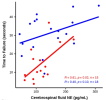
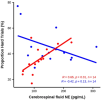
Walitt et al. 2024 found no difference between patients and controls in plasma norepinephrine, but cerebrospinal norepinephrine "correlated with both time to failure and effort preference in PI-ME/CFS participants" (i.e. with patients' ability to sustain hand grip and patients choosing to rapidly tap with pinky).

Figs 6d & e from Walitt et al. 2024:

1760726444378.png1760726470013.png
 
When I came across the symptoms list for autoimmune autonomic ganglionopathy, I was baffled with the fact that this included severe dysautonomia, abnormal reaction of pupils to light, sweating abnormalities (anhidrosis) and severe gastric dysmotility. Why on earth the most severe ME/CFS patients who require TPN are not tested for the antibodies for AAG more routinely?
 
When I came across the symptoms list for autoimmune autonomic ganglionopathy, I was baffled with the fact that this included severe dysautonomia, abnormal reaction of pupils to light, sweating abnormalities (anhidrosis) and severe gastric dysmotility. Why on earth the most severe ME/CFS patients who require TPN are not tested for the antibodies for AAG more routinely?
According to google it’s very rare, with about 100 diagnoses in the US each year. The usual patient is 50-70 years old, with slightly more female than men.

Apparently there are two different tests for AAG without false positives, but with some false negatives:
This patient has chronic panautonomic failure with nOH, gastrointestinal dysmotility, and defective pupillary light reflex with premature redilation of pupils in response to long-flash stimuli. This pupillary abnormality is described in AAG as a pathognomonic finding.2 An autoimmune dysautonomia antibody panel revealed high levels of autoantibodies against ganglionic acetylcholine receptors (gAChRs). The antibody level was 1.70 nmol/L (normal <0.02 nmol/L; levels >1.0 nmol/L are considered confirmatory of AAG). The clinical features and the high level of gAChR antibodies confirm the diagnosis of AAG. Low plasma NE levels are also typical.
 
According to google it’s very rare, with about 100 diagnoses in the US each year. The usual patient is 50-70 years old, with slightly more female than men.

Apparently there are two different tests for AAG without false positives, but with some false negatives:
Thank you for mentioning the tests.
Regarding the extent to which AAG is widespread, I think there may be a negative bias here, as there are a handful of specialists in the developed countries who are aware of the diagnosis, and there are only a couple of labs in the world which can run such a test. It can be both acute and subacute and there are cases of female patients (and children as well) described in clinical case reports. Ganglionic ACHR antibodies can be elevated in cases of POTS but there is a cutoff level defined by Mayo clinic for AAG (so in AAG the level of antibodies is much higher).

There are several reasons I have been interested in this condition. Firstly, I have been infuriated with the way intestinal/GI failure is addressed in ME/CFS patients in the UK. In case of AAG patients usually get better in terms of their gastrointestinal symptoms on IVIG. Secondly, in the UK several patients with AAG were dismissed or disbelieved and as a result didn’t get the immunotherapy they should get as per the latest British IVIG guidelines and are confined in their homes as well.
 
Last edited:
One last comment regarding the average demographic characteristics of patients with AAG: I do realise that a patient’s group on Facebook is biased in its own way, but there are lots of female patients there. There are a couple of people with ME/CFS there as well who were diagnosed with AAG by Dr Vernino.
 
Back
Top Bottom